Can You Walk Between Wineries In Barossa Valley?
Mostly no: Barossa wineries are spread across a 590 km2 valley, so walking between cellar doors rarely works. Here is what you can walk, and the bus, e-bike and driven options that fill the gap.
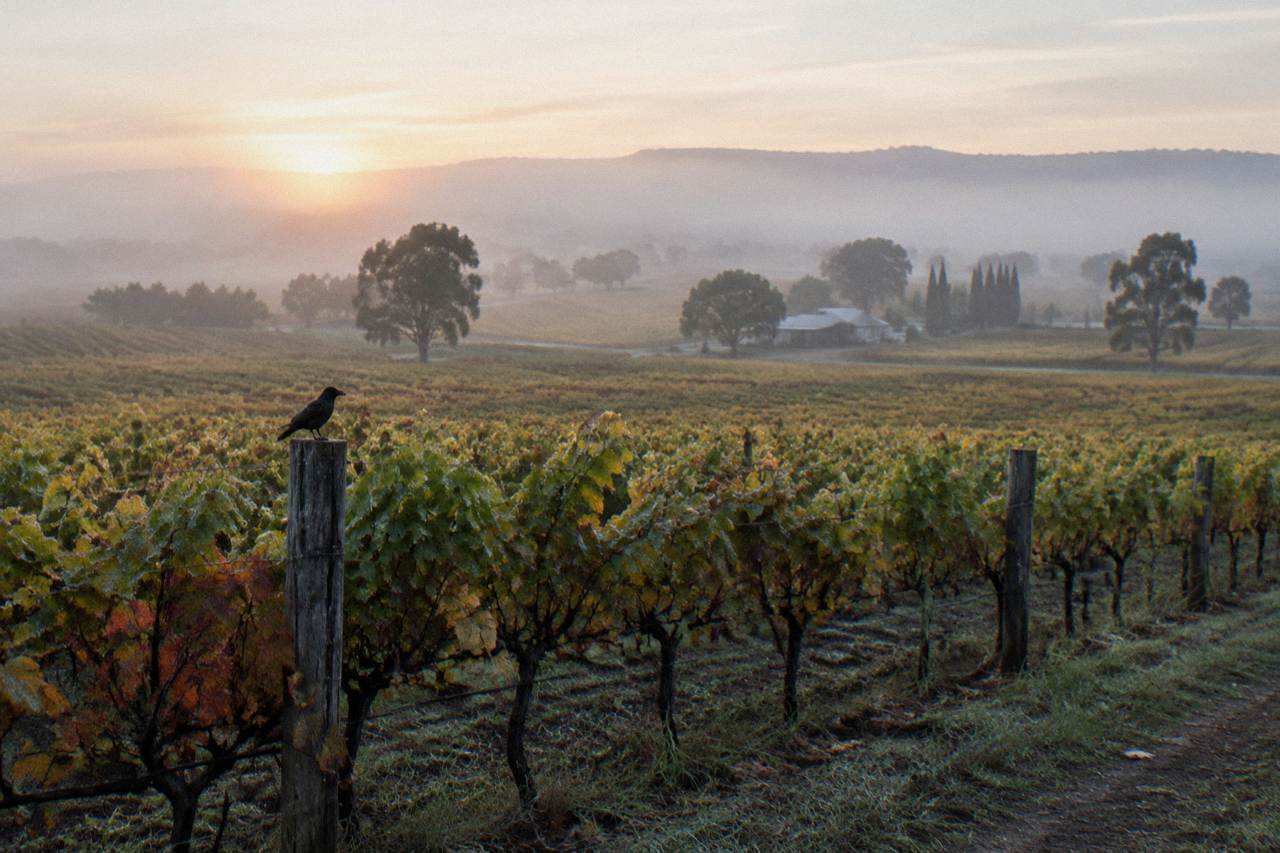
Mostly no, and the reason is simple geography. The Barossa Valley wine region covers 590 square kilometres, with over 150 wineries scattered across it, so the distance from one cellar door to the next is usually a drive, not a stroll. Walking works inside the towns, on the Tanunda Heritage Trail, a 2.5 km walk that starts at the Barossa Visitor Centre at 66-68 Murray Street, and it is a genuinely pleasant way to spend an hour on foot. If walking won't get you between cellar doors, our guide to Barossa Valley hop-on-hop-off transport explains what to book instead.
That distinction, walkable town versus unwalkable region, is the whole answer in miniature. A visitor who bases themselves in Tanunda can walk the main street, the heritage trail and a handful of nearby stops, then hit a wall: the next group of cellar doors sits several kilometres down sealed country roads with no footpath. The regional tourism body places the Barossa 70 km north-east of Adelaide, "just an hour's drive", which hints at the scale involved once you are inside it.
The practical alternatives fill the gap in three ways. A hop-on hop-off bus moves you between wineries on your own schedule; a guided e-bike tour covers the valley's sealed off-road rail trail with a guide; and a driven small-group day handles everything, from pickup to lunch to the route itself. This article walks through each, plus the drink-driving rules that explain why so many visitors hand over the wheel.
Why Are The Distances Between Wineries Too Far To Walk?
The Barossa Valley is a 590 km2 wine region, not a village of side-by-side cellar doors, and its over 150 wineries sit on a road network built for cars. The region's own tourism body describes it as an hour's drive from Adelaide, and once inside, winery-to-winery legs are measured in kilometres of country road. No verified walking distances between named wineries exist in the regional files, which itself tells you something about how people move around.
The Barossa's geography explains the layout. Vineyards sit on the valley floor and climb its western ridge, with elevation running from 112 to 596 metres across the region, and wineries were established over generations wherever water, soil and transport aligned, not in a neat strip. The result is clusters around Tanunda, Nuriootpa, Angaston, Lyndoch and Rowland Flat, with gaps of open farmland, vineyard and roadside between them. Even the named stops on local tours, Chateau Tanunda to Kies Family Wines to Seppeltsfield, are stops a vehicle makes in sequence for a reason.
| Published figure | Figure | What it means for walking |
|---|---|---|
| Barossa Valley region area | 590 km2 | Wineries spread across a full valley, not one street |
| Wineries in the region | over 150 (region's own figure) | Only a fraction sit near any town centre |
| Adelaide to Tanunda drive | about an hour | The region itself is car-scaled end to end |
| Tanunda Heritage Trail | 2.5 km, starts at the Visitor Centre | Walking works inside a town, with limits |
| Neighbouring regions by car | McLaren Vale about 1.5 hrs, Clare Valley about 1.5 hrs | Even region-to-region travel is a driving matter |
Country roads in the Barossa are sealed and generally well maintained, with no toll routes on the Adelaide approach, but they are rural roads: narrow verges, 80 to 100 km/h traffic in places, and long stretches without footpaths or shade. Walking them between tastings is uncomfortable at best, and in summer heat, when long-term means from the Nuriootpa station put January's average maximum at 28.8 degrees, it moves from uncomfortable to unsafe. The Barossa Valley Wine Tours site exists largely because of this geometry: the answer to "can I walk it?" is no, so the real question becomes which wheels to choose.
There is also the tasting problem. Even a modest cellar-door flight leaves a driver near or over the legal limit, which is a separate issue covered in full below. Walking between two wineries solves it only if the two wineries happen to be next door, which across 590 square kilometres of valley they usually are not.
Can You Walk Between Wineries In Barossa Valley?
Inside towns, yes, partly: Tanunda has a 2.5 km heritage trail from the Visitor Centre, and each main street rewards a wander. Between wineries, no: the cellar doors sit kilometres apart on country roads, and the region's own materials describe drives, not walks, between them. Treat the Barossa as a walkable-town, unwalkable-region destination and plan around that split.
This is the question the whole article answers, so it is worth being precise about the walkable part rather than dismissing it. The Barossa Visitor Centre sits at 66-68 Murray Street in Tanunda, and the Tanunda Heritage Trail, a 2.5 km walking route, starts there. That gives you a town loop of heritage buildings, churches and shopfronts, and Tanunda's main street is compact enough to cover on foot with a coffee in hand. Nuriootpa and Angaston have their own walkable strips, and Bethany, the first major European settlement in the Barossa from 1842, retains a village feel.
The walkable pocket ends where the town does. The next cellar door down the road is a country-road leg, and the region has no published network of walking paths linking wineries the way a city links pubs. One genuine exception in kind, though not a winery-to-winery route: the Barossa Trail is a sealed, off-road rail trail that supports cycling and walking on a shared path running from Gawler toward Angaston, and it is the closest thing the region has to a car-free corridor. On foot it is a long corridor; on an e-bike it becomes an actual winery link, which is why the guided e-bike option later in this article works so well.
For a sense of scale from outside the valley, the drive from Adelaide to Tanunda runs about an hour by car via the main northern routes, and there is no direct rail into the Barossa at all. Public transport means a train to Gawler, the railhead, then a connecting bus toward Tanunda, Nuriootpa and Angaston, roughly two and a half hours with a change. A region that takes two and a half hours to reach by public transport from the state capital is not a region you cross on foot between tastings. The practical reading: book accommodation in one town, walk that town thoroughly, and use a bus, bike or driven tour for everything beyond it.
How Does A Hop-On Hop-Off Bus Replace Walking?
The Barossa Valley Hop-On Hop-Off Wine Tour, operated by Trail Hopper, runs from A$100 per person for an eight-hour day and carries you between wineries in an air-conditioned vehicle, with bottled water and GST included. It is rated 4.9 from 442 reviews, caps bookings at 8 people, and offers free cancellation with the cutoff shown on the live booking page. Tasting fees and lunch are not included, so budget for those separately.
This is the closest thing on this site to "walking between wineries, but seated". You keep the independence: you decide which cellar doors to visit and how long to linger, and the bus handles the distances that make walking impossible. The listing includes transport between wineries and venues in the Barossa Valley, an air-conditioned vehicle, bottled water and GST, and the format is explicitly hop-on hop-off with a maximum of 8 per booking. There is no hotel pickup; the listing names the Stamford Plaza Adelaide as a departure reference point, so it is a meet-the-vehicle arrangement rather than a door-to-door service.
A guest review on the listing puts it well: "This is a fabulous and easy way to see some of the best spots in the Barossa. Highly recommend you make Bethany Wines and Rusden Wines two of your stops!" That review also illustrates the format's strength, the stops are partly your call, and its limit, you need to plan your own day. With tasting fees not included, check each cellar door's fee before you commit: standard flights across the region's cellar doors generally run roughly A$10 to A$30 per person, and it varies by winery. Jacob's Creek, for example, prints flights at A$15, A$20 and A$30 per person depending on tier, non-redeemable, with bookings essential and the last slot at 3.30pm, per its official tasting page.
The hop-on hop-off format earns its place in the trio because it answers the exact anxiety behind the walking question: I do not want to drive, but I do not want a rigid itinerary either. An eight-hour window from about A$100 is also the lowest per-person entry point among the guided options, with the trade-offs spelled out in its row: no lunch, no tasting fees, no pickup. Readers wanting the fuller picture can compare it against the other formats in the hop-on hop-off Barossa guide, which breaks the format down in more depth.
Can You Cycle Or Take An E-Bike Between Wineries?
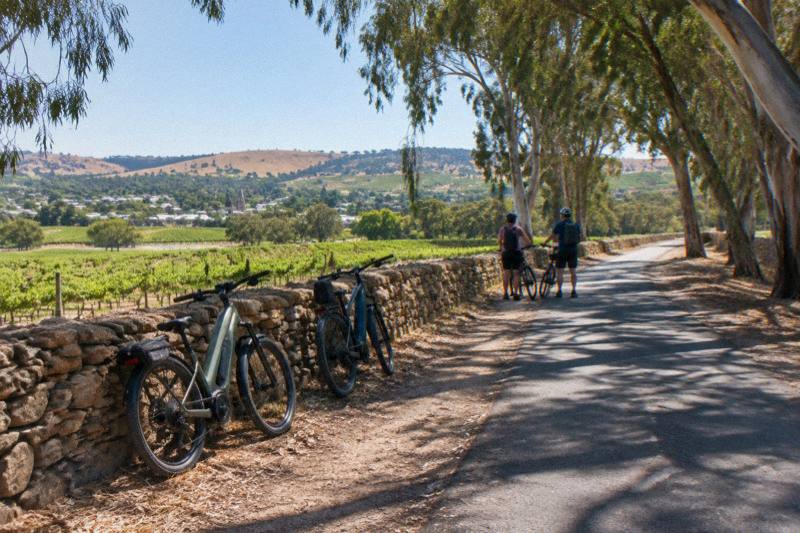
Yes, cycling is the one self-powered way to link Barossa wineries that genuinely works, thanks to the Barossa Trail, a sealed off-road rail trail. The guided pick among the tours we list is Experience Barossa Valley by E-bike from Bike About, running from about A$335 per person for six and a half hours with lunch included. It is rated 5 from 33 reviews, with free cancellation and the cutoff on the live booking page.
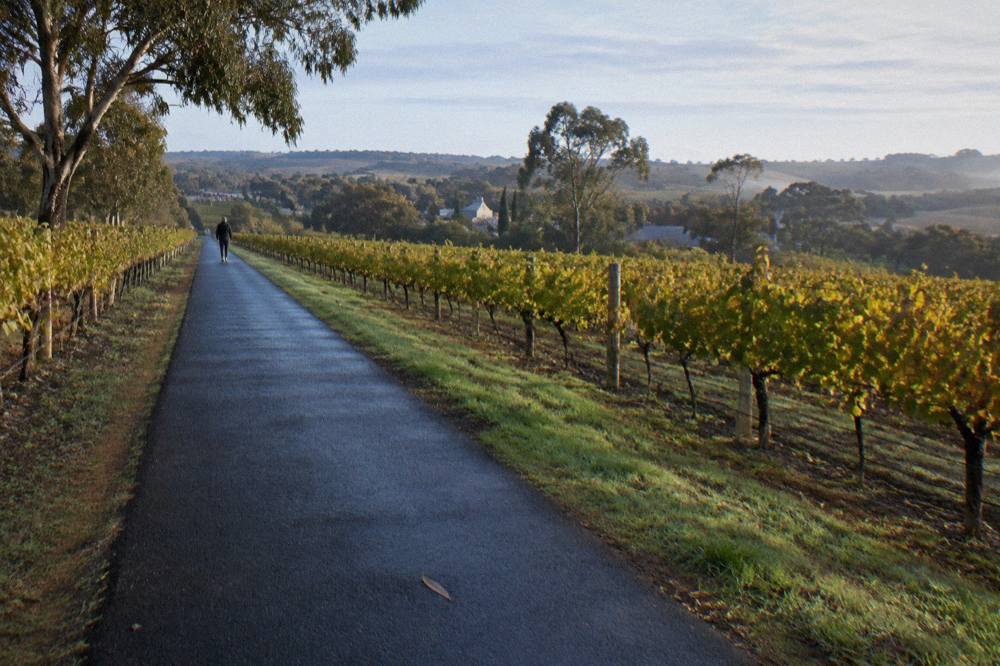
The e-bike tour is the middle path between walking and being driven. The listing's route names Yalumba, the Barossa Valley Chocolate Company, Artisans of Barossa and the Barossa Valley Cheese Company, and the inclusions read like a food trail: an artisan platter lunch and wine tastings at Yalumba, coffee and cake at the chocolate company, a rarities tasting at Artisans of The Barossa, and a cheese tasting at Barossa Cheese. Lunch is included; tasting fees are not stated on the row, so confirm details on the listing before booking. The operator, Bike About, runs the guided tour from Angaston, and the sealed rail trail keeps most of the riding off public roads, which matters both for safety and for enjoying the glass at the platter lunch.
E-bikes also change the distance maths that defeats walking. Pedal assist flattens the valley's rolls and turns a long hop into a pleasant half hour, so winery clusters that are a drive on foot become a ride. The format does still demand a level of comfort on a bike and a willingness to ride in the open; summer long-term means from the Nuriootpa station run to average maximums of 28.8 degrees in January, so a helmet, water and the morning departures matter. Cyclists are subject to the same road rules as drivers, and riding with alcohol in your system is a poor idea for the same legal reasons covered below, another argument for the guided version with a support setup rather than a solo rental after two cellar doors.
For readers weighing bike against bus against a driven day, the e-bike and bike wine tours guide compares the options in detail. The short version: the e-bike tour suits reasonably active visitors who want the wineries plus a moving, outdoor day; the hop-on hop-off bus suits anyone who wants the independence without the saddle time.
What Happens If You Drive Yourself After Tastings?
South Australia's limit for full licence holders is a blood alcohol concentration of 0.05, and police can run random breath testing near any road. A first offence under 0.08 on a full licence brings an expiation notice and 4 demerit points; a second or later offence under 0.08 means disqualification, per the state's road authority. Tastings add up faster than most visitors expect, which is the quiet reason tours exist.
The arithmetic is unforgiving. A standard flight at one cellar door can be four to six small pours, and visiting three wineries without spitting can put a driver over 0.05 well before lunch. The state government's drink-driving page sets out the penalties, and the enforcement reality is random: breath testing stations can appear near any road, and a Barossa excursion day is exactly the traffic they are designed for. Learner and probationary drivers must have zero alcohol at all.
This is the strongest argument against the self-drive version of a walking-style day. Even visitors who plan to "just taste" tend to swallow, and the country roads between wineries, the same ones that defeat walkers, are roads you then drive. Handing the driving to an operator turns the day from a compliance exercise into a holiday, and every driven tour on this site runs on that logic. It also explains the region's tour culture more generally; the question "should I drive or take a tour?" has a clear legal dimension, and the tour versus driving comparison works through it in full.
One planning note if you do drive some days: distances to neighbouring regions are real drives too. McLaren Vale sits roughly an hour and a half from the Barossa by car and closer to Adelaide, about 40 minutes against the Barossa's hour; Clare Valley is roughly an hour and a half; Hahndorf in the Adelaide Hills is under an hour. Nobody walks between any of these, and the same drink-driving rules apply across all of them.
When Does A Driven Small-Group Tour Beat Both?
When you want the walking question to disappear entirely. The Premium Barossa Small Group Tour from See Adelaide runs from A$189 per person for eight hours, rated 4.9 from 1697 reviews, with hotel pickup, a regional platter lunch and chocolate tasting included, and free cancellation up to 24 hours before departure. You never plan a leg, never check a bus timetable and never think about a breathalyser.
The premium day in the trio is the full-service counterpoint to the bus. Its listing names Adelaide Hills, Kies Family Wines, Chateau Tanunda, Melba's Chocolates, Yalumba, Rosenvale Vineyards and the Avenue of Palms among its stops, with a private barrel room tasting at sixth-generation Kies Family Wines, a structured tasting and self-guided tour at Chateau Tanunda, and a private tasting at Rosenvale. Lunch is included as a regional platter, pickup is stated on the row, and the format is small group. A guest review on the listing captures the effect: "Amazing tour! Great guide, Sara, was lots of fun & had loads of great info about the areas we visited! All the vineyards were lovely and gave great info about their winemaking processes and local areas."
Between the bus, the bike and the driven day sits another option worth naming for visitors who like the small-group idea but want tasting fees handled. The Barossa Valley Cellar Door Small Group Tour from CP Tours and Charters runs from A$189 per person for eight and a half hours, rated 4.8 from 545 reviews, with hotel pickup and return, lunch at The Tanunda Club and standard tasting fees all included, visiting four wineries such as Langmeil, Chateau Tanunda, Ubertas and Rusden. Its review on the listing: "The trip from collection to the drop off back at our apartment was amazing. Phil was excellent and took us to the most wonderful vineyards for wine tasting."
The trade-offs between these formats are honest and small. The bus is the cheapest and the most independent but includes the least; the e-bike day is the most physical and the most scenic from ground level; the driven small-group days cost more and include more, and they remove every logistical decision. None of them involves walking between wineries, because that is the one thing the valley's geography rules out.
What About Walking Within One Town Or Cellar Door Estate?
Yes, and this is where walking earns its keep. Tanunda's 2.5 km heritage trail from the Visitor Centre, the walkable main streets of Tanunda, Nuriootpa and Angaston, and the grounds of large estates like Seppeltsfield give you hours of genuinely pleasant foot time. Walking within a cluster, then riding or being driven between clusters, is the realistic shape of a Barossa day on foot.
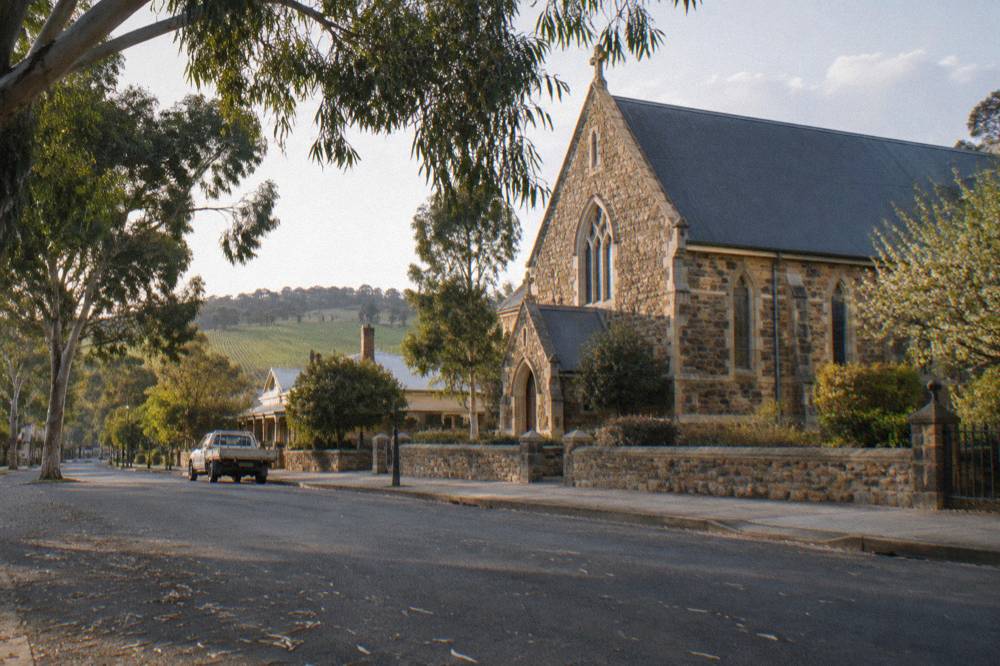
Think of the valley as a string of walkable nodes connected by unwalkable links. Inside a node, walking is the right choice. The Tanunda Heritage Trail covers the town's German settler heritage from its starting point at the Visitor Centre; Angaston's strip runs past stone facades toward the quieter end of the valley; Bethany, settled from 1842, is a small village scene. Several tour itineraries build in exactly this, free time on Tanunda's main street, because operators know the towns are the walkable part.
The estate node works the same way. Seppeltsfield, established 1851, is a destination where the walking happens inside the property: the cellar door, the JamFactory gallery space, Vasse Virgin and the cafe sit a short stroll apart, and several of the coach day trips listed on this site bundle precisely those stops into one visit. Note the cellar door details before you go: tasting fees apply, and group tastings are limited to 6 people, per the estate's own tours page. The estate's 175th Series, four Fridays in November 2026, is an anniversary celebration rather than a new opening, so it changes the vibe of a visit on those dates, not the layout.
For visitors basing themselves in the region rather than day-tripping, the local-pickup options matter. The Valley Wine Tours small-group day, for instance, picks up within the Barossa region only, from A$245 per person for six hours with lunch and tasting fees at its selected wineries included, rated 5.0 from 29 reviews. It is a reminder that once you are staying in the valley, the walking question shrinks to town scale and the tour question becomes a short-hop one. The joining a tour from Tanunda guide covers the in-region options in detail.
Which Format Should You Choose If You Cannot Walk It?
Choose by what you want to control. Want to pick your own cellar doors and keep the day cheap: the hop-on hop-off bus, from A$100 per person. Want scenery and exercise with lunch built in: the e-bike day, from about A$335. Want zero decisions, pickup, lunch and tastings arranged: a small-group driven day from A$189, or a max-6 luxury version from A$380. Every one of them exists because walking failed first.
| Format | Example tour | From | Includes | Rating |
|---|---|---|---|---|
| Hop-on hop-off bus | Trail Hopper, 8 hours | A$100 per person | Transport between wineries, water; no lunch, no tasting fees, no pickup | 4.9 from 442 reviews |
| Guided e-bike day | Bike About, 6 hours 30 minutes | about A$335 per person | Artisan platter lunch, coffee and cake, rarities and cheese tastings | 5 from 33 reviews |
| Small group with lunch | See Adelaide Premium, 8 hours | A$189 per person | Pickup, platter lunch, chocolate, private tastings | 4.9 from 1697 reviews |
| Small group, fees included | CP Tours, 8 hours 30 minutes | A$189 per person | Hotel pickup and return, Tanunda Club lunch, standard tasting fees | 4.8 from 545 reviews |
| Max-6 luxury day | Small Batch Wine Tours, 8 to 9 hours | A$380 per person | Hotel pickup, luxury transfers, multi-course restaurant lunch, tasting fees | 5 from 112 reviews |
The max-6 row deserves a sentence of its own because it is the ceiling of the driven format. The Barossa Valley Wine Tour from Small Batch Wine Tours, from A$380 per person for eight to nine hours, caps the group at six guests and folds in hotel pickup and drop-off in luxury transfers, tasting fees at the wineries, and a multi-course restaurant lunch with a premium beverage. Its review is short and to the point: "Tom was a great tour guide and driver and terrific choice of wineries. Excellent wines to taste and lunch." Free cancellation applies, with the cutoff on the listing.
The e-bike and bus picks above sit at the independent end of that table, and the two solo tiles at either end of this article bracket the driven end. Between them they cover nearly every answer to the walking question except the one the geometry forbids. If your heart is set on foot time, plan it where the valley allows it, on Tanunda's trail and inside the big estates, and let a vehicle own the kilometres in between. For more on pairing days and towns, the how many days you need guide is the natural next read.
Common Questions About Walking Between Wineries In Barossa Valley
Can You Walk Between Wineries In Barossa Valley?
Mostly no. The region covers 590 square kilometres with over 150 wineries on country roads, so winery-to-winery legs are driving distances. Walking works inside towns like Tanunda, whose 2.5 km heritage trail starts at the Visitor Centre, and inside large estates such as Seppeltsfield.
Is Tanunda Walkable Without A Car?
Partly. Tanunda's main street and the 2.5 km Tanunda Heritage Trail from the Barossa Visitor Centre at 66-68 Murray Street are genuinely walkable, and the town is a sensible walking base. The wineries around it are not reachable on foot in any practical sense.
Can You Cycle Between Barossa Wineries Instead Of Walking?
Yes. The Barossa Trail is a sealed off-road rail trail that supports cycling and e-bike touring, and a guided option like Experience Barossa Valley by E-bike, from about A$335 per person with lunch included, links wineries and food stops along it with a guide.
What Is The Cheapest Way To Get Between Wineries Without Driving?
The hop-on hop-off bus. The Barossa Valley Hop-On Hop-Off Wine Tour runs from A$100 per person for eight hours, rated 4.9 from 442 reviews, with transport between wineries included. Lunch and tasting fees are not included, and there is no hotel pickup.
Is It Safe To Walk On Barossa Country Roads?
The main routes are sealed and well maintained, but they are rural roads with traffic and long stretches without footpaths, and summer long-term mean maximums at Nuriootpa sit near 29 degrees. Walking between wineries is not a practical or comfortable plan; use a bus, bike or driven tour instead.
Can You Drink At Cellar Doors And Still Drive In South Australia?
The limit for full licence holders is a 0.05 blood alcohol concentration, and police can run random breath testing near any road. A first offence under 0.08 brings an expiation notice and 4 demerit points; a second or later offence under 0.08 means disqualification.