Barossa Valley Wineries: Towns, Styles And How To Pick Cellar Doors
The Barossa zone holds over 150 wineries across two quite different regions, and no visitor sees more than a handful. This guide breaks the choice into the decisions that actually matter: which region, which grape styles, which town, and how the guided tours group their cellar doors.
Short answer
The Barossa GI zone, recognised in 1997, covers two regions: Barossa Valley with 11,930 hectares under vine and Eden Valley with 2,292. Shiraz makes up 60 percent of Barossa Valley crush tonnes. Most visitors see three to five cellar doors in a day, which is exactly why the grouping logic of a guided tour matters.
The Barossa is not one wine region but a zone: an official Geographical Indication recognised in 1997, holding two regions, Barossa Valley and Eden Valley, plus one declared sub-region, High Eden. Barossa Australia, the regional body, puts the count at over 150 wineries across the zone, spread over 14,222 hectares of vines. That scale is the planning problem. A visitor with one day and a car will reach four, maybe five cellar doors, so the real question is not "which winery is best" but which cluster of wineries, in which region, anchored on which town, suits the way you travel. If you were hoping to skip driving altogether, our guide to walking between Barossa cellar doors covers the few places where foot travel works and the alternatives where it doesn't.
This guide works through that decision in order: the two regions and what each grows, the towns that anchor a day, the named cellar doors and their tasting fees, and finally how the guided tours listed here actually group their stops. Along the way it uses the region's own numbers, Wine Australia's 2026 snapshot figures, and the live listings themselves, rather than rankings, because a ranking of wineries is a matter of taste and no list can settle it for you.
How Many Wineries Does The Barossa Actually Have?
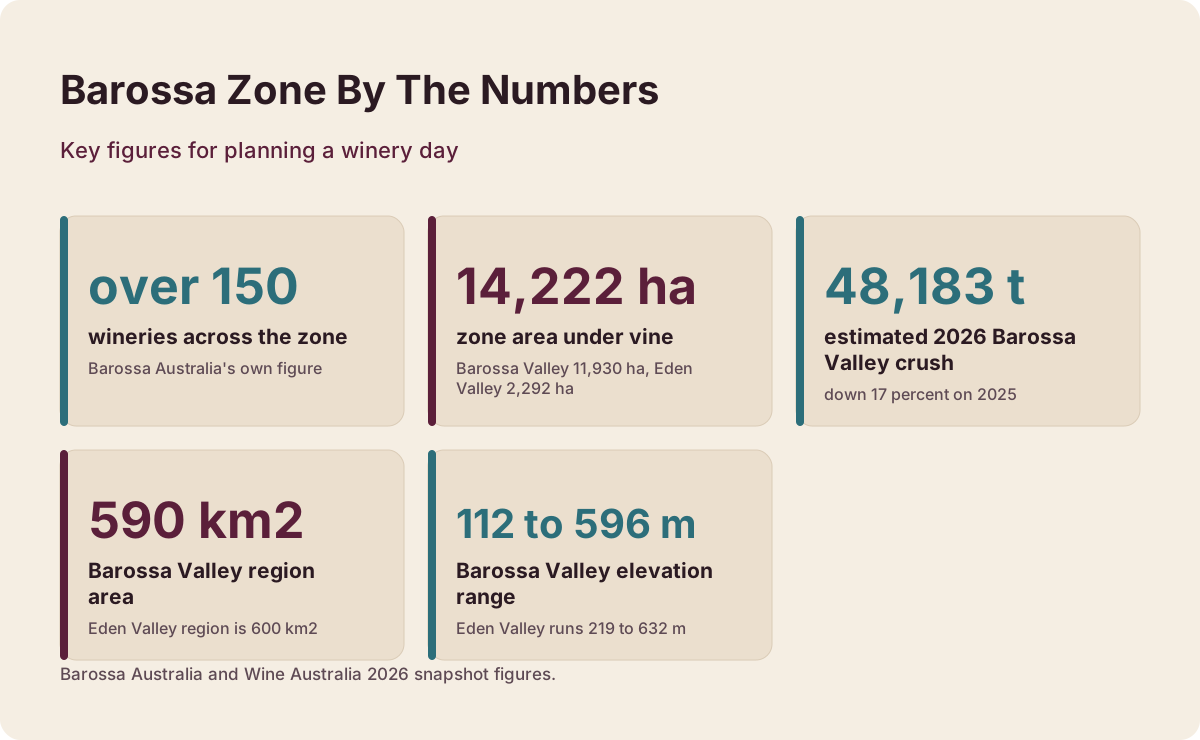
Barossa Australia's own figure is "over 150 wineries" across the zone, and that is the only count worth quoting, because no official page publishes a separate cellar-door count. The zone spans 14,222 hectares under vine across two regions: Barossa Valley with 11,930 hectares and Eden Valley with 2,292. Only a fraction of those wineries run cellar doors you can walk into.
The regional tourism body's wineries page is the source for the over 150 figure, and it deliberately avoids a cellar-door tally, because cellar doors open and close. Three closures make the point: the Penfolds Barossa Valley cellar door at Nuriootpa closed in 2025, the Grant Burge Meshach cellar door closed the same year, and the Rolf Binder cellar door closed at the end of June 2025. Any list of "must-visit" cellar doors older than those closures is partly wrong, which is why this guide names only cellar doors whose current status appears in verified sources, and sends you to the operator's own page for hours and fees.
For scale, the Barossa Valley region alone runs to 590 square kilometres, with elevation between 112 and 596 metres. The vintage rhythm matters too: harvest runs about February to April, and the 2026 vintage came in later than usual, with much of the Barossa Valley crop, in the words of the region's own vintage report, "in the winery before Easter". Visiting during those months means seeing the crush in motion; visiting later means tasting the results of previous years from the barrel room.
| Measure | Barossa Valley (region) | Eden Valley (region) | Zone total |
|---|---|---|---|
| Area under vine | 11,930 ha | 2,292 ha | 14,222 ha |
| Estimated 2026 crush | 48,183 t | 7,289 t | Not published as one figure |
| Region area | 590 km2 | 600 km2 | Zone spans both |
| Elevation range | 112 to 596 m | 219 to 632 m | Overlapping ranges |
| GI status | Recognised 1997 | Recognised 1997 | High Eden is the only declared sub-region |
The zone figures come from the region's own Geographical Indication page, which is the authority on the zone's boundaries; Wine Australia's snapshot uses a slightly different base year for its vineyard scan, so the two sources are not mixed in the table above.
Two Regions, One Zone: Which Side Should You Visit?
Barossa Valley is the warm floor: 11,930 hectares, 90 percent red varieties, and the intense, full-bodied Shiraz the name is famous for. Eden Valley is the cooler eastern high country at 2,292 hectares, 53 percent red, where Riesling leads at 28 percent of crush ahead of Shiraz at 25. Most first-time visitors base themselves in Barossa Valley; Eden Valley rewards a second day or a dedicated stop.
The practical difference shows up in the glass and on the map. Barossa Valley's floor country grows the big reds, and its towns, Tanunda, Nuriootpa, Angaston, Lyndoch and Bethany, hold most of the cellar doors a day tour can reach. Eden Valley sits higher and cooler, and its plantings tilt toward whites, above all Riesling, the grape most closely associated with the region today.
Old vines are the zone's other signature. Wine Australia's own Shiraz page records that the oldest continuously productive Shiraz vines are "believed" to date to 1843 at Langmeil and 1847 at Turkey Flat, both in the Barossa Valley. That word "believed" stays in the sentence because it is the region's own hedged claim, and it is the honest one: vineyard records from the 1840s rest on generations of custodianship rather than a planting certificate. Langmeil's own site calls its Freedom 1843 block what is "believed to be the world's oldest surviving Shiraz vineyard", and that phrasing is the strongest any source gives.
For a deeper look at how a day of tasting slots together, the one day Barossa itinerary guide walks the same floor-country geography hour by hour.
What Grape Styles Is Each Region Known For?
Shiraz is 60 percent of Barossa Valley crush tonnes, with Cabernet Sauvignon at 18 percent and Grenache at 9 percent; Chardonnay and Mataro sit at 2 percent each, and 90 percent of the region's tonnes are red varieties. Eden Valley flips the balance to 53 percent red, with Riesling at 28 percent its leading variety and Shiraz at 25. In plain terms: Barossa Valley for full-bodied reds, Eden Valley for Riesling and cooler-climate structure.
Those percentages are Wine Australia's 2026 snapshot numbers, drawn from the estimated 48,183 tonne Barossa Valley crush, down 17 percent on 2025 after a dry run of seasons. The 2026 vintage report from the region describes reds as concentrated and textural, and names Shiraz as the standout of the year, a useful piece of context if you are tasting current releases: smaller crops often mean denser flavour, and the region's own winemakers are saying exactly that about this vintage.
It is worth being careful with style descriptions. No tasting note is printed here unless a source states it, and the general characterisation, full-bodied reds from the valley floor, cooler structure from Eden Valley, is what the temperature and variety data support. If a cellar door pours you something that does not fit the pattern, trust the glass: variety share is a regional average, not a rule about any single wine.
Which Town Suits The Way You Travel?
Tanunda is the valley's touring heart, with the Barossa Visitor Centre at 66-68 Murray Street and the 2.5 km Tanunda Heritage Trail starting there; Nuriootpa is the commercial hub toward the north; Angaston anchors the Eden Valley edge with a settled, English-village feel; Lyndoch is the gateway off the main road; and Bethany, settled in 1842, is the heritage core. Each town puts a different cluster of cellar doors within reach.
The town facts that matter for planning are simple ones. Tanunda sits centrally enough that most guided tours use it for lunch or free time; the cellar-door small-group day among the tours listed here does exactly that, lunching at The Tanunda Club before further tastings. Nuriootpa hosts the larger operations and the Barossa Farmers Market on Saturdays from 7.30am to 11.30am. Angaston, the highest of the main towns, sits closest to Eden Valley country, which makes it the natural base if Riesling is the mission. Bethany, the first major European settlement in the Barossa in 1842, holds some of the oldest vineyard ground in the zone.
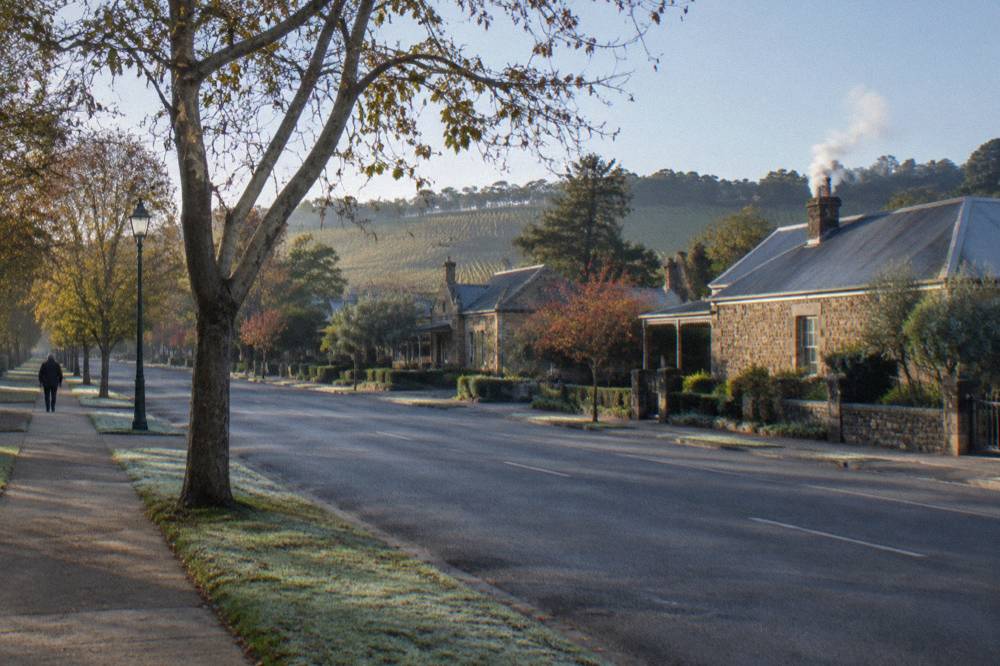
For where to sleep among these towns, the where to stay in the Barossa guide covers three hotels: Novotel Barossa Valley Resort at Rowland Flat, Mercure Barossa Valley Hotel in central Tanunda, and Vine Inn Barossa at Nuriootpa. Town choice is mostly a lunch-and-logistics decision rather than a quality one; every main town sits within about twenty minutes' drive of cellar doors in at least two directions.
Which Cellar Doors Appear On Guided Tours?
The guided days listed here cluster around a recurring cast: Chateau Tanunda and Kies Family Wines appear on the most stop lists, followed by Seppeltsfield, Langmeil, Yalumba and Maggie Beer's Farm Shop. Reading tour stop lists is the fastest honest way to shortlist cellar doors, because each operator has already done the grouping work of matching region, style and driving time.
Take the trio of small-group days as an example. The Four Wineries, Clubhouse Lunch tour from CP Tours and Charters lists Langmeil, Chateau Tanunda, Ubertas and Rusden, with drivers choosing four wineries from an itinerary list, standard tasting fees and a Tanunda Clubhouse lunch included. The Premium Small Group, Chocolate Tasting day from See Adelaide lists Kies Family Wines, Chateau Tanunda, Yalumba and Rosenvale, adding a private barrel-room tasting at Kies and a regional platter lunch. The Four Tastings, Seppeltsfield Village coach day from Benders Bus Tours lists Chateau Yaldara, Seppeltsfield, Hemera Estate and Browns Barossa Donuts, with a gourmet vineyard lunch. Same valley, three different groupings, three different days.
| Tour (decision name) | Format | Named winery stops on the listing | Lunch |
|---|---|---|---|
| Premium Small Group, Chocolate Tasting | Small group | Kies Family Wines, Chateau Tanunda, Yalumba, Rosenvale | Included, regional platter |
| Four Wineries, Clubhouse Lunch | Small group | Langmeil, Chateau Tanunda, Ubertas, Rusden | Included, Tanunda Clubhouse |
| Four Tastings, Seppeltsfield Village | Coach group | Chateau Yaldara, Seppeltsfield, Hemera Estate | Included, gourmet vineyard lunch |
| All Inclusive, Lunch and Coffee | Small group | Pindarie, Lambert Estate, Chateau Tanunda, Maggie Beer's Farm Shop | Included |
| Max 6 Guests, Restaurant Lunch | Small group max 6 | Barossa Valley cellar doors, Tanunda base | Included, multi-course restaurant |
| Hop-On Hop-Off, No Meal | Hop-on hop-off bus | Bethany Wines, Rusden and other stops at your choice | Not included |
The pattern to notice is that the touring groups overlap at the region's most visitable doors rather than its most obscure ones. Chateau Tanunda appears on at least five of the tours we list, Langmeil and Kies on several each. That repetition is not laziness; it reflects which estates can absorb a minibus, pour a structured tasting, and still leave you time at the next stop. The cellar-door grouping question is covered in more depth in the cellar doors and tour groups guide.
If you would rather not drive between stops at all, the drink-driving math settles it: full licence holders in South Australia must not drive at 0.05 blood alcohol or above, a first offence below 0.08 carries an expiation notice and 4 demerit points, and police can run random breath testing near any road. A day of tasting adds up faster than most visitors expect, which is the strongest single argument for the guided tours from Adelaide hub rather than a self-drive day.
What Do Tasting Fees Cost At Named Cellar Doors?
Verified published fees at named cellar doors run from about A$10 to A$30 per person for a standard flight. Jacob's Creek lists flights at A$15, A$20 and A$30 per person by tier, Kaesler's Premium Estate Tasting is A$20 per person, and Henschke tastings start from A$20. Every fee is cellar-door specific; there is no regional standard.
The fee question decides many a self-drive budget, so the verified numbers deserve their own table. Jacob's Creek publishes three tiers, with bookings essential and the last tasting slot at 3.30pm, and its flights are explicitly non-redeemable. Kaesler's A$20 fee is redeemable on a bottle purchase. Henschke starts from A$20, with the waiver or redemption applying to standard options but not always to premium or old-vine experiences, and its seated tastings run about an hour with bookings recommended for groups. Seppeltsfield's cellar door states that tasting fees apply and group tastings are limited to 6 people. "Free tastings" do not exist as a Barossa norm, and no fee is redeemable as a general practice; redemption is printed door by door or not at all.
| Cellar door | Published tasting fee | Notes from the operator's own page |
|---|---|---|
| Jacob's Creek | A$15 / A$20 / A$30 per person by tier | Non-redeemable, bookings essential, last slot 3.30pm |
| Kaesler | A$20 per person | Redeemable on bottle purchase, open 7 days 10am to 5pm |
| Henschke | From A$20 per person | Standard options waived or redeemed on purchase, premium not always |
| Seppeltsfield | Tasting fees apply | Group tastings limited to 6 people |
| Peter Lehmann | Not printed as a fee figure | Open Thursday to Monday, 10.30am to 4.30pm |
Guided tours change this arithmetic. Only six of the 26 tours listed here say outright that tasting fees are included. Among them: the Four Wineries, Clubhouse Lunch day folds standard tasting fees into a price from A$189 per person, and the Max 6 Guests, Restaurant Lunch small-group day covers tasting fees alongside a multi-course restaurant lunch from A$380 per person. Seventeen of the tours listed here do not say either way, and three state that tasting fees are not included. The rule is simple: check the listing, not the tour's name, because a name like "All Inclusive" tells you nothing about tasting fees. The full fee picture, including what a self-drive day costs once you add fees, lunch and fuel, is laid out in the Barossa wine tour cost guide.
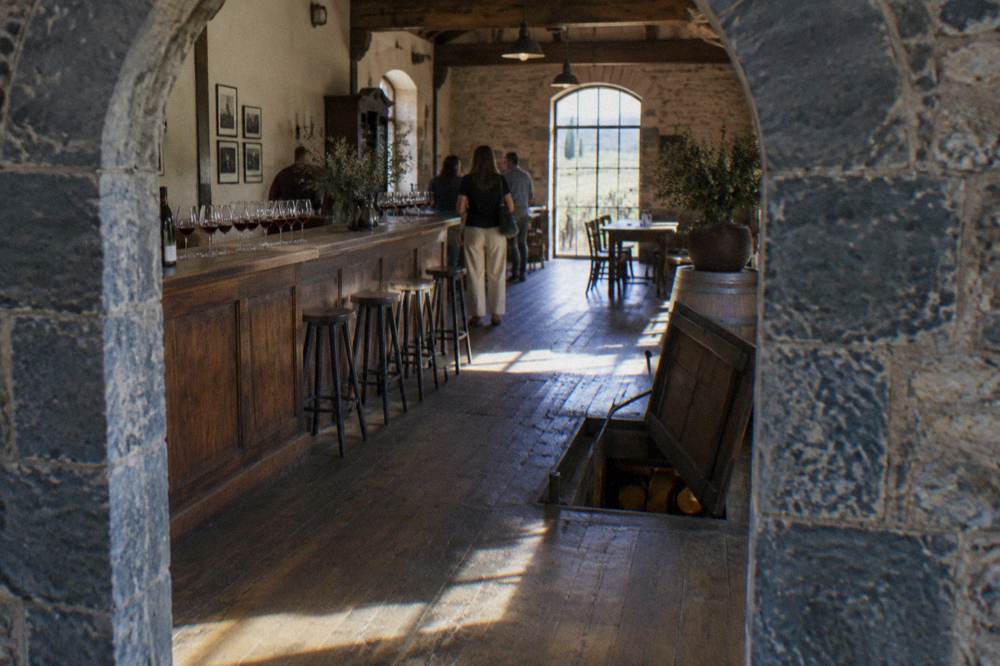
The premium end of the ladder is worth knowing about even if you skip it: Seppeltsfield's 100 Year Old Signature Experience, a Centennial Cellar tour with a taste of 100-year-old Para Tawny straight from the barrel and a multi-course lunch at FINO, is listed at about A$339 on the regional tourism site. It is an anniversary-laced estate, established 1851, whose 175th Series runs four Fridays in November 2026 as an anniversary celebration, not a new opening.
How Do You Build Your Own Shortlist Of Cellar Doors?
Start with the region, then the town, then three to five cellar doors within a short drive of that town, which is the number a full day realistically holds. Match the list to one grape story, valley-floor Shiraz or Eden Valley Riesling, rather than scattering across both. Then check each cellar door's own page for current hours and fees before you lock the route, because opening days vary widely across the zone.
A workable method looks like this. Day one, base on Tanunda, taste the floor-country reds: the estates that appear on the tour stop lists above are proven group-friendly doors, and several, Langmeil with its Freedom 1843 story, Chateau Tanunda with its historic buildings, Yalumba with its gardens, reward a self-guided visit just as much. Day two, if you have it, push toward Angaston and Eden Valley for Riesling and cooler reds. The how many wineries to visit in a day guide explains why four is the sweet spot and six is a blur.
The alternatives to a full coach or minibus day are worth a sentence each. The Hop-On Hop-Off, No Meal bus from Trail Hopper, from A$100 per person, runs an 8-hour loop between Barossa venues with transport, water and nothing else, leaving you to pick stops and pay tasting fees as you go; one guest review calls it "a fabulous and easy way to see some of the best spots in the Barossa". For a slower, closer look, the guided e-bike day from Angaston links Yalumba, Artisans of Barossa and the Barossa Valley Cheese Company on the sealed off-road Barossa Trail. And for a compact half-day anchor, the Private BMW Sedan tour packs five hours of wine-region touring from designated meeting points into from A$639 per group for up to four.
Red Or White First: How Do You Order A Day Of Tasting?
The standard tasting-room logic applies across the zone: sparkling and whites first, lighter reds next, and full-bodied Shiraz and fortifieds last, because a big red early flattens everything poured after it. Structured tastings at the heritage estates run to a guided sequence anyway, and cellar door staff will pour in the order the winemaker intended if you let them. Booking ahead matters most for groups and weekend slots, and Jacob's Creek makes bookings essential for all flights.
A day that mixes regions still works if you sequence by weight rather than geography. An Eden Valley Riesling poured before a valley-floor Shiraz shows the zone's range honestly; the reverse order buries the Riesling. Most guided days solve this by moving from lighter to heavier as the afternoon goes on, which is one quiet advantage of letting an operator set the route. It is also why the small-group format earns its price for many visitors: the driver tracks the sequence, the clock and the driving, and you track the glass.
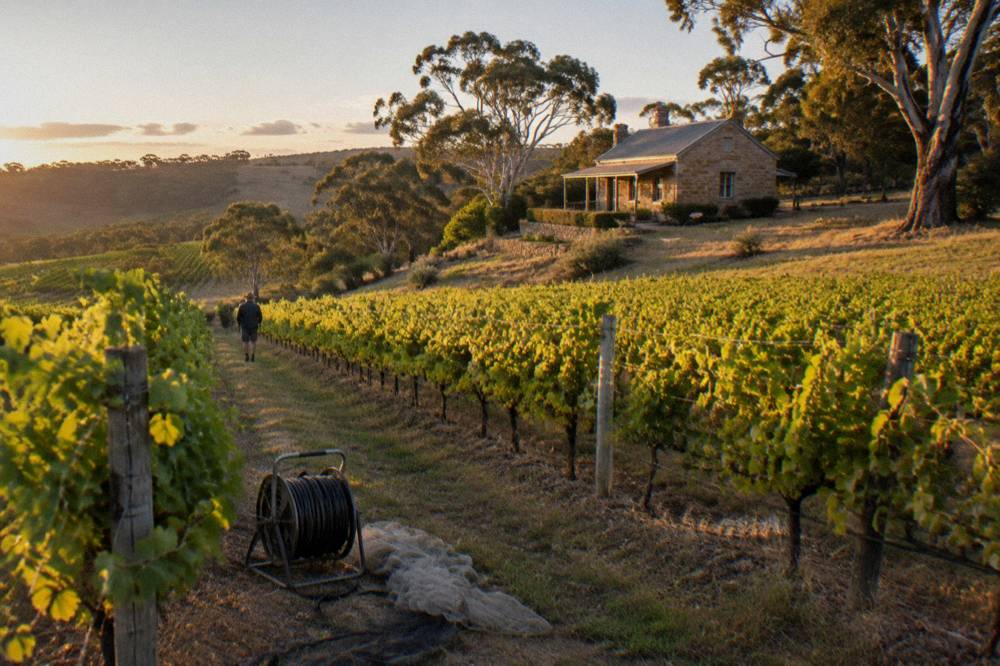
For visitors who want the region's red story told properly, the Barossa Shiraz guide follows the 60 percent variety from its 1840s plantings to the current vintage, and the best wineries on wine tours guide names the estates the tours favour and why. Whichever list you build, this site's own Barossa Valley Wine Tours pages exist to do the grouping work for you when the shortlist gets tiring.
Coach, Small Group Or Hop-On Hop-Off: Which Format Fits?
Coach days from A$175 per person suit first-time visitors who want the landmarks, Seppeltsfield village, Maggie Beer's Farm Shop, in one 8-hour sweep; small-group days from A$189 to A$380 add platter or restaurant lunches and quieter cellar doors; and the hop-on hop-off bus from A$100 per person suits independent travellers who want to pick their own stops. Private days, priced per group, run from about A$375 for the vehicle upward.
The formats differ most in what they let you control. A coach day, like the Four Tastings, Seppeltsfield Village tour from Benders Bus Tours, at 4.7 from 306 reviews, moves a large group through a fixed route with a gourmet lunch and artisan chocolate. A small-group day, like the Max 6 Guests, Restaurant Lunch tour at 5 from 112 reviews, trades the coach's landmarks for leather seats, tasting fees and a multi-course lunch with a premium beverage. The hop-on hop-off bus, 4.9 from 442 reviews, strips the day back to transport alone and hands every other decision back to you. The small-group Barossa tours hub compares that middle format in full.
Private touring is its own calculation because the price basis changes: per group, not per person. The Barossa Discovery Day from Barossa Bespoke Tours runs from A$750 per group for up to six, with Adelaide and Barossa pickup, an 8-hour tailored route, and neither lunch nor tasting fees included. The Private BMW Sedan day sits at the compact end. If comparing these with per-person tours, always state the basis, as the table below does.
| Tour (decision name) | Price as printed | Basis | Duration |
|---|---|---|---|
| Four Tastings, Seppeltsfield Village | From A$175 | Per person | 8 hours |
| Four Wineries, Clubhouse Lunch | From A$189 | Per person | 8 hours 30 minutes |
| Max 6 Guests, Restaurant Lunch | From A$380 | Per person | 8 to 9 hours |
| Hop-On Hop-Off, No Meal | From A$100 | Per person | 8 hours |
| Private Tailored Day, No Lunch | From A$750 | Per group, up to 6 | 8 hours |
| Flexible Private Luxury, No Lunch | From about A$375 | Per group | 8 hours |
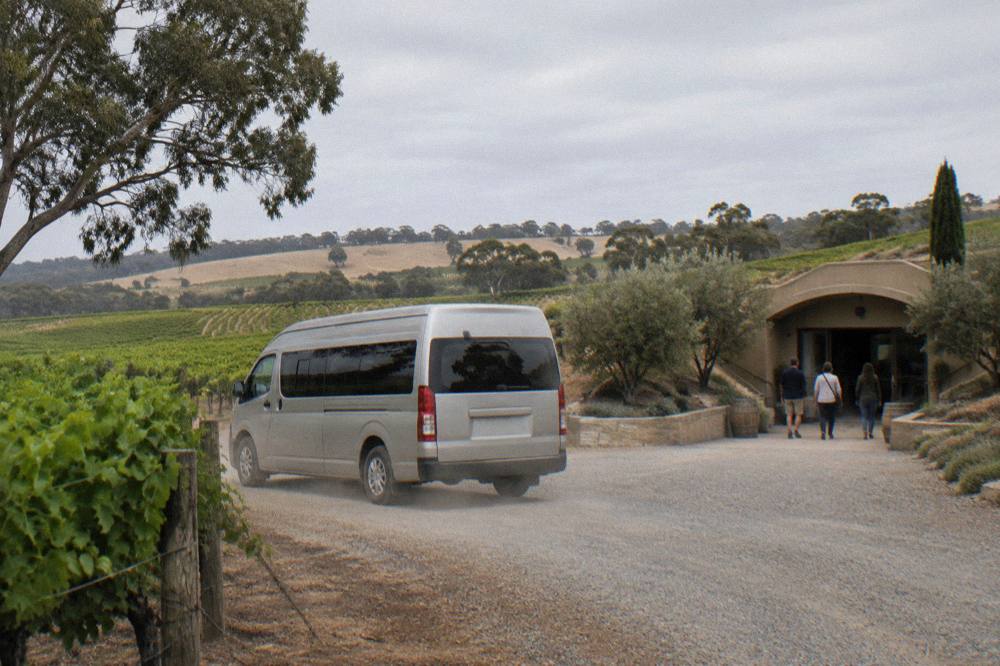
Cancellation terms also vary listing by listing, so never assume a blanket rule. The Premium Small Group, Chocolate Tasting day states free cancellation up to 24 hours before departure; the Voyager small-group day lists no standard refund window, so its live booking page terms govern. Checking the terms on the specific listing before you book is part of the planning, not an afterthought.
Common Questions About Barossa Valley Wineries
How many wineries are in the Barossa?
Over 150, using Barossa Australia's own figure for the whole GI zone. No official source publishes a separate cellar-door count, and several doors have closed in recent years, so treat any longer checklist with caution.
What is the difference between Barossa Valley and Eden Valley?
Barossa Valley is the warmer valley floor, 11,930 hectares under vine, 90 percent red varieties, led by Shiraz at 60 percent of crush. Eden Valley is the cooler high country, 2,292 hectares, 53 percent red, led by Riesling at 28 percent.
How many cellar doors can you visit in a day?
Three to five is the realistic range for a full day, allowing for tastings of 45 minutes to an hour, lunch, and driving time between towns. Guided tours typically build four winery stops into an 8-hour day.
Do Barossa cellar doors charge tasting fees?
Most do, and fees are set door by door. Verified published fees run from about A$10 to A$30 per person for a standard flight; Jacob's Creek flights run A$15 to A$30 per person depending on tier, and Kaesler's A$20 fee is redeemable on a bottle purchase. Six of the tours listed here include standard tasting fees in the price.
Which wineries do guided tours visit?
Chateau Tanunda, Kies Family Wines, Langmeil, Yalumba and Seppeltsfield appear most often on the itineraries of the tours listed here. Each tour's listing names its exact stops, and drivers on some small-group days choose from an itinerary list on the day.
Can you visit Penfolds, Grant Burge Meshach or Rolf Binder cellar doors?
No. The Penfolds Barossa Valley cellar door at Nuriootpa, the Grant Burge Meshach cellar door and the Rolf Binder cellar door all closed in 2025. Open alternatives on current tour routes include Langmeil, Chateau Tanunda, Yalumba, Kies Family Wines and Seppeltsfield.