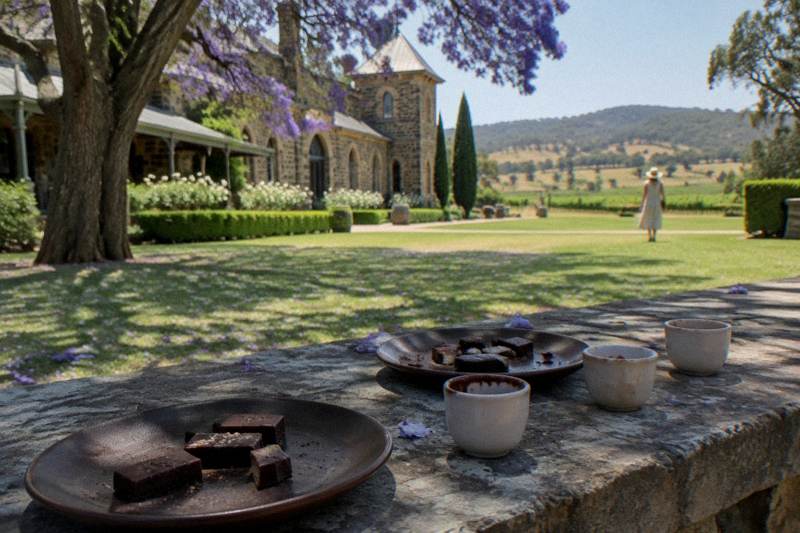
What To Wear On A Barossa Wine Tour By Season
The Barossa runs hot, dry summers and cool, wet winters, and what you wear shapes the day more than most visitors expect. This guide pairs the region's long-term climate record with the inclusions on the tours listed here, so you pack for the tour you actually booked.
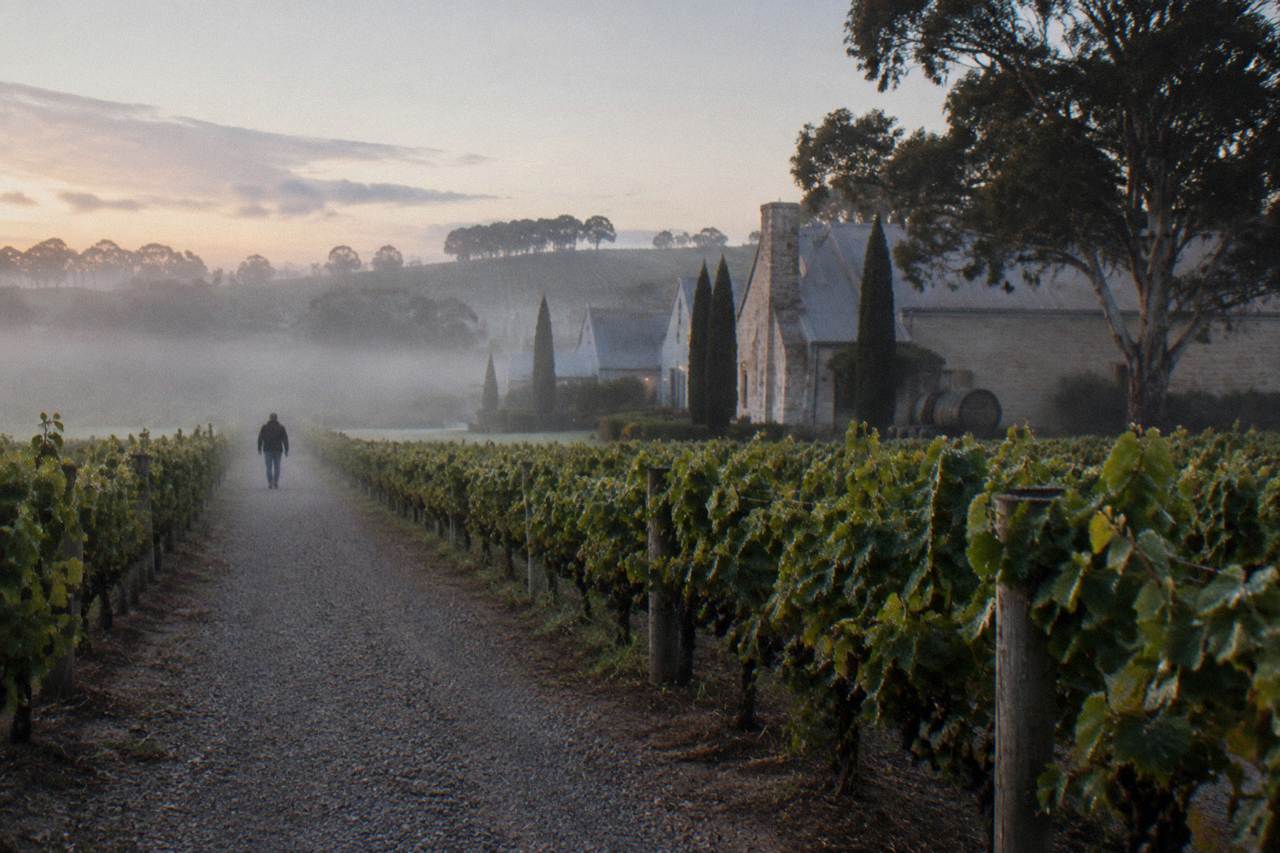
Short answer
Dress in layers year round. Long-term means at Nuriootpa run from 13.2°C to 28.8°C for daily maximums, with summer often hot and winter nights near 4°C. Most tours run in air-conditioned vehicles, so light clothing plus a warm layer works across formats, and closed shoes suit cellar doors, barrel rooms and the region's gravel and grass surfaces.
A Barossa tour day usually starts before the heat, moves between air-conditioned vehicles and open verandahs, and finishes after the evening cool arrives. That swing, plus the gravel paths, lawns and cellar floors between you and the tasting bench, is what your clothing has to survive. The region's own long-term climate record says the gap between a January afternoon and a July morning is bigger than most visitors pack for, and the difference between a good tour day and an uncomfortable one is often just a layer and the right shoes.
The honest answer about what to wear has three parts. The first is climate: what the Barossa's long-term averages actually do, month by month. The second is format: a hop-on hop-off bus day, a guided e-bike day and a private sedan day make very different clothing demands. The third is the cellar door itself, where the dress code question has a simpler answer than people fear. This guide works through all three, using the climate record and the listings' own stated inclusions, nothing guessed.
What Should You Wear To Go Wine Tasting In The Barossa?
Dress for a day that moves between extremes, not for one fixed temperature. The long-term daily maximum at Nuriootpa ranges from 13.2°C in July to 28.8°C in January, while overnight minimums fall to 4.4°C in the same midwinter month. A tour day touches both ends of that range in the cooler months, so layers beat any single outfit, whatever the season.
The default formula that works across most of the year is simple: a breathable base layer, something warm to pull on when the sun drops or the vehicle air-conditioning runs cold, and closed, comfortable shoes. Natural fibres or proper summer fabrics matter in January, when long-term means sit near 29°C and actual days can run well above the average. A hat and sunscreen belong in the bag from October through March, because several stops on the big day tours are outdoor photo stops: Mengler Hill Lookout appears on multiple listings, and the Avenue of Palms and scenic drives break up the cellar door visits.
There is no dress code at a Barossa cellar door that this site's research found stated anywhere. The practical constraint is physical rather than social. Cellar doors sit among working vineyards and wineries, with gravel driveways, grassed areas, tasting rooms that open onto terraces, and in some cases barrel rooms kept cool on purpose. Smart casual is the local norm and nobody will look twice at jeans, but stilettos on gravel and thongs on a bike path both fail for reasons that have nothing to do with style.
One more planning note: the day is long. The full-day tours listed here run 7 to 9 hours, and an 8-hour day that begins in a cool Adelaide morning and ends after a warm afternoon calls for at least one layer you can shed and carry. A light jacket or scarf you can tie to a bag solves this. It is the single most commonly under-packed item for wine regions, and the Barossa's climate record, with mean minimums below 10°C in every month from April through November, explains why.
What Does The Barossa Weather Actually Do, Month By Month?
The long-term record from the Bureau of Meteorology's Nuriootpa comparison station shows hot, dry summers and cool, markedly wetter winters. Mean daily maximums climb from 13.2°C in July to 28.8°C in January, while mean monthly rainfall triples from 18.8 mm in January to 66.2 mm in July. These are 46-year averages, not forecasts, and they are the right basis for packing.
These figures come from the Bureau of Meteorology's long-term averages for the Nuriootpa comparison station, a 46-year record, and the regional tourism body's own climate and seasons page describes the same Mediterranean pattern of hot dry summers and cooler wetter winters. Two packing implications jump out of the table. First, the rainfall column: May through September averages 49 to 66 mm a month, so a light rain shell earns its place in the bag for roughly half the year. Second, the minimum column: even in February the mean minimum is 13.9°C, and from April onward every month averages a single-digit overnight low. Evening terrace tastings and the drive home get cold in a way daytime planning misses.
| Month | Mean Max (°C) | Mean Min (°C) | Mean Rain (mm) |
|---|---|---|---|
| January | 28.8 | 13.6 | 18.8 |
| February | 28.6 | 13.9 | 18.5 |
| March | 25.7 | 11.8 | 22.2 |
| April | 21.4 | 9.0 | 38.2 |
| May | 17.0 | 6.7 | 55.0 |
| June | 14.2 | 5.1 | 56.3 |
| July | 13.2 | 4.4 | 66.2 |
| August | 14.3 | 4.8 | 63.6 |
| September | 16.8 | 5.9 | 60.0 |
| October | 20.2 | 8.0 | 49.4 |
| November | 23.8 | 9.9 | 29.3 |
| December | 26.3 | 11.8 | 24.3 |
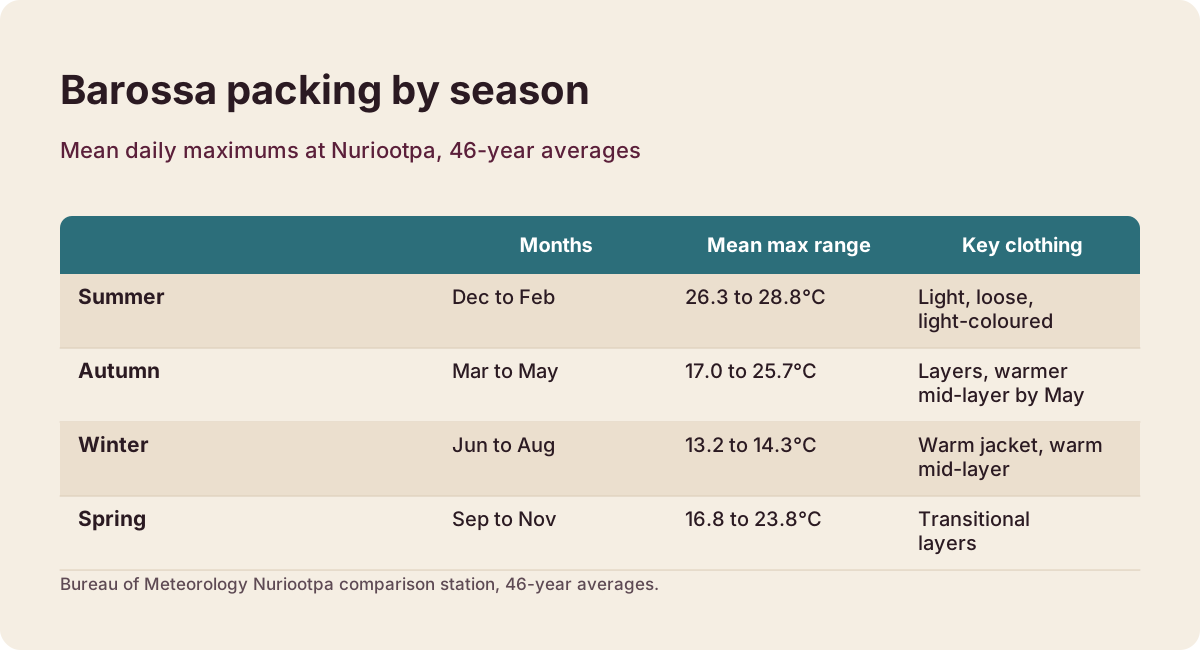
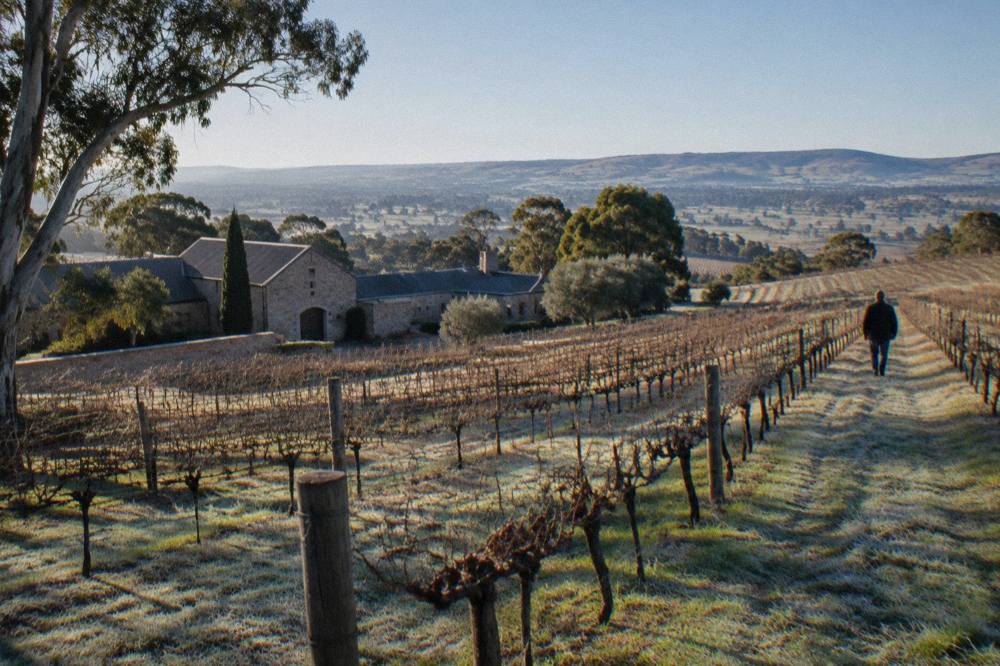
The seasonal packing logic follows directly from the table. Summer days are hot and dry and the problem is sun, while winter days are mild on paper but cold at the edges and wet enough to matter. Spring and autumn sit in between, which is exactly why they are the easiest seasons to over-pack for and the most important ones to layer for. The sections below translate the numbers into actual clothing, and the summary table condenses them into one packing reference.
| Season | Months | Mean max range | Key clothing | Extras |
|---|---|---|---|---|
| Summer | Dec to Feb | 26.3 to 28.8°C | Light, loose, light-coloured | Sun hat, sunscreen, sunglasses, one layer for air-conditioning |
| Autumn | Mar to May | 17.0 to 25.7°C | Layers, warmer mid-layer by May | Rain shell from April, closed shoes |
| Winter | Jun to Aug | 13.2 to 14.3°C | Warm jacket, warm mid-layer | Gloves, beanie, waterproof-capable shoes |
| Spring | Sep to Nov | 16.8 to 23.8°C | Transitional layers | Rain shell early season, sun protection by November |
If you are still choosing the tour itself before you choose the outfit, these three formats cover the clothing spectrum from fully sheltered to fully outdoors.
What Should You Wear In Summer, From December To February?
Pack for heat first and everything else second. Mean maximums of 26.3°C to 28.8°C across the three summer months, with monthly rainfall under 25 mm, mean dry air and strong sun. Light, loose, light-coloured clothing, a proper sun hat, sunglasses and sunscreen matter more than any fashion choice, and a warm layer still belongs in the bag for air-conditioned vehicles and evenings.
The summer catch is the contrast, not the heat itself. The mean minimum in December is 11.8°C and in January 13.6°C, so a day that begins with an early pickup from an Adelaide hotel can start cool enough to want a jacket on the vehicle, peak hot at the midday cellar door, and cool again by the return leg. The listings themselves explain the pattern: many of the day tours state air-conditioned vehicles among their inclusions, including the Barossa Valley Cellar Door Small Group Tour, the All Inclusive Barossa Valley Food and Wine Tour and the Barossa Valley Hop-On Hop-Off Wine Tour, all of which list air-conditioned transport on their pages. Air-conditioning is a comfort feature on the road and a reason to carry a layer, because the temperature step from a cooled coach to a 29-degree verandah is the jolt your body notices.
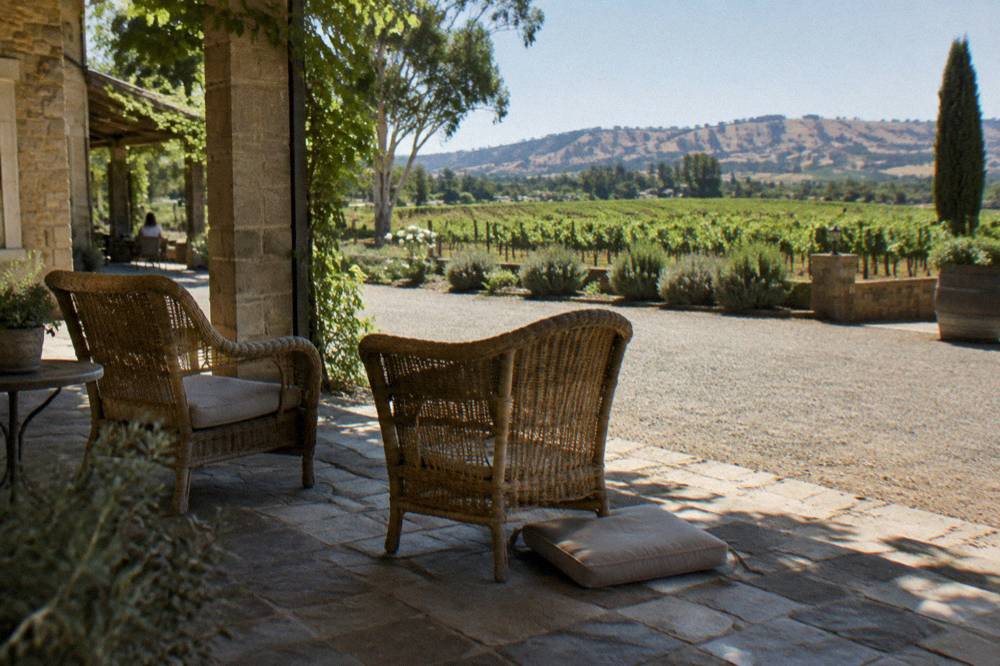
Footwear in summer is about surfaces. Cellar door forecourts, lawns at lunch venues and lookout photo stops all involve walking on uneven or soft ground, and several summer tour days include outdoor sightseeing stops listed by name, such as Mengler Hill on the All Inclusive tour's itinerary. Closed sandals with grip or light trainers handle all of it. Open thongs do not survive a day that mixes gravel driveways with a walk across sun-baked pavement, and the region's dry summer means dust sits on every surface.
A note on fabric and colour. Light colours and breathable weaves do real work in the Barossa summer because the sun is the day's main adversary, not the temperature number alone. Long-sleeved loose shirts can actually be cooler than short sleeves in direct Australian sun, a habit worth borrowing from people who work outdoors here. And if your summer day includes chocolate stops, and several tours list Melba's Chocolates or the Barossa Valley Chocolate Company on their itineraries, a small bag rather than pockets keeps the purchases intact.
What Should You Wear In Autumn, From March To May?
Autumn is the layering season, and the numbers say so clearly. Mean maximums slide from 25.7°C in March to 17.0°C in May while mean minimums fall from 11.8°C to 6.7°C, and rainfall doubles between March and April, from 22.2 mm to 38.2 mm. A light jacket, a warm mid-layer for May, and a compact rain layer from April onward are the working formula.
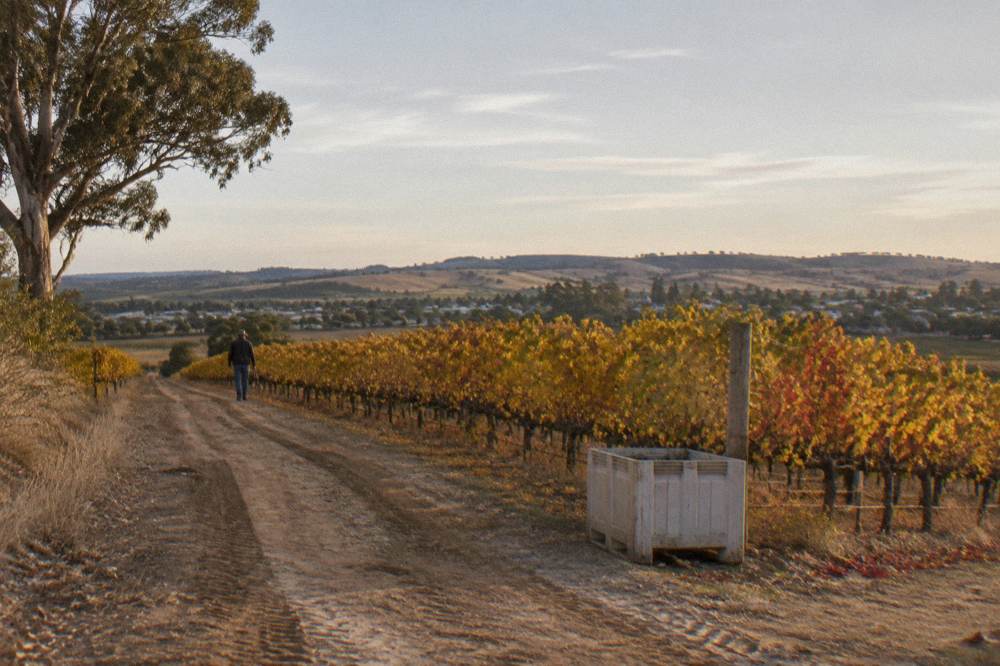
March is the mildest compromise month in the record, warm afternoons, cool nights, low rainfall on average. April brings the first real change: the mean minimum drops to 9.0°C and mean rainfall jumps to 38.2 mm. By May the region averages 6.7°C overnight and 55.0 mm of rain, which is winter-adjacent. What that means for a tour day is that an autumn visitor experiences the widest swing of any season: warm enough to lunch outside in March, cold enough to want gloves for an early vineyard photo stop by late May. Layers again, but heavier ones as the season runs.
One autumn-specific point comes from the vintage calendar rather than the climate table. Harvest in the Barossa Valley runs about February to April, and the 2026 vintage report on the regional wine body's site describes a later-than-usual season with much of the fruit in the winery before Easter. Tour days that pass working wineries in autumn can coincide with harvest activity, which occasionally means brief waits at cellar doors while fruit moves, and definitely means dust and equipment around working sites. Practical, washable clothing fits that reality better than anything delicate.
Rain strategy for autumn deserves one sentence of realism. A compact rain shell or foldable umbrella covers the average case in April and May, but a day of steady rain is possible, and waterproof footwear stops a wet morning defining the whole afternoon. The monthly climate and crowds question pairs well with this section if you are still choosing dates, and the Barossa wine tasting fees guide covers the costs waiting at the cellar doors you will be dressed for.
What Should You Wear In Winter, From June To August?
Winter is genuinely cold at the edges and wet on average. Mean maximums sit at 13.2°C to 14.3°C, mean minimums at 4.4°C to 5.1°C, and June through August average 56.3 to 66.2 mm of rain each, the wettest stretch of the year. A proper warm jacket, closed waterproof-capable shoes and a warm hat transform a winter tour day from endurance to enjoyment.
The number visitors underestimate is the minimum. A mean overnight low of 4.4°C in July means morning pickups happen in genuine cold, and cellar door verandahs, which are glorious in summer, become somewhere you want a coat in July. Midday is mild on paper at 13 to 14°C average maximum, but that average includes both bright still days and cold wet ones, and the rainfall column says the wet ones are common. Dressing like you would for a cool European spring day, rather than an Australian summer day, is the right mental shift. Other pages covering the same trip are gathered on Barossa Valley Wine Tours.
Winter also changes what you want from a tour format, and the stated inclusions on each listing matter here. The Barossa Valley Wine Tour with Max 6 Guests and Restaurant Lunch states luxury hotel pickup and drop-off and heated comfort through its transfers, which is worth a lot in July. The small-group Voyager tour from Adelaide lists hotel pickup and drop-off and lunch among its inclusions. And on the private side, the Barossa Valley Private Luxury Tour Full Day picks up from your accommodation with a fully flexible, bespoke itinerary and wine tasting fees at the selected wineries included in the price, from about A$375 per group, which in winter means minimal time standing outdoors between stops.
Beyond the coat, winter packing should respect the indoors-outdoors rhythm of the day. Cellar doors and restaurants are heated; photo stops, walks between buildings and any outdoor element are not. A mid-layer you can shed indoors, gloves you can drive and photograph in, and shoes with real tread for wet paved surfaces and lawns complete the kit. An umbrella is fair game, but a hooded jacket keeps your hands free at tasting benches, which matters more than it sounds on an eight-hour day.
What Should You Wear In Spring, From September To November?
Spring warms fast and stays wet early. Mean maximums rise from 16.8°C in September to 23.8°C in November while mean minimums climb from 5.9°C to 9.9°C, and September still averages 60.0 mm of rain. September wants a winter-adjacent kit, October is transitional, and November behaves like early summer, with sun protection back on the list by mid-season.
The rainfall gradient is the spring story. September averages 60.0 mm, essentially a winter month, and November averages 29.3 mm, less than half that. The temperature gradient runs the same direction: a 7°C climb in mean maximum across the three months. What that means practically is that a September visitor should pack as if for winter with hope, and a November visitor should pack as if for summer with a jacket. October sits between, and layers carry it comfortably.
Spring is also the season where the outdoor formats come back into their own. The guided e-bike day, Experience Barossa Valley by E-bike, runs 6 hours 30 minutes and includes an artisan platter lunch with wine tastings at Yalumba, coffee and cake at the Barossa Valley Chocolate Company and a rarities tasting at Artisans of Barossa, from about A$335 per person, and a spring day with mean maximums in the high teens to low twenties is the climate sweet spot for it. The same logic applies to self-guided wandering in Tanunda or Angaston between tour days.
For a spring day of any length, the packing list is the autumn list shifted warmer: a breathable layer, a warm layer that packs small, a rain shell early in the season, and sun protection by November. The Barossa's spring winds can also be real, and a hat that ties on beats one that blows across a vineyard, a small point that becomes a large one at Mengler Hill or any open lookout.
What Shoes Work On A Barossa Wine Tour?
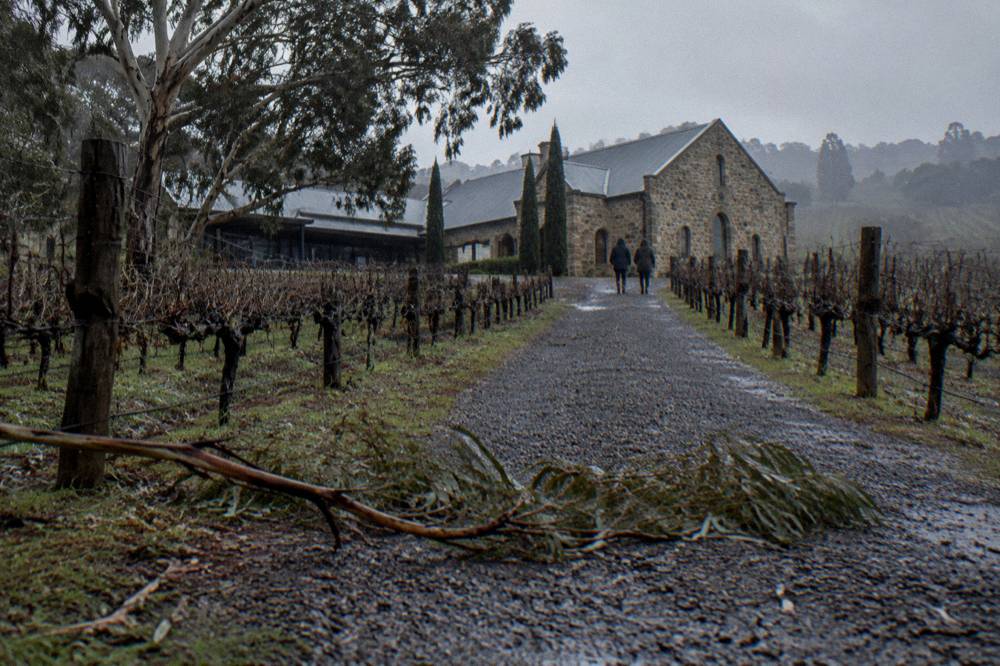
Closed, comfortable, grippy shoes are the answer for nearly every tour format, and the inclusions on these tour pages show why. Tours move across gravel forecourts, lawns, cellar floors and, on the e-bike day, a sealed rail trail, and the barrel room at Chateau Tanunda appears on multiple itineraries as a stop. Nothing in the research found any cellar door stating a footwear requirement, but the surfaces make the rule for you.
Start with the formats. The hop-on hop-off bus day, from A$100 per person, moves you between wineries and venues in an air-conditioned vehicle with transport stated among its inclusions, but every hop is on foot, and comfortable shoes are what make the freedom worth having. A reviewer on that listing put the day plainly: "This is a fabulous and easy way to see some of the best spots in the Barossa." Easy is a footwear outcome. The e-bike day is firmer still: a guided ride of 6 hours 30 minutes means proper shoes, and the listing includes use of a helmet among its stated inclusions. Enclosed shoes are the obvious companion to a helmet on any cycling day.
The barrel room question has a temperature answer rather than a rule. Tasting rooms and barrel stores at working wineries are kept cool, and multiple listings name Chateau Tanunda, where the premium small-group tour includes a structured tasting and a self-guided tour of the historic buildings. Cool stone buildings in any season reward closed shoes and socks, a point that reads as over-cautious in January and obvious by May. For private touring, the Barossa Discovery Day private wine tour, from A$750 per group for up to 6, and the private BMW sedan tour, from A$639 per group for up to 4, both keep walking distances short, but cellar forecourts remain gravel.
| Tour format | Example tour | What the listing states | Footwear reality |
|---|---|---|---|
| Hop-on hop-off bus | Barossa Valley Hop-On Hop-Off Wine Tour | Air-conditioned vehicle, transport between venues | Comfortable walking shoes, frequent short walks on gravel and paving |
| Guided e-bike | Experience Barossa Valley by E-bike | 6 hours 30 minutes, helmet included, artisan platter lunch | Enclosed shoes suitable for cycling |
| Small group with lunch | Premium Barossa Small Group Tour | Air-conditioned day, Chateau Tanunda self-guided tour included | Closed shoes for cool buildings and forecourts |
| Private sedan or vehicle | Private Barossa Valley Wine Region Tour | BMW 5 series sedan, designated meeting points | Any comfortable shoe, short walks only |
| Coach group | Experience Hahndorf & Barossa | Coach transport, hotel pickup from City and Glenelg hotels | Comfortable shoes for towns, farms and cellar doors |
Does Your Tour Format Change What You Should Wear?
Yes, and more than most packing guides admit. Of the 26 tours listed on this site, 18 spell out pickup in some form and 8 leave it unstated, which changes how much outdoor waiting a day involves. Formats span air-conditioned coaches, an e-bike day, hop-on hop-off buses and private vehicles. Match the outfit to the format you actually booked, not to a generic wine-tour picture.
The coach and small-group days are the most forgiving. Listings like the Sip, Savour & Stroll: Barossa to Hahndorf day state pickup from city and Glenelg hotels, air-conditioning and lunch at Kies Family Wines among the inclusions, so the clothing question reduces to comfort at stops. A reviewer on that tour described the guide as "friendly, knowledgeable, and made the whole trip fun and stress-free", and low-stress days are partly a clothing outcome. The same logic covers the Hahndorf and Barossa gourmet lunch day, which includes a visit to a strawberry picking farm among its stops, a rare clothing case where you might reasonably want shoes you do not mind getting dusty.
The self-directed formats demand the most from an outfit. The Taste & Graze Food and Wine Trail, from A$90 per person for a four-hour self-guided experience covering three venues, and the hop-on hop-off day both leave you outdoors between venues for longer stretches than a coach day ever does. Sun protection in the warm half of the year and a real rain layer in the wet half are not optional extras on those formats, they are the difference between savouring and enduring. The getting to the Barossa guide is the companion read if you are also weighing a self-drive day, with the drink-driving limit explained plainly.
A word on the drink-driving question, because it changes what a driving outfit needs to be. Full licence holders in South Australia must not drive with a blood alcohol concentration of 0.05 or more, and the state's licensing authority sets out the penalties on its official drivers' handbook page. Tasting days and driving do not mix, which is a quiet argument for the tour formats above and the reason so many visitors hand the keys over entirely.
Should You Dress Up For The Cellar Door?
No cellar door on this site's research list states a dress code, and smart casual is the practical ceiling anywhere in the region. The Premium Barossa Small Group Tour, with 4.9 from 1697 reviews, includes a private barrel room tasting at Kies Family Wines and a self-guided tour at Chateau Tanunda, and nothing about either demands more than neat, comfortable clothing you can walk and stand in for hours.
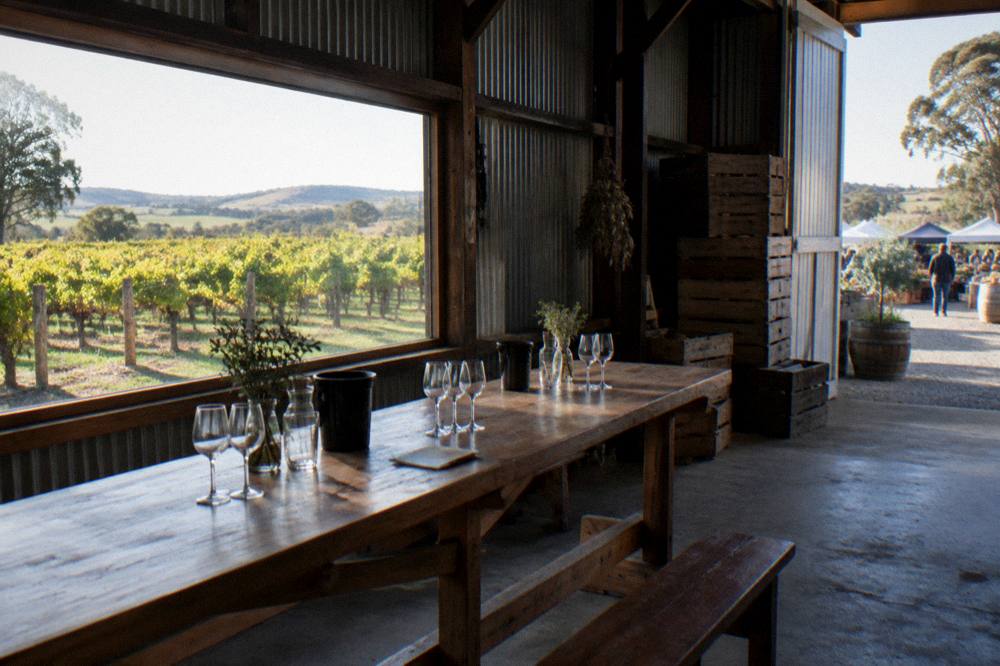
The region's character does the relaxing. The Barossa's cellar doors range from historic stone estates to shed-style tasting rooms beside working wineries, and the day moves constantly between them, so an outfit that photographs well at a barrel bench and shrugs off dust on a winery path is the real win. A collared shirt or a neat dress with a practical layer covers every venue on every itinerary this site lists. The one thing to skip is brand-new stiff shoes: an eight-hour day with five winery stops, like the Four Wineries day that includes tasting fees and a clubhouse lunch, punishes anything unbroken-in.
For visitors pairing a tour with a longer stay, the practical evening wardrobe follows the same climate logic as the daytime one, and the where to stay in the Barossa guide picks up the accommodation side of the trip. The regional tourism body's planning pages are the right place to confirm current venue details before you travel.
Whatever the season and whatever the format, these three tours bracket the clothing spectrum from sheltered coach day to open-air e-bike day.
Common Questions About What To Wear On A Barossa Wine Tour
What should I wear on a Barossa wine tour?
Layers and closed shoes. Long-term mean maximums range from 13.2°C in July to 28.8°C in January, and most tours run in air-conditioned vehicles, so a breathable base, a warm layer and a jacket cover every season. Closed, comfortable shoes handle gravel forecourts, lawns and cool barrel rooms.
Can I wear white or light colours wine tasting?
You can, with a caveat: red wine spills and dusty vineyard paths are both real on tour days. If white clothing matters to you, keep a dark layer for the tasting stops or accept the risk. Nothing in any listing this site reviewed imposes a colour or formality rule.
Are sandals or heels okay at Barossa cellar doors?
Heels are a poor match for gravel driveways and grassed areas, which are common at cellar doors. Flat sandals with grip are workable in summer, though enclosed shoes are more comfortable across a full seven-to-nine-hour tour day and are the clear choice for the e-bike format, where a helmet and hours in the saddle make enclosed shoes the sensible pairing.
Do I need a rain jacket for a Barossa tour?
From April through October, yes. Mean monthly rainfall at Nuriootpa averages 38.2 mm in April, peaks at 66.2 mm in July and stays at 49.4 mm in October. A compact rain shell packs small and covers the average case in the wetter months.
Is there a dress code at Barossa cellar doors?
None that this site's research found stated anywhere. Smart casual is the local norm everywhere from Chateau Tanunda to shed-style tasting rooms. Comfort and the ability to walk and stand for hours matter more than formality on any tour day.
What should I wear for the e-bike wine tour?
Treat it as a light cycling day: breathable clothing you can move in, enclosed shoes, sunglasses and sun protection, plus a layer for cool starts. The listing for Experience Barossa Valley by E-bike includes a helmet and runs 6 hours 30 minutes with an artisan platter lunch, so dress for riding with a comfortable margin, not for the cellar door photo.