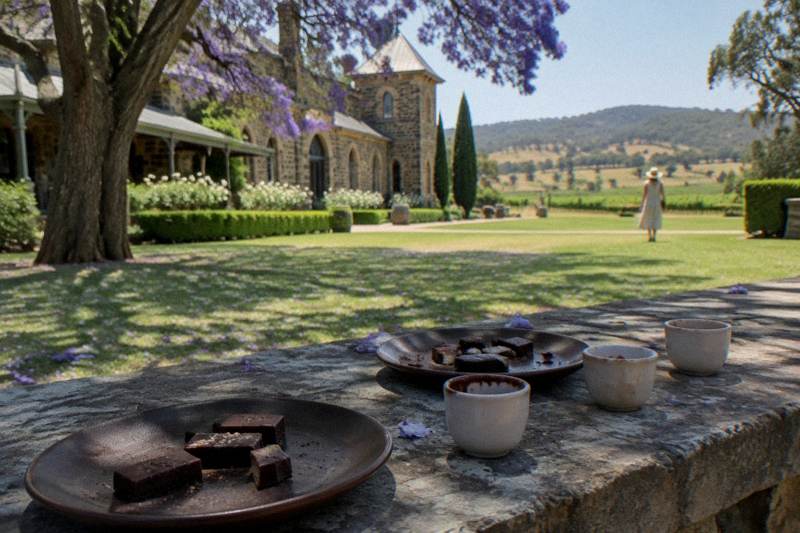
What Is The Best Month To Visit Barossa Valley?
A month by month guide to choosing when to visit the Barossa Valley, using long-term Nuriootpa weather means, harvest timing, the 2026 vintage report and the 2027 Vintage Festival dates.
What Is The Best Month To Visit Barossa Valley?
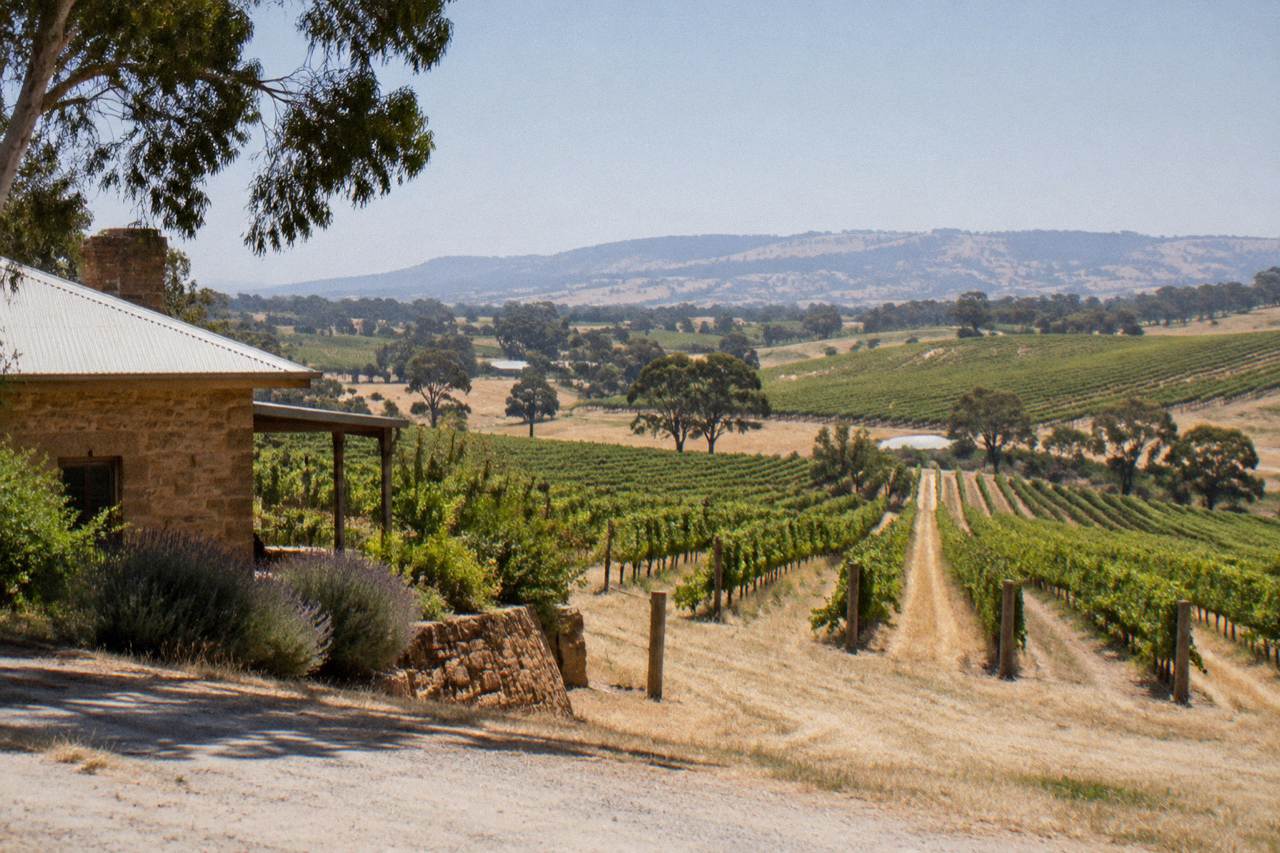
There is no single best month, but March and April make the strongest case: harvest runs about February to April, the 2026 vintage report describes concentrated, textural reds, and the next Barossa Vintage Festival runs 21 to 25 April 2027. If you want mild weather without harvest crowds, October and November offer long-term mean maximums of 20.2 and 23.8 degrees at Nuriootpa. Cellar door tours run year round, so the month matters less than you might think.
That answer comes with an honest caveat: no month guarantees anything. The weather figures in this article are long-term means from the Bureau of Meteorology's Nuriootpa comparison station, which recorded 46 years of data before it closed in 1999, so they describe the climate's usual shape rather than any forecast. The Barossa has a Mediterranean pattern, hot dry summers and cooler wetter winters, and the regional tourism body lays out the seasons on its own climate page at barossa.com.
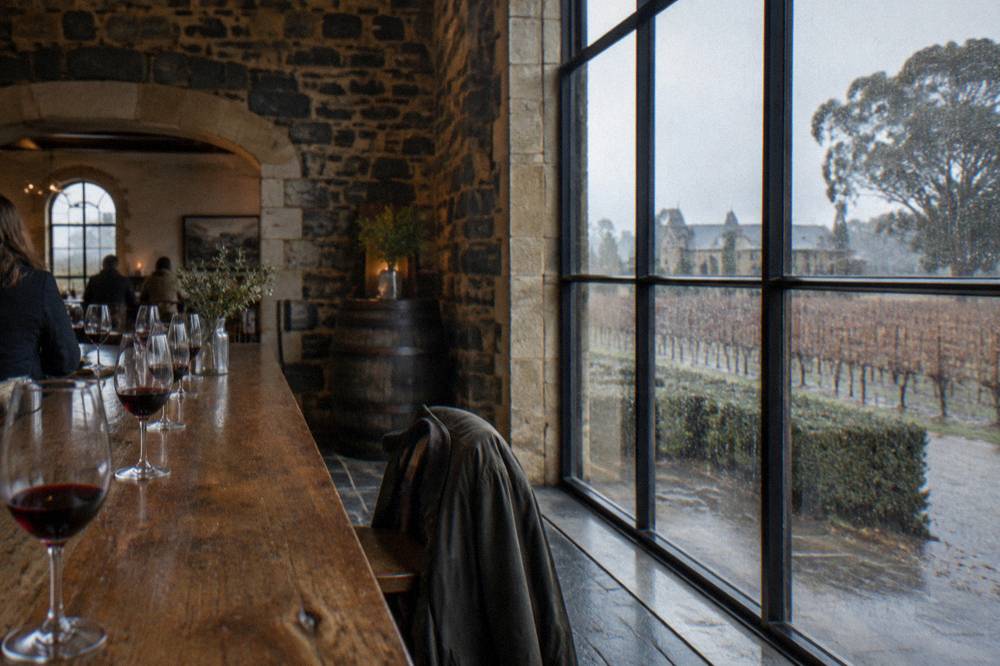
What the month really changes is the character of the trip. Visit in March and you may share Tanunda's main street with pickers and tractors moving fruit. Visit in July and you get misty mornings, open fires at cellar doors, and a quieter pace. Visit in late April 2027 and you land in the middle of the Vintage Festival, five days of long lunches, masterclasses, markets, parades and concerts.
The month also changes which tour style suits you. A guided e-bike day is far more appealing in October than in the height of summer heat. A hop-on hop-off bus day, where you choose your own wineries, works in any season. The eight-hour Premium Barossa Small Group Tour with its regional platter lunch and chocolate tasting stop runs the same route whenever you book it. This site's planning coverage, including the month by month detail below, sits alongside guides like Barossa Valley Wine Tours and the deeper pieces on how many days you need in the Barossa Valley.
It also pays to know a little of the region's shape before you pin a date. The Barossa sits about 70 km north-east of Adelaide, an hour's drive, with over 150 wineries across two regions, the warmer Barossa Valley floor and the cooler Eden Valley above it. Colonel William Light named the Barossa Range in 1837 after the Barrosa ridge in Andalusia, the site of an 1811 Peninsula War battle he fought in, and the spelling with two s's came from a clerical error that stuck. None of that changes the weather, but it does explain why a single valley holds so many contrasting wine styles within a short drive.
If you already know your dates, the three tours below are the flexible all-rounders that work across the calendar.
What Does The Weather Actually Do Month By Month?
The long-term means from the Nuriootpa station show January and February averaging 28.8 and 28.6 degree maximums with under 19 mm of rain each, while June and July average 14.2 and 13.2 degree maximums with 56 to 66 mm of rain. The shoulder months sit between: April averages 21.4 degrees, October 20.2. Rainfall is strongly winter-weighted, with the driest stretch from December through February.
Those numbers come from the Bureau of Meteorology's long-term averages table for the Nuriootpa comparison site, station 023321, which you can read in full at bom.gov.au. Treat them as the climate's baseline, not a promise about the week you book.
| Month | Mean maximum (C) | Mean minimum (C) | Mean rainfall (mm) |
|---|---|---|---|
| January | 28.8 | 13.6 | 18.8 |
| February | 28.6 | 13.9 | 18.5 |
| March | 25.7 | 11.8 | 22.2 |
| April | 21.4 | 9.0 | 38.2 |
| May | 17.0 | 6.7 | 55.0 |
| June | 14.2 | 5.1 | 56.3 |
| July | 13.2 | 4.4 | 66.2 |
| August | 14.3 | 4.8 | 63.6 |
| September | 16.8 | 5.9 | 60.0 |
| October | 20.2 | 8.0 | 49.4 |
| November | 23.8 | 9.9 | 29.3 |
| December | 26.3 | 11.8 | 24.3 |
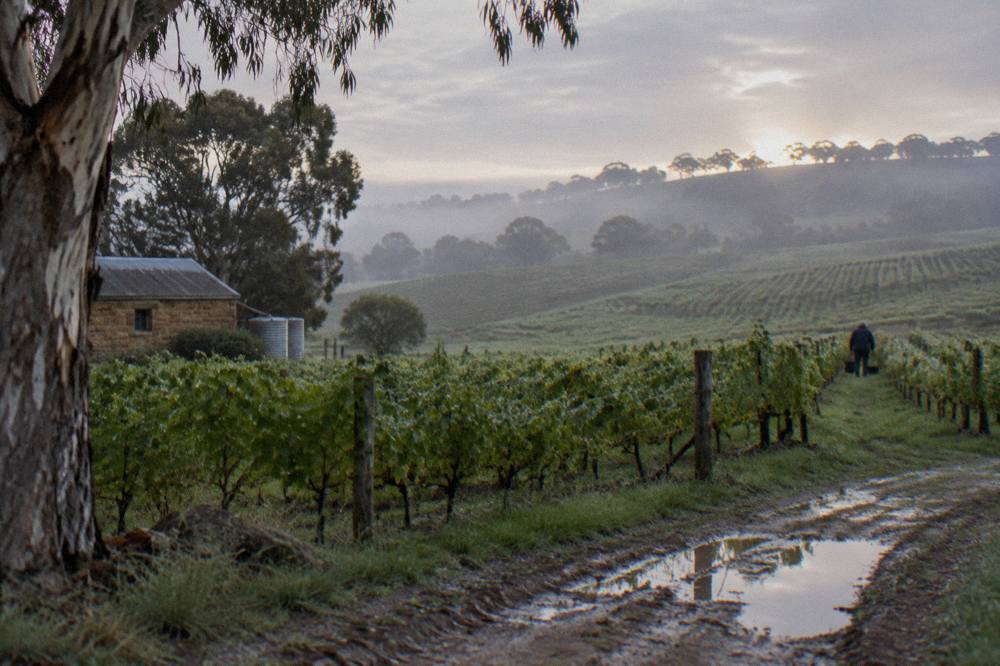
Read the table as three blocks. Summer, December to February, is hot and dry: fine for cellar door days with air-conditioned transport, harder for anything self-powered. Winter, June to August, is cool and the wettest stretch, with July the single wettest month at 66.2 mm on average. The shoulder seasons, March to May and September to November, hold the mild middle ground, and that is where most of the year's best touring weather sits.
Note the minimums as well as the maximums. Even in January the mean minimum is 13.6 degrees, so summer evenings cool off sharply, which is why outdoor long lunches work late into a March afternoon and why a winter morning tasting room feels genuinely cold at 4.4 degrees mean minimum in July. Pack layers in the cooler half of the year and sun protection in the warmer half; the region's dry summers mean the heat is rarely humid, but it is real.
One practical note for anyone comparing regions: the same shoulder logic applies across South Australia's wine country, and if you are weighing the Barossa against its coastal rival, the Barossa or McLaren Vale comparison covers the differences in style, distance and landscape. McLaren Vale sits closer to Adelaide, roughly 40 minutes against about an hour to the Barossa, which can matter if you are short on time.
When Is Harvest And Why Does It Matter For Your Month?
Harvest in the Barossa Valley runs about February to April, and the 2026 vintage arrived later than usual, with much of the fruit in the winery before Easter. The 2026 vintage report describes yields considerably below average but reds that are concentrated and textural, with Shiraz the standout. Visiting during harvest means energy in the towns and machinery in the vineyards; visiting after it means the winemakers have time to talk.
The vintage report itself, written by Louisa Rose of Hill-Smith Family Estates and published on the regional site at barossa.com, makes clear how unusual the run-up was. Calendar-year 2025 brought 331 mm of rain at Nuriootpa, 77 percent of average, the third dry year in a row. Then March 2026 delivered 56 mm, nearly three times the monthly average, which brought some splitting and disease risk but also thinned yields further. Quality held, and the report's verdict on the reds is the reason a 2026 Barossa Shiraz is worth cellaring.
For your month choice, harvest cuts two ways. February and March put you among the action: trucks of Shiraz, the smell of fermentation around the wineries, and the sense that the region is at work. April and May give you the aftermath: softer light, autumn colour on the vines, and cellar door staff with a new vintage to pour. Shiraz makes up 60 percent of the Barossa Valley's crush tonnes in the 2026 Wine Australia snapshot, so the red story is the region's story. If you're curious whether that Shiraz-heavy reputation holds up, our data-backed assessment of Barossa wine quality weighs the old-vine claims against the evidence.
The old-vine thread deepens it. The oldest continuously productive Shiraz vines in the region are believed to date to 1843 at Langmeil and 1847 at Turkey Flat, and Langmeil's own Freedom 1843 block draws visitors specifically to see vineyard that survived more than 180 harvests. Those vines fruit in the same February to April window as everything else, so a harvest-month visit is also the month those blocks get picked.
If tasting rather than timing is your priority, a structured day helps. The Barossa Valley Cellar Door Small Group Tour from CP Tours and Charters includes standard tasting fees and a clubhouse lunch, rated 4.8 from 545 reviews, from A$189 per person with hotel pickup and return. It is the kind of day that works in any month, and free cancellation is available with the exact terms shown on the listing.
Which Months Suit Which Tour Styles?
Hot months, December to February, favour air-conditioned small group and coach days with minimal walking. Mild months, March to May and September to November, suit e-bike tours, walking between close cellar doors and outdoor lunches. Cool winter months favour short scenic flights, indoor tastings and hop-on hop-off days where the bus does the work. Every tour style here is bookable year round; the month only changes how comfortable each one feels.
The clearest example is the e-bike day. Experience Barossa Valley by E-bike from Bike About runs about six and a half hours from Angaston, taking in Yalumba, the Barossa Valley Chocolate Company, Artisans of Barossa and the Barossa Valley Cheese Company, with an artisan platter lunch and tastings, from about A$335 per person. On a 23.8 degree November mean maximum that is a pleasure. In the 28.8 degree January mean, with the summer sun on sealed trail, it becomes a test of stamina. The Barossa Trail that carries much of the riding is a sealed off-road rail trail, which keeps you off traffic but not off the heat.
The hop-on hop-off bus day is the opposite: weather barely touches it. The Barossa Valley Hop On Hop Off Wine Tour from Trail Hopper, rated 4.9 from 442 reviews and from A$100 per person, moves you between wineries in an air-conditioned vehicle with bottled water, and you choose where to hop off. One guest review on the listing puts it well: "This is a fabulous and easy way to see some of the best spots in the Barossa. Highly recommend you make Bethany Wines and Rusden Wines two of your stops!" Note that tastings and lunch are not included on that one, so budget for cellar door fees as you go, and the tasting fee landscape is covered in detail in the Barossa Valley tasting fees guide.
| Months | Long-term feel | Tours that suit |
|---|---|---|
| December to February | Hot, dry, mean maximums 26.3 to 28.8 C | Coach and small group days with air-conditioning, helicopter flights |
| March to May | Mild to cool, 17.0 to 25.7 C, autumn colour | E-bike tours, harvest-season cellar door days, festival visits |
| June to August | Coolest and wettest, 13.2 to 14.3 C, 56 to 66 mm rain | Indoor tastings, hop-on hop-off bus days, short scenic flights |
| September to November | Warming and drying, 16.8 to 23.8 C | E-bike and active tours, outdoor lunches, walking itineraries |
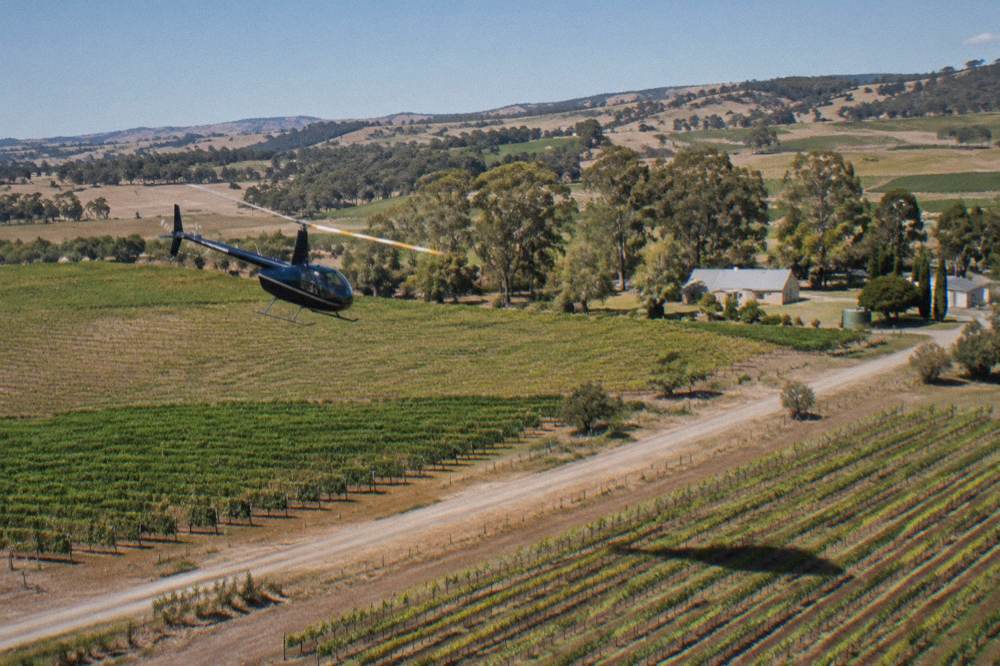
Helicopter days ignore the seasons almost entirely. The three Barossa Helicopters flights listed on this site, 10, 20 and 30 minutes from A$275 per group for up to three, fly with live pilot commentary over vineyards and landmarks such as the Whispering Wall and Chateau Tanunda, and the operator flies from the Lyndoch area. Weather can ground any flight, so check conditions with the operator, but the month itself is not the barrier people assume.
What About April 2027 And The Vintage Festival?
The next Barossa Vintage Festival runs 21 to 25 April 2027, five days of long lunches, masterclasses, markets, parades and concerts celebrating vintage and heritage. April's long-term means, a 21.4 degree maximum and 38.2 mm of rain, sit comfortably in the middle of the year's range. If you want one month that combines festival energy, harvest aftermath and mild weather, April 2027 is the clear pick.
The festival is the region's signature event and the dates are confirmed on the festival's own site at barossavintagefestival.com.au. Events spread across cellar doors, halls and backyards through the Barossa's towns, so a festival visit works best with a base in Tanunda, Nuriootpa or Angaston rather than a day trip, though day tours still run through the period. It is worth planning early: a five-day regional festival concentrates a lot of visitors into a small set of towns.
One thing to hold loosely: do not build your month choice around any single winery event without checking it directly. Seppeltsfield, established 1851, marks its 175th with a series across four Fridays in November 2026, an anniversary celebration rather than an opening, and its cellar door notes that tasting fees apply and group tastings are limited to 6 people. The 100 Year Old Signature Experience there, a Centennial Cellar tour with a tasting of 100-year-old Para Tawny from the barrel and a multi-course lunch at FINO, is listed at about A$339 on the regional tourism site.
Do Tours And Cellar Doors Run All Year?
Yes, with conditions. The tours listed here run right through the calendar, and cellar doors keep their own hours: some open seven days, others Thursday to Monday, Peter Lehmann among them, 10.30am to 4.30pm. Standard tasting flights generally run roughly A$10 to A$30 per person depending on the cellar door. What changes by month is comfort and crowd, not availability.
A few specifics help. Jacob's Creek lists flights at A$15, A$20 and A$30 per person, non-redeemable, with bookings essential and a last slot at 3.30pm. Kaesler's Premium Estate Tasting is A$20 per person, redeemable on bottle purchase, open seven days. Henschke tastings start from A$20 per person, with seated experiences running about an hour. These are per-door policies, not a regional rule, so check each cellar door before you build a self-drive day.
And if you are self-driving, the month matters less than the law. Full licence holders in South Australia must not drive with a blood alcohol concentration of 0.05 or more, and police can run random breath testing near any road. A first offence under 0.08 brings an expiation notice and 4 demerit points; a second or later offence under 0.08 means disqualification. That arithmetic is the strongest argument for a guided day in any month, and the driving versus taking a tour question is worth settling before you pick a date.
Getting there does not change with the seasons either. The drive from Adelaide to Tanunda is about an hour with no toll roads, while public transport means a train to Gawler and then a bus, roughly two and a half hours with a change. That second option is slow enough that most visitors drive or book a tour with pickup, and the getting to the Barossa guide covers the routes in full.
Does The Month Change Which Day Trip You Should Book?
Not as much as it changes how the day feels. The Barossa to Hahndorf combinations, several of them from A$175 to A$179 per person with lunch included, suit the warmer months when Hahndorf's main street is pleasant to stroll. Full-day coach and small group winery days work in any month. The choice is really about format and inclusions, then picking a month that makes that format comfortable.
Consider the spread across these tours. The Experience Hahndorf & Barossa tour from Benders Bus Tours, 4.9 from 496 reviews, from A$175 per person, pairs Hahndorf and Beerenberg Farm with two wine tastings and a gourmet lunch, with city and Glenelg hotel pickups. A strawberry farm stop belongs to the warmer half of the year. The All Inclusive Barossa Valley Food and Wine Tour from SeaLink South Australia, 4.5 from 143 reviews and from A$209 per person, includes lunch, wine tastings and a Maggie Beer's Farm Shop visit, and its indoor-weighted itinerary barely notices the season.
One review from the SeaLink day captures why weatherproofing matters: "We had a great day, loved the spots we stopped at such a beautiful day. Pub choice for lunch was good, food and entertainment. Comfortable trip we will recommend to our friends." That comfort comes from the format, an air-conditioned mini-coach with a driver-guide, not from luck with the forecast.
For couples weighing a smaller vehicle, the two-person tour question has its own answer, and the Barossa Valley Wine Tour, Max 6 Guests with Restaurant Lunch, from Small Batch Wine Tours, fits it: 5.0 from 112 reviews, from A$380 per person, tasting fees included, a multi-course restaurant lunch, and hotel pickup and drop-off. It is a premium day that rewards a mild month with outdoor seating at lunch.
How Should You Actually Pick Your Month?
Work backwards from what you want the day to feel like. Harvest energy and new vintage talk: March or April. Festival: late April 2027. Mild riding and walking weather: October or November. Quiet cellar doors and open fires: June to August. Cheaper, calmer and flexible: any month outside festival week. Then book the tour format that matches, because every style on this site, coach, small group, private, e-bike, helicopter, runs year round.
Two practical notes finish the picture. First, cancellation terms vary by listing, so read them before you lock a date. The Premium Barossa Small Group Tour from See Adelaide, rated 4.9 from 1697 reviews and from A$189 per person, states free cancellation is available up to 24 hours before departure, and it includes hotel pickup, a regional platter lunch and tastings at Kies Family Wines, Chateau Tanunda and Rosenvale Vineyards. One guest review on the listing sums up the format: "Amazing tour! Great guide, Sara, was lots of fun & had loads of great info about the areas we visited!" You can Check availability for your month on the operator's live listing.
Second, budget by season rather than by month. Tour prices across the line-up do not shift with the calendar in any way the listings state, but your incidental costs can: tasting fees, lunch stops and festival events all add up faster in festival week. The Barossa Valley wine tour cost guide breaks the numbers down tour by tour.
Whichever month you land on, the three tours below are the dependable all-rounders, each with pickup or a flexible format and each bookable across the year.
Common Questions About The Best Month To Visit Barossa Valley
What Is The Best Month To Visit Barossa Valley?
March and April make the strongest overall case: harvest runs about February to April, the shoulder weather is mild with long-term mean maximums of 25.7 and 21.4 degrees at Nuriootpa, and the next Barossa Vintage Festival runs 21 to 25 April 2027. October and November suit riders and walkers, and cellar door tours run year round.
When is grape harvest in the Barossa Valley?
Harvest runs about February to April. The 2026 vintage arrived later than usual, with much of the Barossa Valley fruit in the winery before Easter, and the vintage report describes yields considerably below average with concentrated, textural reds.
Is the Barossa Valley too hot in summer?
Summer is genuinely hot: long-term mean maximums are 28.8 degrees in January and 28.6 in February at Nuriootpa, with under 19 mm of rain each month. Air-conditioned coach, small group and hop-on hop-off tours handle it comfortably; active formats like e-bike days are better saved for spring or autumn.
When is the next Barossa Vintage Festival?
The next Barossa Vintage Festival runs 21 to 25 April 2027, with long lunches, masterclasses, markets, parades and concerts across the region's towns. If festival energy is what you want, that week is the date to build around.
Do Barossa wine tours run in winter?
Yes. The tours listed here are bookable year round, and winter suits indoor tastings, hop-on hop-off bus days and short scenic helicopter flights. Long-term winter means at Nuriootpa are 13.2 to 14.3 degree maximums with 56 to 66 mm of rain per month, so pack a layer.