Is Barossa A Good Wine?
A data-led answer to whether Barossa wine is good: Shiraz share, old-vine claims, the 2026 vintage report and what the numbers say about Australia's most planted red region.
Is Barossa A Good Wine?
Yes, by almost every measure that can actually be counted, Barossa wine is good, and the region's own data explains why. Shiraz makes up 60 percent of the Barossa Valley's crush, 90 percent of the region's plantings are red varieties, and the oldest Shiraz vines are believed to date to 1843. Reputation is one thing, but numbers are another, and Barossa has an unusual amount of both. The region sits 70 km north-east of Adelaide, an hour's drive, and holds over 150 wineries by Barossa Australia's own figure. That scale matters because it means the claim "Barossa is good wine" is not resting on one famous name; it rests on a whole region's output, most of it red, much of it from vines older than almost any others on earth.
The honest way to answer a question like this is to separate three things people often blur together. First, what the region grows and in what proportions, which is recorded in Wine Australia's snapshots. Second, what the old-vine claims actually say, and they say "believed", a word this article keeps deliberately. Third, what the people who tasted the most recent vintage report, and the 2026 report, written by Louisa Rose of Hill-Smith Family Estates for the regional site, is unusually direct: "the standout of 2026 so far is Shiraz."
What the data cannot do is tell you what you will enjoy. Barossa wine is dominated by full-bodied reds; readers who drink mostly crisp whites may find less here for them, with Chardonnay at just 2 percent of the region's tonnes. The cheapest way to settle the question is a tasting day that covers several cellar doors in one trip, which is exactly what the small group tours on this site are built for.
If you want to run your own taste test against the data, these three day tours each cover multiple wineries from Adelaide:
The rest of this article walks through the evidence in order: the variety numbers, the old-vine records, the vintage report, the comparison with neighbouring regions, and what it costs to taste the answer yourself.
What Does The Region's Own Data Say About Barossa Wine?
Wine Australia's snapshot of the Barossa Valley records an estimated 48,183 tonnes of crush, of which Shiraz is 60 percent, Cabernet Sauvignon 18 percent and Grenache 9 percent. Ninety percent of the region's tonnes are red varieties, and the region covers 590 square kilometres at elevations of 112 to 596 metres. Those figures come from a single consistent source, the Wine Australia Region Snapshot, which is the only tonnage number worth quoting here. A separate crush survey figure exists but sources disagree, so this article leaves it out.
The dominance of red is the single most important fact for anyone asking whether Barossa is good. A region does not keep 90 percent of its vineyard in red varieties by accident; it does so because that is what the climate, the soils and the market reward. The 2026 snapshot puts yields at 4.2 tonnes per hectare, and the crush was down 17 percent on 2025, a year the vintage report describes in detail.
Here is the variety breakdown in one place:
| Variety | Share of Barossa Valley tonnes | What it suggests |
|---|---|---|
| Shiraz | 60% | The region's centre of gravity |
| Cabernet Sauvignon | 18% | The second red pillar |
| Grenache | 9% | Old-vine red blending material |
| Chardonnay | 2% | A small white presence |
| Mataro | 2% | A niche but prized red |
| All red varieties combined | 90% | Overwhelmingly a red region |
The structure of the region backs the numbers. The Barossa zone was officially recognised as a Geographical Indication in 1997 and contains two regions, Barossa Valley and Eden Valley, with High Eden the only declared sub-region. Under vine, the zone carries 14,222 hectares, of which 11,930 sit in the Barossa Valley itself. Those are Barossa Australia's figures, and they describe a region built around red wine at a scale few others match. For a deeper look at the flagship variety, the Barossa Shiraz varieties guide breaks down what the dominance of one grape means for a tasting day.
How Old Are Barossa's Oldest Vines, Really?
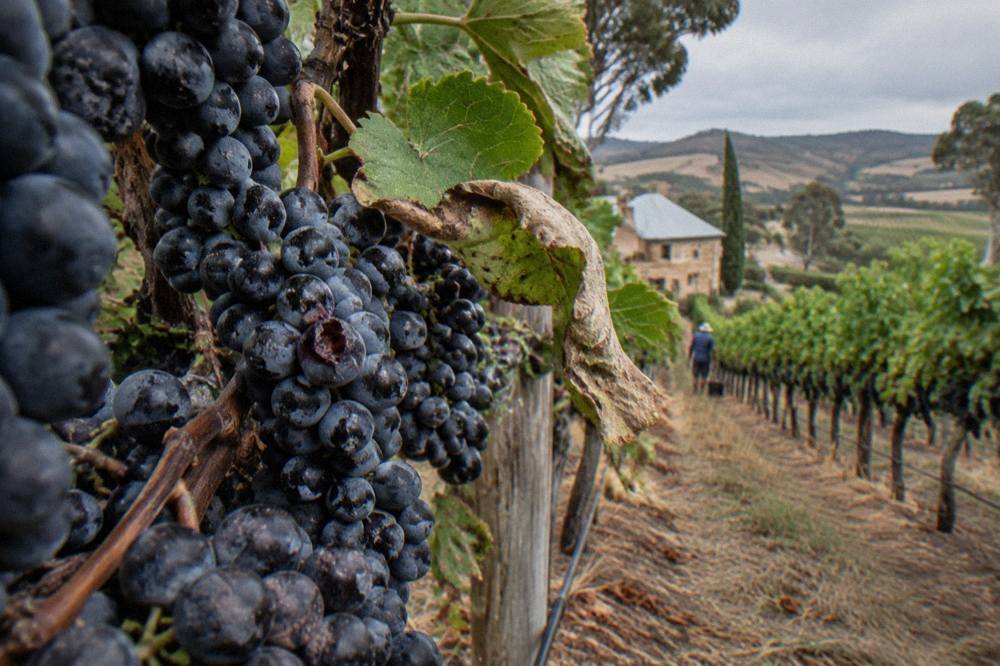
The oldest continuously productive Shiraz vines in Barossa are believed to date to 1843 at Langmeil and 1847 at Turkey Flat, according to Wine Australia's own varieties page. The word "believed" is doing real work in that sentence, and any honest answer keeps it. Langmeil, founded in 1842, describes itself as home to what is believed to be the world's oldest surviving Shiraz vineyard, the Freedom 1843. Turkey Flat's own site mentions its 1847 Bluestone Cellar; the vine claim itself rests on Wine Australia's wording.
Why does vine age matter to the quality question? Because old vines are rare, they are expensive to keep, and nobody keeps a vineyard for nearly two centuries producing wine nobody wants. Old-vine fruit is a region's longest-running vote of confidence from the people who own it. Barossa's European settlement goes back to Bethany in 1842, and the vineyards followed almost immediately; the region is named for the Barrosa ridge in Andalusia by Colonel William Light, a name that arrived with a clerical error in the spelling and has no plain-English translation.
The practical consequence for a visitor is that several of these historic sites are stops on ordinary day tours. Langmeil Winery appears on the itineraries of both the Barossa Valley Cellar Door Small Group Tour and the Voyager small group tour, so a tasting day can put you in front of vineyard history without any special arrangement. Chateau Tanunda, another heritage stop, appears on five of the day tours on this site, which tells you how central the old estates are to the region's offer.
The honest caveat: age claims beyond the two Wine Australia names are not confirmed on official pages. Henschke's Hill of Grace planting year, for instance, is unverified and this article will not print it. What can be said firmly is that vines believed to date from the 1840s are still producing in Barossa, and that is a fact very few wine regions on earth can match.
What Did The 2026 Vintage Report Actually Say?
The 2026 Barossa vintage report, written by Louisa Rose of Hill-Smith Family Estates and published on the regional site, describes yields considerably below average but reds that are concentrated and textural, and states plainly that "the standout of 2026 so far is Shiraz." The report also records a vintage later than usual, with much of the Barossa Valley harvest "in the winery before Easter." Harvest in the valley runs about February to April.
The weather behind it is worth understanding because it explains the character of what is now in bottle. Calendar-year 2025 brought 331 mm of rain at Nuriootpa, 77 percent of average, the third dry year in a row. Then March 2026 delivered 56 mm, nearly three times the monthly average, which brought some splitting and disease risk but, in the report's assessment, quality held. A small crop from old, dry-grown vines in a year the winemakers themselves single out is about as good a quality signal as data can give.
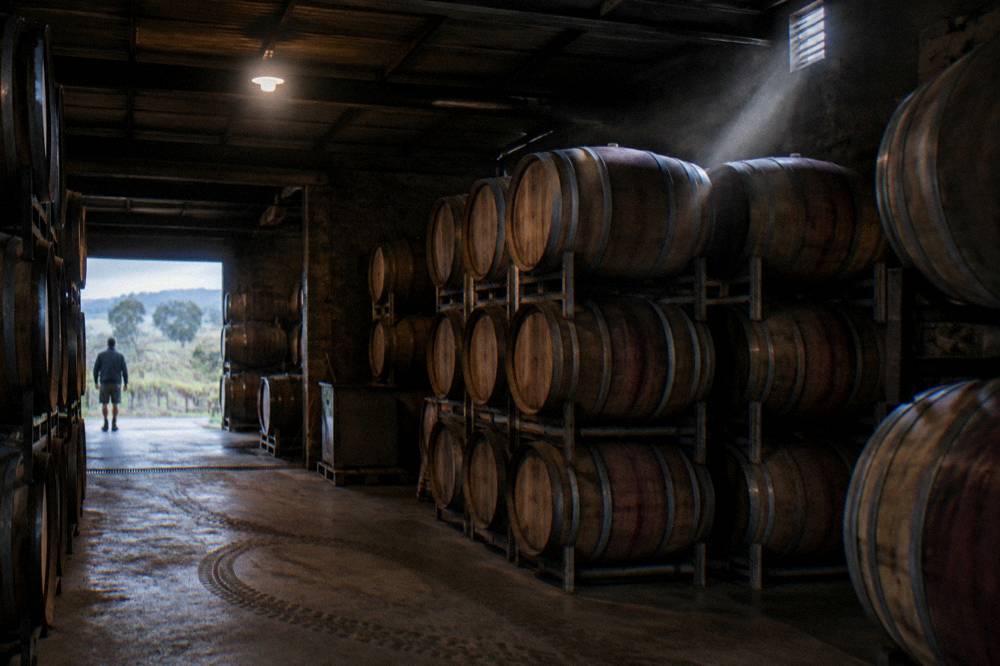
For anyone weighing whether Barossa is good, the vintage report is the closest thing to an insider answer. It is written by a working winemaker inside the region, not a marketing department, and its judgement is on the record at the regional vintage report page. You can read the full quotes there, including the context around the March rains. The planning question this raises, when to time a visit around harvest, is covered in the best month to visit Barossa Valley article.
How Does Barossa Compare With Its Neighbouring Regions?
Against McLaren Vale, Clare Valley and Eden Valley, Barossa Valley carries the largest vineyard area and the largest crush of the four, with Shiraz at 60 percent of tonnes compared with McLaren Vale's 53 percent. Clare Valley is a Riesling region at 35 percent of tonnes, and Eden Valley leans to Riesling too at 28 percent. All four figures come from the same Wine Australia snapshot series, so the comparison is like for like.
| Region | Hectares | Red share | Leading variety | Crush tonnes | Yield t/ha |
|---|---|---|---|---|---|
| Barossa Valley | 11,930 (barossa.com) / 11,609 (Vineyard Scan) | 90% | Shiraz 60% | 48,183 t | 4.2 |
| Eden Valley | 2,169 | 53% | Riesling 28% | 7,289 t | 3.4 |
| Clare Valley | 5,093 | 72% | Riesling 35% | 15,183 t | 3.0 |
| McLaren Vale | 7,438 | 91% | Shiraz 53% | 31,736 t | 4.3 |
Read as a quality argument, the table says this: if your question is "is Barossa a good wine region for big reds", the answer is that it is the biggest and most Shiraz-weighted of its neighbourhood. If your question is "is Barossa a good region for Riesling", the honest answer is that Clare and Eden Valley do that job, which is why several combined itineraries exist pairing Barossa with one of them; the Barossa, Clare Valley and McLaren Vale comparison guide covers those. Driving times make the pairing practical: McLaren Vale is roughly 1.5 hours from the Barossa by car, Clare Valley roughly 1.5 hours, and Hahndorf in the Adelaide Hills under an hour, though mapping sources vary by start point.
None of this ranks the regions by quality, and no honest writer should. What the data does establish is difference of character: Barossa is the red engine of the group, and its reputation for full-bodied Shiraz is a direct read of its planting data rather than a slogan.
Is Barossa Only About Red Wine?
Mostly, yes: 90 percent of the Barossa Valley's tonnes are red varieties, with Chardonnay at 2 percent and Mataro at 2 percent among the small remainder. But "mostly red" is not "only red", and the Eden Valley half of the zone shifts the balance, running 53 percent red with Riesling its leading variety at 28 percent. A visitor who drinks white is not stranded; they are simply drinking Eden Valley Riesling rather than Barossa Valley Shiraz, often within the same day's drive.
The fortified tradition is the other exception worth naming. Seppeltsfield, established 1851, is the estate most associated with it, and its Centennial Cellar holds tawny laid down across more than a century; the 100 Year Old Signature Experience, which pairs a tour of that cellar with a tasting of 100-year-old Para Tawny direct from barrel and a multi-course lunch at FINO, is listed at about A$339 on the regional tourism site. That is a wine experience you cannot assemble from ordinary table wine anywhere, and it is part of the honest case for Barossa's standing.
For tasting purposes, the practical mix looks like this: a standard day tour around the Barossa Valley floor will serve mostly Shiraz, Grenache and Cabernet, with Riesling appearing when an itinerary reaches higher ground toward Eden Valley. The Barossa wineries visitor guide explains how the two regions divide up. Grenache deserves a special mention for the curious: at 9 percent of tonnes it is the region's quiet third act, and old Grenache is one of the wines the region's winemakers get most animated about.
What Is The Cheapest Way To Judge Barossa Wine Yourself?
The cheapest structured option among the tours listed here is the Barossa Valley Hop-On Hop-Off Wine Tour, from A$100 per person for eight hours of transport between wineries. It carries a 4.9 rating from 442 reviews. Tasting fees are not included, so the full cost depends on how many cellar doors you visit. At the other end, guided days with lunch and tastings bundled run from A$175 to A$245 per person. Bundling matters: only six of the 26 tours here state that tasting fees are included, so check each tour page to be sure.
The economics are simple. A standard tasting flight at a named cellar door runs roughly A$10 to A$30 per person, so the fees across several independent stops stack up quickly, well before lunch and before anyone has covered the drink-driving question. South Australia's limit for full licence holders is a blood alcohol concentration of 0.05, police can run random breath testing near any road, and a first offence under 0.08 means an expiation notice and four demerit points. A tour converts all of that risk and admin into one price.
A review from the hop-on hop-off listing captures the appeal of the self-directed version: "This is a fabulous and easy way to see some of the best spots in the Barossa. Highly recommend you make Bethany Wines and Rusden Wines two of your stops!" That format suits confident tasters who already know what they like. For a first verdict on Barossa, a guided day with a driver choosing the wineries is usually the better instrument.
For readers who want the middle path, the Wine Diva small group day bundles a lunch platter, pickup from Adelaide, Glenelg or the Barossa Valley, and an accredited local driver, from A$195 per person; it rates 4.9 from 57 reviews, a small pool reported honestly. Tasting fees are not included on that row, so budget for the flights on top.
The comparison below shows how the main formats price out across the tours on this site, with the pricing basis stated for every listing since private tours quote per group.
| Tour (decision name) | Price basis | From | Tasting fees | Lunch |
|---|---|---|---|---|
| Hop-On Hop-Off, No Meal | per person | A$100 | Not included | Not included |
| Four Tastings, Seppeltsfield Village | per person | A$175 | Not stated | Included |
| Four Wineries, Clubhouse Lunch | per person | A$189 | Included | Included |
| Premium Small Group, Chocolate Tasting | per person | A$189 | Not stated | Included |
| Wine Diva, Lunch Platter Included | per person | A$195 | Not included | Included |
| Max 6 Guests, Restaurant Lunch | per person | A$380 | Included | Included |
Do The Cellar Doors Charge For Tastings?
Yes, cellar door tastings in the Barossa are generally paid, and there is no general "free tasting" practice to rely on: Jacob's Creek flights cost A$15 to A$30 per person and are explicitly non-redeemable, Kaesler's Premium Estate Tasting is A$20 per person redeemable on bottle purchase, and Henschke tastings start from A$20. Fees are set cellar door by cellar door, and the only way to know what a tour covers is its own listing.
| Cellar door | Standard tasting | Booking notes |
|---|---|---|
| Jacob's Creek | A$15, A$20 or A$30 by flight | Non-redeemable, bookings essential, last slot 3.30pm |
| Kaesler | A$20 Premium Estate Tasting | Redeemable on bottle purchase, open 7 days 10am to 5pm |
| Henschke | From A$20 per person | Standard options often waived or redeemed on purchase; premium and old-vine not always |
| Seppeltsfield | Fees apply | Group tastings limited to 6 people |
| Peter Lehmann | Fees on the day | Open Thursday to Monday 10.30am to 4.30pm, closed Tuesday and Wednesday |
| Yalumba | A$10 standard tasting | Open Tuesday to Sunday 10am to 5pm, Monday 11am to 5pm |
Two closures matter to anyone planning a circuit on older information: the Penfolds Barossa Valley cellar door at Nuriootpa closed in 2025, and the Rolf Binder cellar door closed the same year. The Grant Burge Meshach cellar door also closed in 2025, with Grant Burge moving to the St Hugo site at Rowland Flat. Neither the closed doors nor their successors should appear on a self-planned list without checking current status. The Barossa tasting fees guide keeps the working detail.
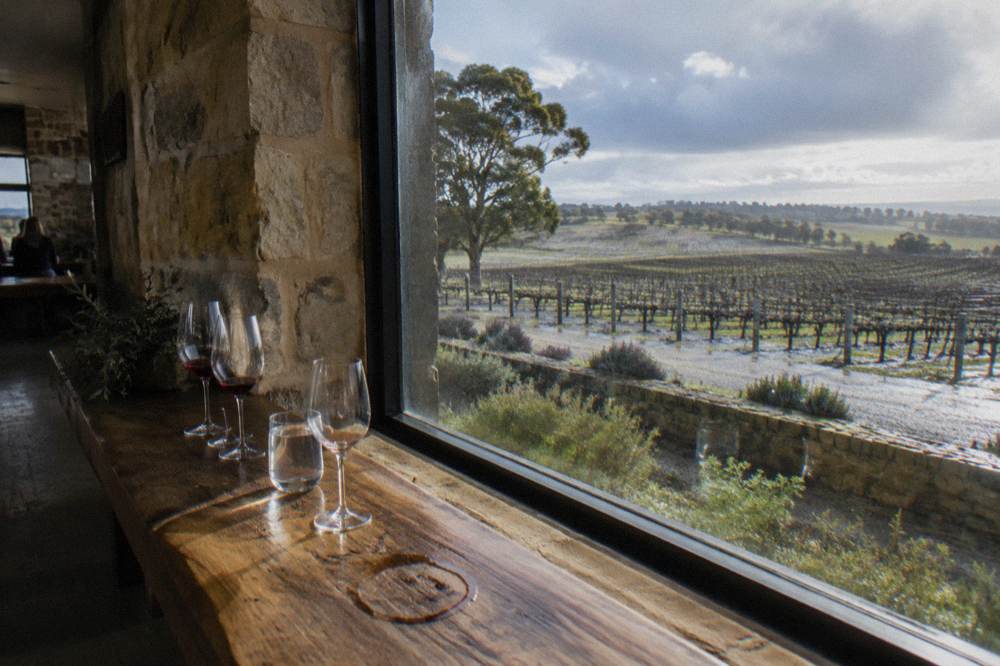
This is where a bundled tour earns its price. On the Barossa Valley Cellar Door Small Group Tour, the listing states standard wine tasting fees are included along with hotel pickup and return and lunch at the Tanunda Club, from A$189 per person; it rates 4.8 from 545 reviews. One guest review on the listing reads: "The trip from collection to the drop off back at our apartment was amazing. Phil was excellent and took us to the most wonderful vineyards for wine tasting." You can compare it against the four wineries day tour page or Check availability for your dates.
So Is Barossa A Good Wine? The Verdict On The Evidence
On the evidence, Barossa is a good wine region by any measurable standard: it holds vines believed to be the world's oldest producing Shiraz, its 2026 vintage drew a "standout" verdict for Shiraz from the region's own report, and its 60 percent Shiraz share reflects generations of planting decisions. Whether it is good wine for you depends on one thing only: whether full-bodied red is your glass. The data says the region is not pretending to be anything else.
This article has deliberately avoided tasting-note invention, quality rankings and any "most famous" claim, because none of those would survive contact with the sources. What survives is this: a region of 590 square kilometres, 90 percent red, dry-grown old vines, a difficult 2026 harvest that winemakers still call concentrated and textural, and a tasting infrastructure, from a A$100 hop-on hop-off bus to a A$339 century-old tawny experience, that lets any visitor test the claim in a single day. That is a strong hand, and the region plays it openly.
For the team at Barossa Valley Wine Tours, the recommendation is simple: run the experiment. Book one tasting day, order the Shiraz and the Grenache at each stop, and let a region whose oldest Shiraz vines are believed to date to the 1840s make its own case. The three days below are the fairest tests of the tours we list.
Common Questions About Barossa Wine
Is Barossa A Good Wine?
On the measurable evidence, yes. Shiraz is 60 percent of the Barossa Valley's crush, the 2026 vintage report names Shiraz the standout of the year, and vines believed to date to 1843 still produce there. Whether you will enjoy it depends on your taste for full-bodied reds, which is what the region overwhelmingly makes.
What Percentage Of Barossa Wine Is Red?
Ninety percent of the Barossa Valley's tonnes are red varieties, per the Wine Australia snapshot. Shiraz alone is 60 percent, Cabernet Sauvignon 18 percent and Grenache 9 percent, with Chardonnay at just 2 percent.
How Old Are The Oldest Barossa Shiraz Vines?
The oldest continuously productive Shiraz vines are believed to date to 1843 at Langmeil and 1847 at Turkey Flat, according to Wine Australia. The word "believed" is part of the claim and should stay attached to it.
Was The 2026 Barossa Vintage A Good One?
Small but high quality. The regional report describes yields considerably below average after a dry 2025 and heavy March rain, yet calls the reds concentrated and textural and names Shiraz the standout of 2026 so far.
Do Barossa Cellar Doors Charge For Tastings?
Generally yes. Standard flights at named cellar doors run roughly A$10 to A$30 per person, with policies varying: Jacob's Creek flights are non-redeemable, Kaesler's fee is redeemable on bottle purchase. Some tours bundle tasting fees; only the listings that say so include them.
What Is The Cheapest Way To Taste Barossa Wine?
The hop-on hop-off bus tour, from A$100 per person, covers eight hours of transport between wineries. It is the cheapest structured option among the tours listed here, though tasting fees are not included. Guided days with lunch bundled start from A$175 per person.