Barossa Valley Shiraz: What Makes It Famous And Where To Taste It
Shiraz is the grape the Barossa Valley is built on: 60 percent of the region's crush tonnes, from vines believed to date back to the 1840s. This guide sets out the verified numbers, the 2026 vintage story, the cellar doors that pour it, and the tours that stop at the producers behind the oldest plantings.
Short answer
Barossa Valley Shiraz accounts for 60 percent of the region's crush tonnes and 90 percent of its plantings are red varieties. The oldest continuously productive Shiraz vines are believed to date to 1843 at Langmeil and 1847 at Turkey Flat. Tours from Adelaide stop at Langmeil, Chateau Tanunda and Kies Family Wines, from A$175 per person.
Shiraz is not one wine among many in the Barossa Valley. It is the region's working engine and its calling card, filling six of every ten tonnes crushed in the 2026 season and drawing visitors to cellar doors where the vines were planted before the Australian colonies federated. This guide sticks to what the region's own bodies and the tour listings actually state: the plantings, the old-vine claims, the 2026 vintage report, and where the published tours stop.
The story splits into three parts. First, the numbers: what the region grows and how much of it is Shiraz. Second, the history: vineyards believed to date to 1843 and 1847 that are still producing. Third, the practical question for a visitor, which cellar doors and which tours put that wine in your glass without you needing to drive between them.
What Makes Barossa Valley Shiraz Different?
Shiraz makes up 60 percent of the Barossa Valley's crush tonnes, and 90 percent of the region's plantings are red varieties. The Wine Australia region snapshot for the 2026 season estimates the Barossa Valley crush at 48,183 tonnes, down 17 percent on 2025, at an average of 4.2 tonnes per hectare. That scale, from 11,930 hectares under vine, is what separates the Barossa from smaller Shiraz districts.
The Barossa Valley region sits inside the broader Barossa zone, which was officially recognised as a Geographical Indication in 1997 and holds two regions: the warm Barossa Valley floor and the cooler Eden Valley above it. The zone figure is 14,222 hectares under vine, of which the Barossa Valley carries 11,930. Within the valley itself the variety mix is lopsided toward reds: Cabernet Sauvignon takes 18 percent of tonnes, Grenache 9 percent, and Chardonnay and Mataro just 2 percent each, per the same snapshot.
Elevation plays its part too. The region runs from 112 to 596 metres across 590 square kilometres, which is why one district can ripen rich, full-bodied Shiraz while the Eden Valley, at 219 to 632 metres, leans toward Riesling at 28 percent of its tonnes. Barossa Australia's own figure for the region is "over 150 wineries", and you can read the region's own summary on the Barossa Australia wineries page.
| Region fact | Figure | Source basis |
|---|---|---|
| Shiraz share of Barossa Valley tonnes | 60 percent | Wine Australia snapshot |
| Red varieties share of plantings | 90 percent | Wine Australia snapshot |
| Estimated 2026 crush | 48,183 tonnes | Wine Australia snapshot |
| Change on 2025 | Down 17 percent | Wine Australia snapshot |
| Barossa Valley area under vine | 11,930 hectares | barossa.com zone figures |
| Elevation range | 112 to 596 metres | barossa.com |
How Old Are The Oldest Shiraz Vines In The Barossa?
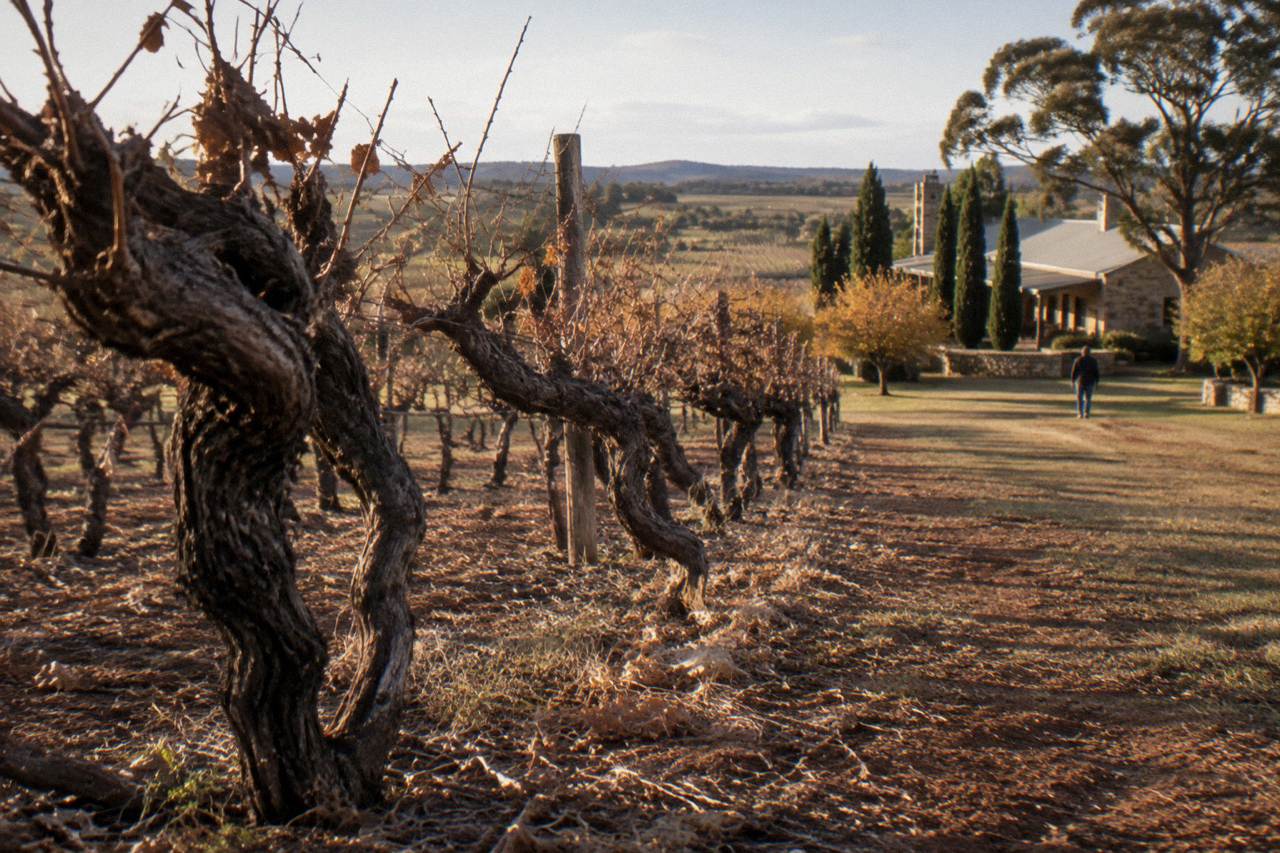
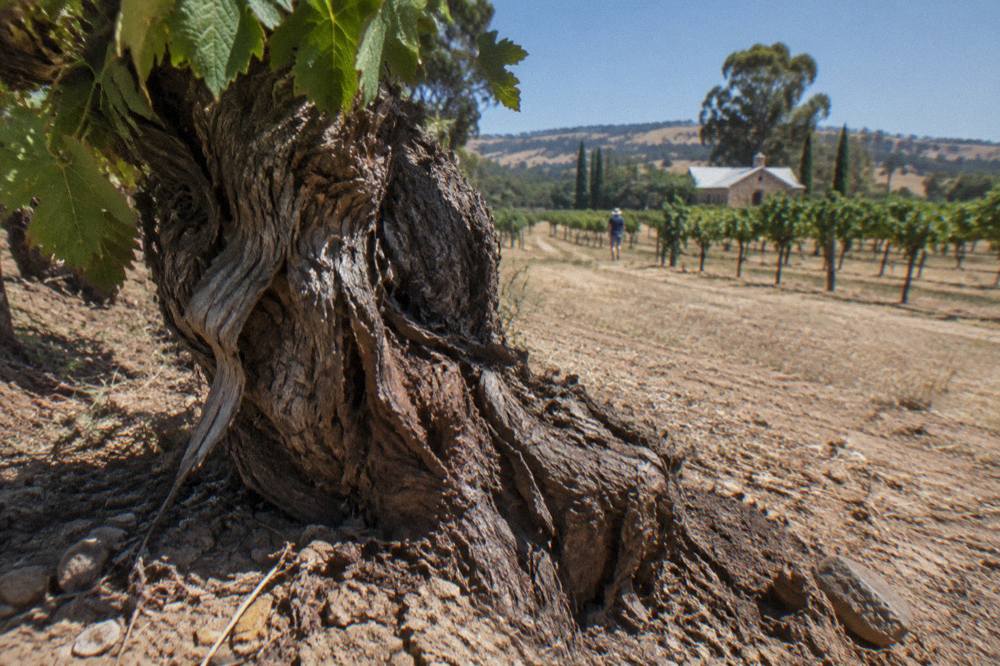
The oldest continuously productive Shiraz vines are believed to date to 1843 at Langmeil and 1847 at Turkey Flat, both in the Barossa Valley. Wine Australia states both claims with the word "believed", and Langmeil's own site calls its Freedom 1843 block what is believed to be the world's oldest surviving Shiraz vineyard, on a winery founded in 1842. Those old survivors are only part of the story, and the Barossa Valley's full rise to fame goes back to the region's very beginnings.
That hedge matters. Vineyard records from the 1840s are patchy, so the region's careful wording is "believed to date to", and this guide keeps it. What is not in doubt is the practical draw: Langmeil's Freedom 1843 Shiraz comes from a vineyard block that survived the later era of vineyard removals in the district, per Langmeil's own account of the block, and Langmeil appears on the stop lists of several published Barossa tours.
European settlement of the valley reinforces the timeline. Colonel William Light named the Barossa Range in 1837 after the Barrosa ridge in Andalusia, the site of an 1811 Peninsula War battle he fought in, and the spelling with two s's came from a clerical error. Bethany, the first major European settlement in the Barossa, followed in 1842, the same year Langmeil was founded. Vines planted within a few years of settlement are still yielding fruit today.
If old vines are the reason you are coming, the old vine estates on Barossa wine tours guide maps which published tours call at which producers, and the question of how many wineries to visit in a day matters more when each stop carries this much history.
The three days above all fit the Shiraz visitor well, for different reasons. The Premium Barossa Small Group Tour: Wine tasting, Lunch & Chocolate runs a private barrel room tasting at sixth-generation Kies Family Wines plus a structured tasting at historic Chateau Tanunda, from A$189 per person, rated 4.9 from 1697 reviews. The Barossa Valley Cellar Door Small Group Tour adds Langmeil Winery, the home of the Freedom 1843 claim, with tasting fees included, from A$189 per person.
What Was The 2026 Shiraz Vintage Like?
The Barossa's own 2026 vintage report, written by Louisa Rose of Hill-Smith Family Estates, calls Shiraz the standout of the season, with concentrated and textural reds despite yields considerably below average. Much of the vintage was in the winery before Easter, and the estimated crush fell 17 percent to 48,183 tonnes. The region had come off its third dry year in a row.
The season itself was unusual. Calendar-year 2025 rain at Nuriootpa totalled 331 millimetres, 77 percent of the average, after two earlier dry years. Then March 2026 brought 56 millimetres at Nuriootpa, nearly three times that month's average, which created some splitting and disease risk in the vineyard but also thinned yields further. The report says quality held, with the reds the beneficiaries of a small, concentrated crop.
For a visitor, the practical takeaway is that 2026 Barossa Shiraz is a smaller-release vintage worth asking about at cellar doors, and the first bottles will roll out over the years ahead. The harvest window itself runs about February to April, and the full report sits on the Barossa Australia 2026 vintage report page if you want the winemaker's own words.
Timing a trip around the season is covered in detail in the best month to visit the Barossa Valley, which uses the same long-term climate averages rather than forecasts.
Which Cellar Doors Pour Barossa Shiraz, And What Do Tastings Cost?
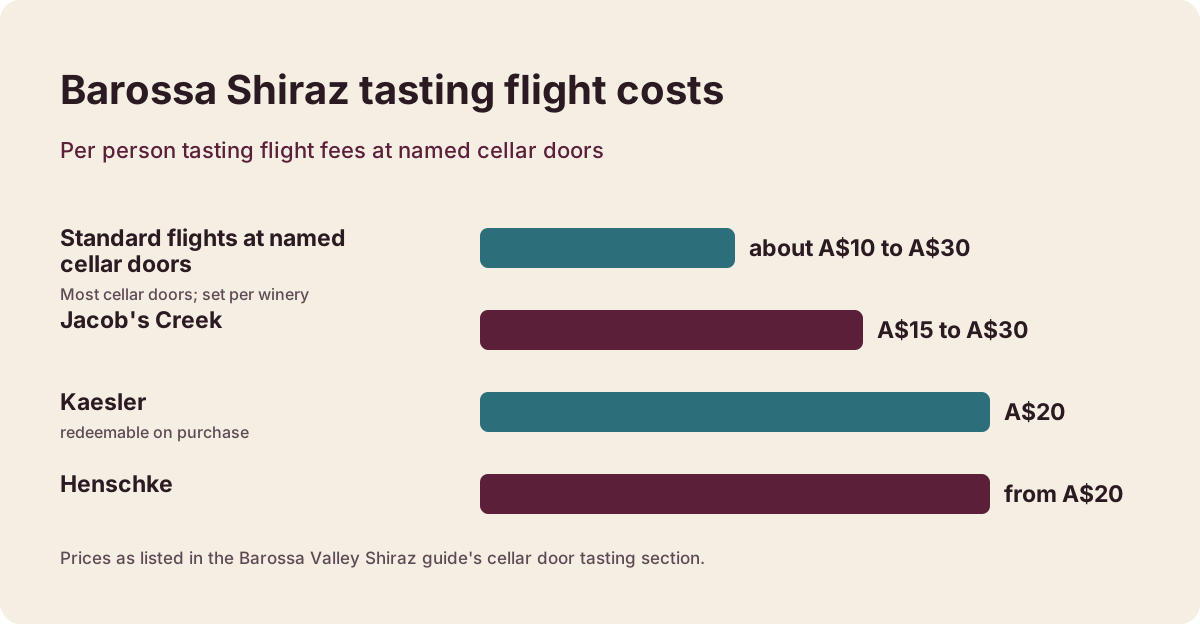
Standard tasting flights at the Barossa's named cellar doors mostly run from about A$10 to A$30 per person, set per winery rather than by any regional rule. Jacob's Creek charges A$15 to A$30 for its flights, Kaesler A$20 redeemable on purchase, and Henschke from A$20. Tasting fees are never free as a general Barossa practice, and only some tours include them.
The published fees give a fair planning range. At Jacob's Creek, the official tasting page lists three flights: A$15 per person for the Light and Fresh, A$20 for the Limited Release, and A$30 for the Cellar Collection, all non-redeemable, with bookings essential and a last slot of 3.30pm. Kaesler's Premium Estate Tasting is A$20 per person, redeemable on a bottle purchase, with the cellar door open seven days from 10am to 5pm. Henschke tastings start from A$20 per person, waived or redeemed on purchase for standard options but not always for premium or old-vine flights, and the seated experiences run about an hour with bookings recommended for groups.
Seppeltsfield, established 1851, states plainly that tasting fees apply and that group tastings are limited to 6 people, which matters if you are travelling with six or more. Peter Lehmann's cellar door opens Thursday to Monday, 10.30am to 4.30pm, and is closed Tuesday and Wednesday. If a winery you hoped to visit is not on any of these lists, check its own page before you drive, because cellar door hours and fee policies change and a few well-known doors have closed in the past two years.
| Cellar door | Standard tasting fee | Notes from official pages |
|---|---|---|
| Jacob's Creek | A$15 to A$30 per person | Three flights, non-redeemable, bookings essential |
| Kaesler | A$20 per person | Redeemable on bottle purchase, open 7 days 10am to 5pm |
| Henschke | From A$20 per person | Waived or redeemed on standard options, seated about 1 hour |
| Seppeltsfield | Fees apply | Group tastings limited to 6 people |
The full fee picture, including what "included" means on each tour listing, is in the Barossa Valley wine tasting fees guide. Of the tours on this site, only six spell out that tasting fees are included, three say they are not, and the rest stay quiet on the matter, so check your tour's listing before assuming anything.
Which Barossa Tours Stop At Old-Vine Shiraz Producers?
Langmeil Winery appears on the stop lists of three published tours: the Barossa Valley Cellar Door Small Group Tour from A$189, the Barossa Valley Shared Tour with Wine Tasting and Lunch from about A$238, and the Small Tour Barossa Valley Voyager Tour from A$245. Rockford and Chateau Tanunda, two other heritage Shiraz names, also appear on published itineraries.
The Cellar Door tour by CP Tours and Charters is the most direct old-vine play: Langmeil plus Chateau Tanunda plus Rusden and Ubertas, hotel pickup and return, standard tasting fees included, lunch at The Tanunda Club, from A$189 per person, rated 4.8 from 545 reviews. A guest review on the listing sums up the day: "Phil was excellent and took us to the most wonderful vineyards for wine tasting. The lunch was exceptional and we all enjoyed it immensely."
The Barossa Valley Shared Tour with Wine Tasting and Lunch, run by AMQ Tours, pairs Langmeil with Z Wine, Rockford Winery and Corryton Burge Cellar Door over seven hours, lunch and tasting fees included, from about A$238 per person, rated 5 from 33 reviews. Its own itinerary is marked as a sample, subject to change. The Voyager tour from Adelaide's Top Food & Wine Tours adds a second Langmeil stop alongside Kies and Seabrook, with lunch and hotel pickup, from A$245 per person, rated 4.9 from 159 reviews; that listing shows no standard refund window, so read its terms on the booking page.
If you would rather set your own pace past the old-vine names, the hop-on hop-off Barossa wine tour option covers the same ground without a fixed itinerary, and one guest review of the Trail Hopper service recommends Bethany Wines and Rusden Wines as stops: "This is a fabulous and easy way to see some of the best spots in the Barossa."
| Tour | Old-vine or Shiraz stops | Price basis | Rating |
|---|---|---|---|
| Barossa Valley Cellar Door Small Group Tour | Langmeil, Chateau Tanunda, Rusden | From A$189 per person | 4.8 from 545 |
| Barossa Valley Shared Tour with Wine Tasting and Lunch | Langmeil, Rockford, Z Wine | From about A$238 per person | 5 from 33 |
| Small Tour Barossa Valley Voyager Tour | Langmeil, Kies, Seabrook | From A$245 per person | 4.9 from 159 |
| Premium Barossa Small Group Tour | Chateau Tanunda, Kies, Yalumba | From A$189 per person | 4.9 from 1697 |
How Does Barossa Shiraz Compare With McLaren Vale And Clare Valley?
McLaren Vale's Shiraz share of crush tonnes is 53 percent against the Barossa Valley's 60 percent, and the Barossa crushes more Shiraz in absolute tonnes: 48,183 against McLaren Vale's 31,736. The Clare Valley, by contrast, is Riesling country at 35 percent of its tonnes, with Shiraz second at 30 percent on a much smaller 5,093 hectares.
The same Wine Australia snapshots that give the Barossa its numbers let you place the neighbours honestly. McLaren Vale sits closer to Adelaide, roughly 40 minutes against about an hour to the Barossa, and its plantings are 91 percent red varieties on 7,438 hectares, with Shiraz the lead but Grenache a bigger part of the conversation than in the Barossa. The Eden Valley, the Barossa's own high country, crushes just 7,289 tonnes and leans to Riesling, which is why a Barossa zone visit can cover two very different styles in one day.
None of this ranks the regions. What it does show is scale and specialisation: the Barossa Valley grows the most Shiraz of the three and gives it the largest share of its own crush, which is the honest version of the fame claim. If you are weighing the two warm regions against each other, the Barossa or McLaren Vale comparison walks the practical differences, and combined-region trips are covered in the Barossa, Clare Valley and McLaren Vale combined tours guide. If that fame claim makes you wonder which producer actually carries it, the guide to the Barossa's most famous winery applies the same honest test to individual cellar doors.
| Region | Hectares | Lead variety | 2026 crush tonnes | Red share |
|---|---|---|---|---|
| Barossa Valley | 11,930 | Shiraz 60 percent | 48,183 | 90 percent |
| McLaren Vale | 7,438 | Shiraz 53 percent | 31,736 | 91 percent |
| Eden Valley | 2,169 | Riesling 28 percent | 7,289 | 53 percent |
| Clare Valley | 5,093 | Riesling 35 percent | 15,183 | 72 percent |
When Should You Visit To Taste New Barossa Shiraz?
Harvest in the Barossa Valley runs about February to April, and the next Barossa Vintage Festival runs 21 to 25 April 2027, with long lunches, masterclasses, markets, parades and concerts on the festival program. New-vintage Shiraz typically reaches cellar doors well after the season itself, so the festival is a celebration of the vintage rather than a first taste of it.
Long-term climate means from the Nuriootpa station put summer at a mean maximum of 28.8 degrees in January against 13.2 in July, with annual rainfall of about 500 millimetres concentrated from May through September. Those are 46-year averages, not forecasts, and any given visit day can sit well outside them. Nothing about the weather promises a cellar door or flight will run on a given day; check the operator's page for that.
Planning around the season has two practical hooks. Autumn means the harvest activity and the festival lead-in; spring means milder walking weather for towns like Tanunda, where the 2.5 kilometre Heritage Trail starts at the Barossa Visitor Centre on Murray Street. Barossa Valley Wine Tours covers the seasonal questions in depth elsewhere on this site, including whether a tour day beats a self-drive day.
What Does A Shiraz-Focused Barossa Tour Day Cost?
Published Shiraz-friendly day tours from Adelaide run from A$175 per person for coach-group days with lunch to A$245 and above for small-group formats, with one self-guided food and wine trail at A$90 per person. Private days are priced per group, from A$750 for up to 6 guests, and are not comparable to per-person prices without saying the basis.
The cheapest full days with lunch included start at A$175: the Benders Bus Tours coach days, one rated 4.7 from 306 reviews with four tastings and a Seppeltsfield village visit, one rated 4.9 from 496 reviews pairing Hahndorf with the Barossa. Mid-range small-group days sit between A$189 and A$245 per person. The top small-group format in the line-up here, the max-6 restaurant-lunch day by Small Batch Wine Tours, runs from A$380 per person with tasting fees and a multi-course lunch included, rated 5 from 112 reviews.
| Tour format | Example listing | Price basis | Includes |
|---|---|---|---|
| Coach day with lunch | Barossa Tour from Adelaide: 4 Tastings & Lunch Included | From A$175 per person | 4 tastings, gourmet lunch, pickup |
| Small group with lunch | Premium Barossa Small Group Tour | From A$189 per person | Lunch, tastings, pickup, chocolate stop |
| Small group max 6 | Barossa Valley Wine Tour, Max 6 guests | From A$380 per person | Tasting fees, multi-course lunch, hotel pickup |
| Self-guided trail | Taste & Graze Food and Wine Trail | From A$90 per person | Three experiences, 4 hours, no transport |
What the price buys varies by row, which is why this site prints each listing's inclusions rather than assuming them. Six of the 26 tours listed here state tasting fees included, 17 include lunch, and 18 state pickup in some form. The names of tours do not tell you what is inside: the All Inclusive tour's row does not state tasting fees, and the Premium tour's row does not state them either, so the label never does the work.
The hop-on hop-off day above is the budget route to a Shiraz crawl, from A$100 per person, though its row states tasting fees are not included and lunch is not included, so budget for both. Its stop list is built around the Stamford Plaza Adelaide departure and transport between wineries rather than a fixed cellar door lineup, with a booking cap of 8.
Should You Drive Yourself Or Take A Tour For A Shiraz Day?
Full licence holders in South Australia must not drive with a blood alcohol concentration of 0.05 or more, and police can run random breath testing near any road. A first offence under 0.08 brings an expiation notice and 4 demerit points; a second or later offence under 0.08 means disqualification. For a day built around tasting, that arithmetic usually settles the question.
Self-driving gives you control of the stops and the clock, and the drive from Adelaide to Tanunda is about an hour with no toll roads. But a Shiraz day means several tastings, and cellar doors pour generously enough that even careful spitting can leave a driver near the limit by the third stop. The trade-offs are laid out honestly in the wine tour versus driving article, including the public transport reality: no direct rail into the valley, with Gawler as the railhead and a connecting bus making the trip roughly two and a half hours with a change.
A guided day also buys access the driver misses. The premium small-group listing includes a private barrel room tasting at Kies Family Wines and a structured tasting with a self-guided tour at Chateau Tanunda, inclusions a casual visitor would not arrange alone. One guest review of that tour reads: "Even if you are not a wine lover, you certainly will be after this experience!"
Common Questions About Barossa Valley Shiraz
What percentage of Barossa Valley wine is Shiraz?
Shiraz is 60 percent of the Barossa Valley's crush tonnes in the Wine Australia 2026 season snapshot, followed by Cabernet Sauvignon at 18 percent and Grenache at 9 percent. Red varieties account for 90 percent of the region's plantings.
Where are the oldest Shiraz vines in the world?
The oldest continuously productive Shiraz vines are believed to date to 1843 at Langmeil in the Barossa Valley and 1847 at Turkey Flat, also in the Barossa. Both claims carry the word "believed" because 1840s vineyard records are incomplete.
Is 2026 a good Barossa Shiraz vintage?
The Barossa's own 2026 vintage report describes concentrated and textural reds with Shiraz the standout of the season, though yields were considerably below average and the estimated crush fell 17 percent to 48,183 tonnes.
Which tours visit Langmeil Winery?
Three published tours list Langmeil on their itineraries: the Barossa Valley Cellar Door Small Group Tour from A$189, the Barossa Valley Shared Tour with Wine Tasting and Lunch from about A$238, and the Small Tour Barossa Valley Voyager Tour from A$245, all per person.
Do Barossa wine tastings cost money?
Yes. Standard flights at named cellar doors run from about A$10 to A$30 per person, set per winery: Jacob's Creek charges A$15 to A$30 non-redeemable, Kaesler A$20 redeemable on purchase, and Henschke from A$20. Only six of the tours listed here state that tasting fees are included.
Barossa Shiraz earns its reputation on numbers the region publishes about itself: a 60 percent share of crush, vines believed to predate the gold rushes, and a 2026 season the region's own report calls a Shiraz standout. Any of the three days above will put that glass in your hand; pick the format that matches your budget and your tolerance for a coach, and ask at each cellar door what the old vines poured that week.