What Does Barossa Mean In English?
The name Barossa has no plain-English meaning: it comes from an 1837 naming by Colonel William Light after a Spanish ridge, with a spelling born of a clerical error. Here is the full story, plus the region facts behind the name.
What Does Barossa Mean In English?
There is no plain-English translation of the word Barossa. It is a proper name, given to the Barossa Range in 1837 by Colonel William Light, after the Barrosa ridge in Andalusia, Spain, near where he fought in an 1811 Peninsula War battle. The familiar double-s spelling came later, and it began as a clerical error.
That is the short answer, and it is the answer the region's own history pages give. The name is not Aboriginal in origin, it is not a wine term, and it does not describe a landscape feature in any language. It is a memory carried by one man from a Spanish battlefield to a South Australian survey map, then frozen in place by a spelling slip nobody corrected.
The story matters more than most name origins because it explains the shape of the modern region. When people say "Barossa" today they usually mean the wine zone an hour north-east of Adelaide, a place of over 150 wineries, Shiraz from vines believed to date to the 1840s, and stone churches built by Prussian settlers who arrived within a decade of the naming. The name arrived first. Everything else followed.
The 1837 connection is documented on the region's own history page, which records the naming and the Andalusian ridge. The Peninsula War battle in question was fought in 1811, and Light served in it as a young British officer. Naming a distant range after a hill that carried personal meaning for him was a common practice among surveyors of the period; his map simply happened to outlive most of the others.
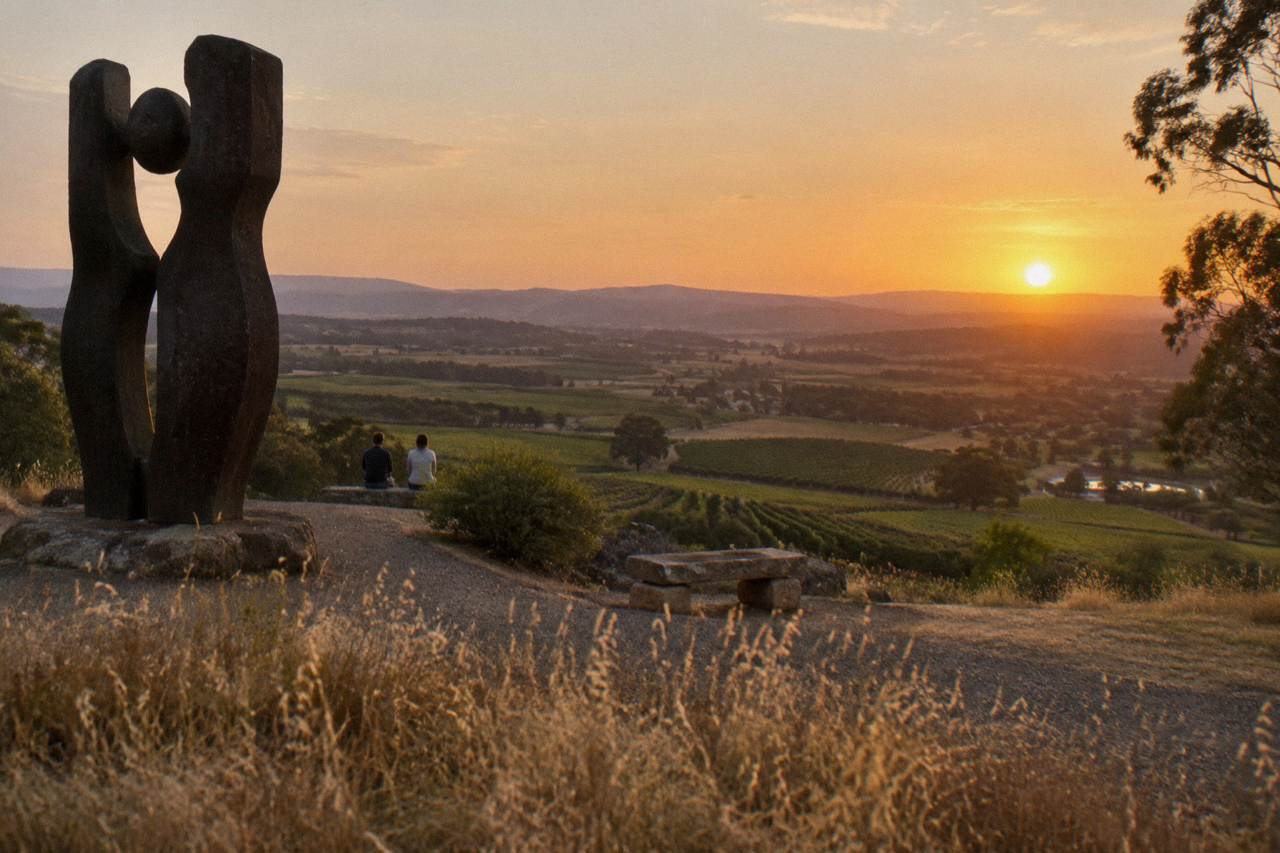
For travellers, the practical takeaway is small but pleasing. The word on every wine label, cellar door sign and tour brochure in the valley traces back to a Spanish ridge and a soldier's memory, filtered through a typo. A tasting day here is, among other things, a walk through a name that travelled across the world to find its vines.
That anomaly is worth pausing on. Most of the world's great wine names describe something: a river, a village, a hill, a grape. Barossa describes a battle honour. There is no valley in Spain called Barossa producing wine; the wine association exists only here, in South Australia, because the settlers who followed Light planted on land his map had labelled with a borrowed Spanish name. Every time the word appears on a bottle shelf in Europe or North America, it is exporting a South Australian story that began with an Andalusian ridge.
If that makes you want to see the place rather than just read about it, these three full-day options cover the main ways in:
Who Named The Barossa Range And Why?
Colonel William Light, South Australia's first Surveyor-General, named the Barossa Range in 1837 while surveying the country north-east of the new colony at Adelaide. He chose the name Barrosa after a ridge near Cadiz in Andalusia, where he had fought in the Battle of Barrosa in March 1811 during the Peninsula War. The spelling shifted to Barossa in official records.
Light's career before South Australia was military. He served in the British army against Napoleon's forces in Spain and Portugal, and the Barrosa engagement was one he experienced first-hand. When he later rode through the hills inland, naming features as surveyors did, the old battlefield names came with him. The Barossa Range joined a long list of imperial place names transplanted onto Aboriginal country.
The spelling change is the part people enjoy most. Somewhere between Light's field notes and the official record, a clerk wrote Barossa with a double-s instead of Barrosa with a single-s. Nobody corrected it. The error propagated through maps, land grants and eventually wine labels, and by the time anyone might have fixed it, the double-s version had generations of momentum behind it. The region's own history account treats it plainly: the spelling came from a clerical error, and there is no plain-English translation of the word.
| Element of the name | What the record states |
|---|---|
| English meaning | None; it is a proper name with no translation |
| Named by | Colonel William Light, Surveyor-General of South Australia |
| Year named | 1837 |
| Named after | The Barrosa ridge in Andalusia, Spain |
| Personal link | Light fought in the 1811 Battle of Barrosa in the Peninsula War |
| Spelling | Barossa, arising from a clerical error for Barrosa |
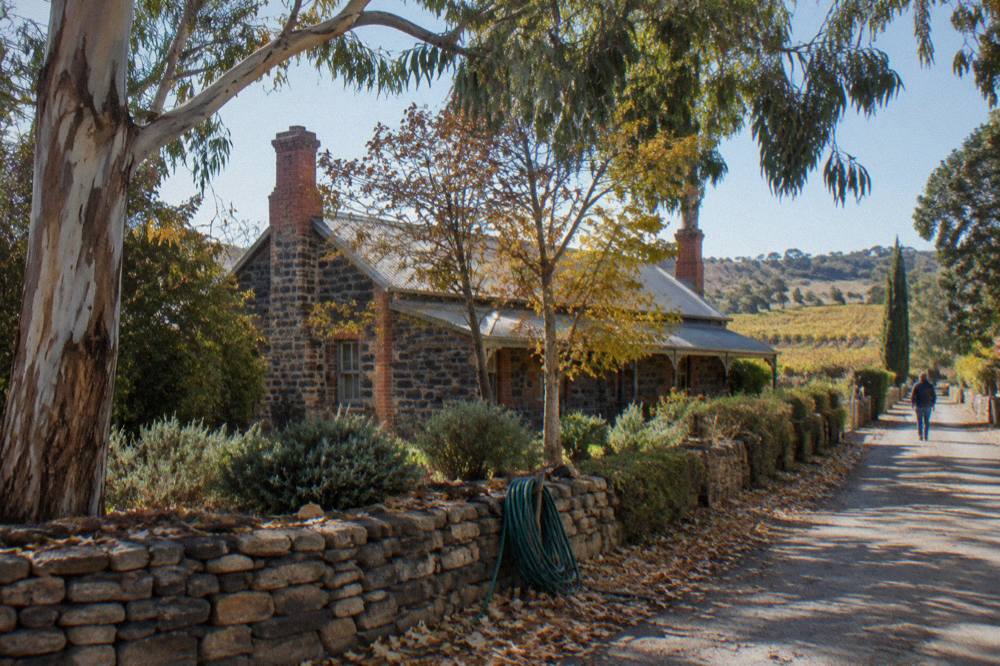
Light did not live to see the vineyards; he died only two years after the naming. Prussian settler families, Silesian Lutherans, began arriving in the district within the following years, planting Riesling and later Shiraz on the range's eastern and western flanks. Bethany, the first major European settlement in the Barossa, was established in 1842, five years after the name went on the map. The oldest Shiraz vines in the region, at Langmeil and Turkey Flat, are believed to date to 1843 and 1847 respectively, within a decade of Light's survey.
So the sequence runs: 1837 the name, the settlers soon after, 1842 the first village, 1843 onward the oldest surviving vines. A name that began as a soldier's souvenir became, within ten short years, the label on some of the oldest continuously productive Shiraz in the world, according to Wine Australia's own regional pages.
There is a second naming layer visitors often miss. The towns of the valley carry the settlers' fingerprints rather than Light's: Tanunda, Nuriootpa, Angaston and Bethany echo the Silesian and British mix of the early district, while the range and the river system keep the transplanted Spanish name. So the Barossa is really two vocabularies laid over one another, an imperial name for the landscape and settler names for the places people actually lived. A day driving or riding between cellar doors passes through both without ever announcing the switch.
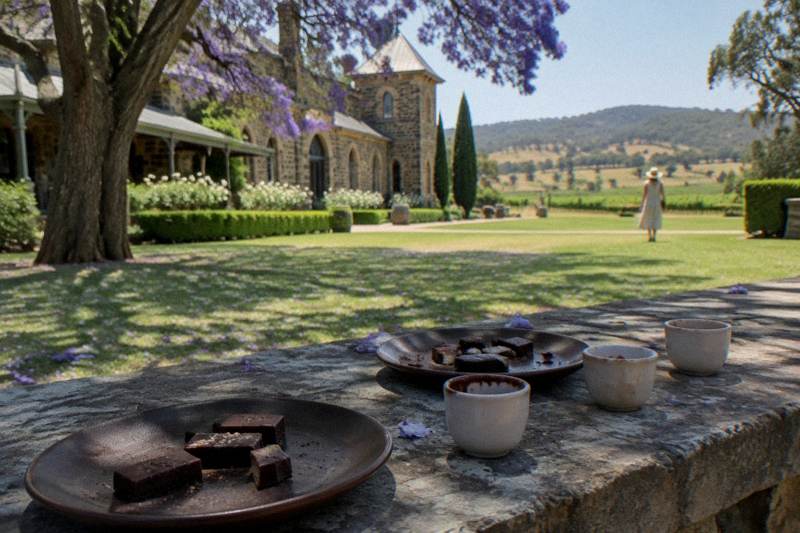
One way to stand inside that history without planning a thing is the Premium Small Group, Chocolate Tasting day, which visits Langmeil's neighbours at Chateau Tanunda and Kies Family Wines, sixth-generation growers. Check availability
Wondering how a full tasting day actually runs?
How Did A Spanish Name Become A Wine Region?
The Barossa became an official wine zone when its Geographical Indication was registered in 1997, but the name had been used for the district since the settlers' era. The GI covers two distinct regions, Barossa Valley on the valley floor and Eden Valley in the hills, and High Eden is the zone's only declared sub-region.
A Geographical Indication is a legally protected boundary, the Australian equivalent of a European appellation. Before 1997, "Barossa" on a label was a matter of custom; after it, the word could only be used for fruit grown inside the line. The zone sits about 70 km north-east of Adelaide, which the regional tourism body describes as "just an hour's drive", and it holds over 150 wineries on the region's own count.
The two halves of the zone could hardly be more different, and the numbers make the contrast plain. The Barossa Valley floor is warm, low and red-wine country. Eden Valley, higher and cooler, is Riesling territory. Together they give the single name a range most regions would need two names to cover.
| Measure | Barossa Valley region | Eden Valley region |
|---|---|---|
| Vineyard area | 11,930 ha | 2,292 ha |
| 2026 estimated crush | 48,183 t | 7,289 t |
| Dominant variety | Shiraz, 60% of tonnes | Riesling, 28% of tonnes |
| Red share of plantings | 90% | 53% |
| Elevation range | 112 to 596 m | 219 to 632 m |
| Character | Warm floor, full-bodied reds | Cool hills, Riesling and elegant reds |
These are Wine Australia's snapshot figures for the 2026 season, and they carry one more story worth knowing. The 2026 crush was down 17 percent on 2025 after a dry run of seasons and heavy March rain, yet the region's official vintage report describes concentrated, textural reds and calls Shiraz the standout of the year. A hard season produced small volumes of serious wine, which is about as Barossa as it gets.
The elevation column explains the wine column. The valley floor bottoms out at 112 metres and climbs toward 596, gathering heat that ripens Shiraz to the full-bodied style the region is known for. Eden Valley starts where the floor's weather gives out, running from 219 to 632 metres, cool enough that Riesling, a grape that struggles in heat, becomes the leading variety by tonnes. One borrowed name, two climates, and a table of grapes that could not swap places if they tried.
The name's journey from battlefield to wine law spanned more than a century and a half, and every stage left a trace you can still visit: Light's range, the 1842 village at Bethany, the 1851 estate at Seppeltsfield, the 1997 boundary on the map. For more on the wines themselves, see the Barossa Valley Shiraz guide and the Barossa Valley wineries guide.
Where Is The Barossa Valley Exactly?
The Barossa Valley sits roughly 70 km north-east of Adelaide, and the regional tourism body describes the drive to Tanunda as about an hour. There are no toll roads on any Adelaide to Barossa route. There is no direct rail into the valley; the train line ends at Gawler, where a connecting bus runs to Lyndoch, Tanunda, Nuriootpa and Angaston.
For a region this famous, the geography is surprisingly compact. The Barossa Valley region alone covers about 590 square kilometres, with the towns strung along a single valley corridor. Lyndoch at the southern end, Tanunda and Nuriootpa in the middle, Angaston at the top: the distance between the first and last is a short drive, which is why hop-on hop-off bus tours and even e-bike tours work here. The sealed Barossa Trail, a former rail corridor turned shared path, stitches the towns together off-road, and the guided e-bike tours listed here use it as their spine. Other pages covering the same trip are gathered on Barossa Valley Wine Tours.
The neighbours explain the map too. McLaren Vale sits about 40 minutes from Adelaide against roughly an hour to the Barossa, Clare Valley is about an hour and a half further north, and Hahndorf in the Adelaide Hills is under an hour away on the other side of the city. Several of the day trips listed on this site stitch the Barossa and Hahndorf into a single outing, which only works because the two sit on opposite shoulders of Adelaide. Planning the drive in detail is covered in the Adelaide to Barossa Valley getting there guide.
| Travel fact | Detail |
|---|---|
| Distance from Adelaide | About 70 km north-east |
| Drive time to Tanunda | About an hour |
| Toll roads | None on any route |
| Rail | None into the valley; Gawler is the railhead |
| Bus connection | LinkSA route 1110 to Tanunda, Nuriootpa and Angaston, roughly two and a half hours with a change |
| Drink drive limit | Full licence holders must not drive at 0.05 BAC or above |
That last row is the quiet reason wine tours exist. South Australia's limit is 0.05 for full licence holders, a first offence under 0.08 brings an expiation notice and four demerit points, and police can run random breath testing near any road. A region built on tasting rooms is a region best visited with a driver, which is the honest argument for the coach, small-group and private formats that dominate the local line-up of tours. The trade-off is weighed out in is a Barossa wine tour worth it or should you drive.
It also explains the shape of a tasting day. A driver who cannot drink covers the corridor between towns while guests work through flights; the tour vehicle parks at the cellar door and everyone else samples. That division of labour, more than any scenery or hospitality, is what turned a name borrowed from Spain into a region with a full ecosystem of guided days, from a A$100 hop-on hop-off seat to private tailored tours from A$750 per group.
What Wines Made The Name Famous?
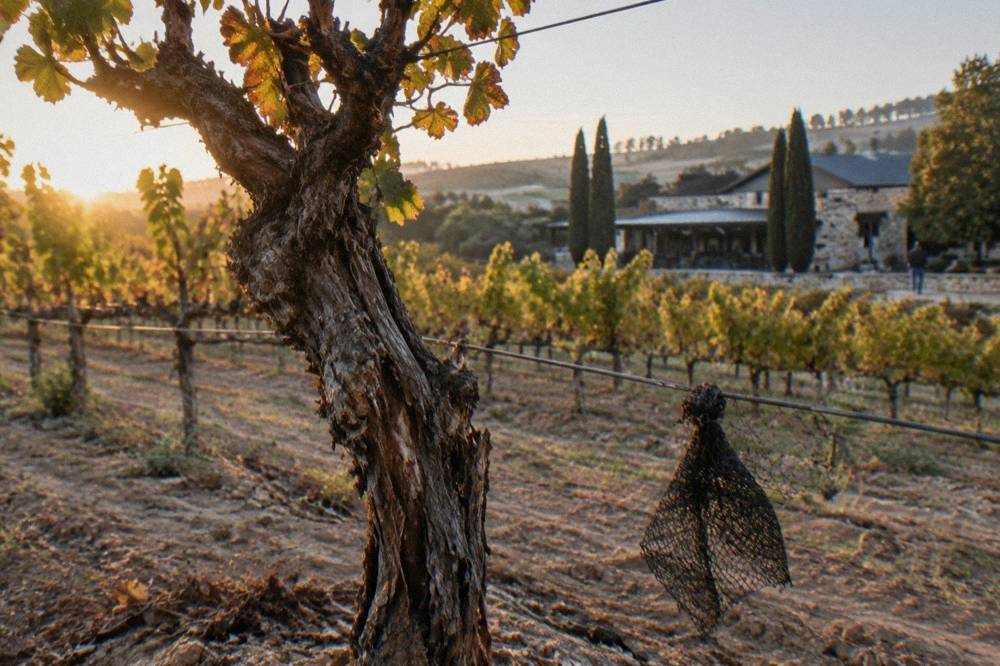
Shiraz made the name. It accounts for 60 percent of the Barossa Valley's crush tonnes in the 2026 season, with Cabernet at 18 percent and Grenache at 9 percent, and the region's oldest Shiraz vines are believed to date to 1843 at Langmeil and 1847 at Turkey Flat. Nine in every ten vines in the valley are red varieties.
The word Barossa on a label carries a legal meaning and a flavour expectation, and the second is built almost entirely on one grape. Barossa Shiraz is a full-bodied red in the style the region is known for, and the old-vine story is central: vines believed to have been producing since the 1840s give the region a claim no marketing department had to invent. Langmeil's own page puts it carefully, calling its Freedom block what is believed to be the world's oldest surviving Shiraz vineyard, and the hedged wording is the honest version of the story.
The 2026 season added a chapter. Yields were considerably below average after a dry 2025, when the Nuriootpa station recorded just 331 mm of rain, 77 percent of the long-term mean, and then near-triple-average March rain in 2026. Yet the official vintage report from Louisa Rose of Hill-Smith Family Estates describes concentrated, textural reds and names Shiraz the standout. Small crops, serious wine.
Eden Valley rounds the picture out. Higher and cooler, it swings toward Riesling at 28 percent of its tonnes, with Shiraz still a quarter. So the single borrowed name covers both the thundering floor reds and the fine, high-acid whites of the hills, a breadth Wine Australia's Shiraz page notes when it credits the Barossa with those oldest believed-1843 plantings.
Grenache deserves a sentence of its own, because its 9 percent share understates its pull. Old bush-vine Grenache, along with Mataro at 2 percent, anchors the red blends and rosés that have spread through the region's cellar doors in recent years, and Cabernet's 18 percent keeps a sturdy second red on most tasting lists. Chardonnay, at 2 percent, is a footnote on the valley floor and a much larger presence just over the range, where Eden Valley's cooler sites handle it with ease. The name covers all of it.
How Do You Experience The Name First Hand?
The easiest way to feel what the name stands for is a full-day tasting tour from Adelaide: the day trips listed here run seven to nine hours, most include lunch, and prices start from A$100 per person for the hop-on hop-off bus and from A$189 for fully guided small-group days with a regional platter lunch. Pickup is stated on many listings, always check the individual row.
Reading about a clerical error is one thing; standing in an 1851 estate's cellar with a glass of 100-year-old tawny nearby is another. The tours listed here are the bridge, and they divide cleanly by how much structure you want. Guided small-group days handle everything: pickup where stated, tastings where the row says included, lunch where the row says included. The hop-on hop-off bus, from A$100 per person and rated 4.9 from 442 reviews, hands you the wheel instead, with a maximum of eight per booking and tastings and lunch bought as you go.
One guest review of the bus puts the appeal plainly: "This is a fabulous and easy way to see some of the best spots in the Barossa. Highly recommend you make Bethany Wines and Rusden Wines two of your stops!" Bethany, of course, is the 1842 settlement, so the route and the history line up by themselves.
At the guided end, the Premium Small Group day from See Adelaide sets the benchmark for the tours on this site: 4.9 from 1,697 reviews, from A$189 per person, eight hours, hotel pickup, a regional platter lunch and private tastings at sixth-generation Kies Family Wines and three-generation Rosenvale, with Melba's Chocolates for the drive home. A reviewer named Deidre D summed it up: "Amazing tour! Great guide, Sara, was lots of fun & had loads of great info about the areas we visited!"
For something slower still, the guided e-bike day from Angaston, from about A$335 per person and rated 5 from 33 reviews, rides the sealed Barossa Trail between Yalumba, the Barossa Valley Chocolate Company and Artisans of Barossa, with an artisan platter lunch and a rarities tasting along the way. Six and a half hours under your own pedal-assist power is the most literal way to feel the scale of the valley the name covers.
Private formats stretch the same name in the other direction. The Barossa Discovery Day from Barossa Bespoke Tours runs from A$750 per group for up to six, a fully tailored eight hours with Adelaide and Barossa pickup, rated 5 from 63 reviews, with lunch and tasting fees paid as you go. For a shorter taste of the air, the 10-minute private helicopter flight from Barossa Helicopters, from A$275 per group for up to three and rated 4.9 from 60 reviews, passes over Jacob's Creek country with live pilot commentary, a different lens on the valley Light named from a ridge line of his own.
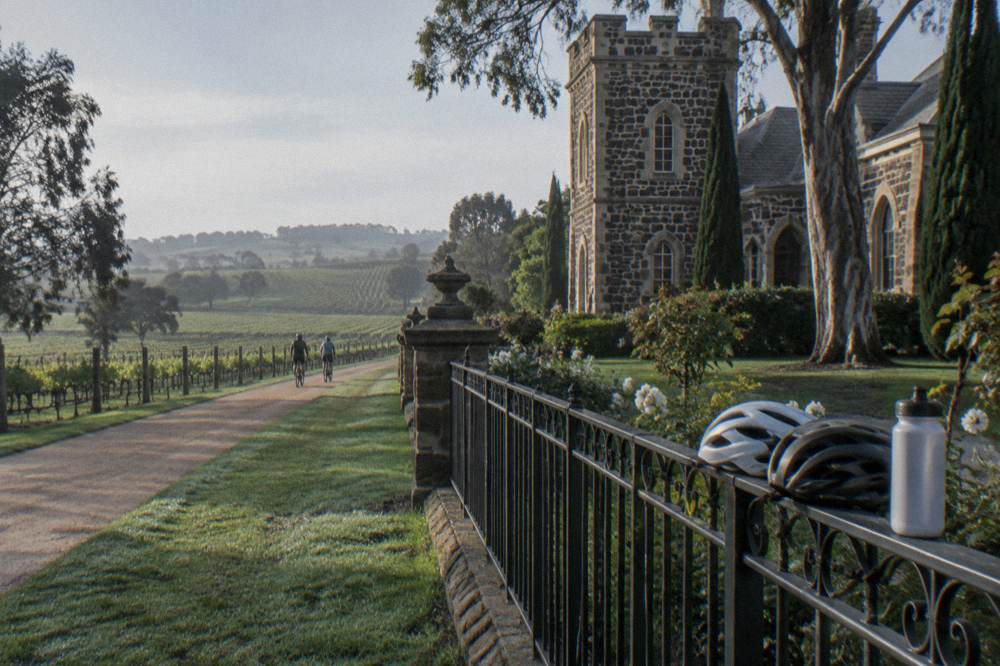
Whichever format fits, the name you are touring is the same one Light borrowed from Spain in 1837. The full-day options below cover the three most common ways in, from the fully guided premium day to the cellar-door small group to the coach day built around Seppeltsfield village, the estate founded the same decade the oldest vines went into the ground.
Common Questions About The Barossa Name
What does Barossa mean in English?
Nothing, in plain English. Barossa is a proper name with no translation, coined for the Barossa Range in 1837 by Colonel William Light after the Barrosa ridge in Andalusia, Spain, where he fought in an 1811 Peninsula War battle.
Is the correct spelling Barossa or Barrosa?
Light's original reference was Barrosa with one s, the Spanish ridge. Australian records added the second s through a clerical error, and Barossa has been the standard spelling on maps, labels and law ever since.
Who was Colonel William Light?
South Australia's first Surveyor-General, the man who laid out the city of Adelaide. He named the Barossa Range in 1837 during survey work north-east of the new colony, drawing on places he had fought in Spain during the Peninsula War.
Is Barossa an Aboriginal word?
No. The name is a transplanted Spanish one from 1837. The country the name sits on is Aboriginal land, and the region's documented European naming history begins with Light's survey of that year.
Does Barossa cover one valley or two regions?
The legal Barossa zone, registered as a Geographical Indication in 1997, contains two regions: the warm Barossa Valley floor, planted to about 11,930 hectares, and the cooler Eden Valley in the hills, about 2,292 hectares, with High Eden the only declared sub-region.
Why is the name on so many wine labels?
Because the 1997 Geographical Indication restricts its use to wine grown inside the zone, and the zone produces some of the world's most recognised Shiraz, 60 percent of the Barossa Valley's crush, from vines believed to date to the 1840s.