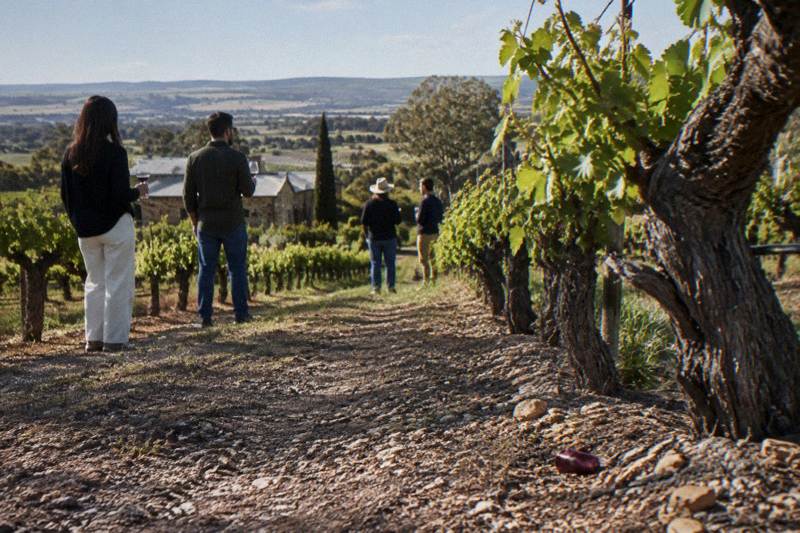
What Is The Most Famous Winery In The Barossa Valley?
Seppeltsfield, Langmeil, Jacob's Creek and more: an honest, data-backed look at which Barossa winery is genuinely the most famous, and how to visit each on a tour.
What Is The Most Famous Winery In The Barossa Valley?
Seppeltsfield is the name with the strongest claim, and the claim rests on verifiable ground: established in 1851, still operating from its original estate, and home to the Centennial Cellar, where visitors can taste a 100-year-old Para Tawny poured straight from the barrel. No other Barossa winery offers anything quite like that tasting, and few Australian estates can point to 175 continuous years on the same site. That said, fame in this region is not a single-entrant contest. Langmeil carries the oldest vines, Jacob's Creek carries the biggest global name, and the drive between them is short enough that a visitor can judge all three in one day.
The honest answer depends on which kind of fame you are weighing. Global brand recognition belongs to Jacob's Creek, a label found on supermarket shelves far beyond Australia. Heritage fame belongs to Seppeltsfield, the 1851 estate whose village precinct, palm-lined drive and Centennial Cellar make it the region's most photographed winery. Vineyard fame belongs to Langmeil, whose Freedom 1843 block is, on Wine Australia's own regional pages, believed to be the world's oldest surviving Shiraz vineyard. Each claim is documented, and each is a reason a tour bus stops where it does.
The estate itself keeps its dates public: Seppeltsfield was established in 1851, and the regional tourism body's listing describes the estate's village of winemaking buildings, the JamFactory craft studios and the Vasse Virgin skincare shop that now occupy it. Seppeltsfield's 175th Series, four Fridays of celebrations in November 2026, marks that anniversary; it is a celebration of an old estate, not a new opening, and the distinction matters when you are reading promotional copy.
For most visitors the practical question is not which estate tops an abstract ranking but which famous names you can realistically see in a day. The three tours below are the itineraries that route through the best-known cellar doors with a driver, lunch and tastings organised for you.
A note on scale before the estate-by-estate breakdown: the Barossa is not one famous winery surrounded by also-rans. The region's own figure is over 150 wineries across the valley floor and the Eden Valley high country, and the Barossa Valley zone alone runs 11,930 hectares under vine. Shiraz accounts for 60 percent of the region's crush tonnes in the 2026 Wine Australia snapshot, with Cabernet at 18 percent and Grenache at 9 percent. Fame here is concentrated in a handful of historic estates, but the depth behind them is what makes a full day of cellar doors worthwhile. The region's broader reputation is its own story, covered in why the Barossa Valley is so famous.
Why Is Seppeltsfield Considered The Region's Flagship Estate?
Seppeltsfield earns flagship status through age, continuity and one experience nobody else can copy: the 100 Year Old Signature Experience, a guided Centennial Cellar tour that includes a tasting of 100-year-old Para Tawny direct from barrel, followed by a multi-course lunch at FINO Seppeltsfield. The regional tourism site lists that experience at about A$339 per person. Established in 1851, the estate has outlived every trend in Australian wine and still operates as a working village rather than a single cellar door. That combination of history, architecture and a genuinely singular tasting is why the name comes up first in almost any conversation about the Barossa's flagship.
The estate's own visitor page states plainly that tasting fees apply and that group tastings are limited to 6 people, a detail worth knowing before you arrive with a party of eight. The standard cellar door tasting is listed in the Barossa Visitor Centre's wine resource guide at A$15, marked as redeemable in that guide, though the estate's own page simply says fees apply, so treat the redemption detail as a visitor-centre note rather than a promise. Either way, budget for a fee and book ahead; the Centennial Cellar tours in particular are the kind of experience that rewards a reservation.
What gives the estate its fame is the century-old practice behind that barrel tasting. Para Tawny, the Barossa's signature fortified style, has been laid down here in every vintage year since the estate's founding generations, which is what makes a pour from a 100-year-old barrel possible at all. Fortified wine is a smaller part of the modern Barossa than it once was, but Seppeltsfield kept the tradition when many peers did not, and that persistence is now the estate's signature attraction.
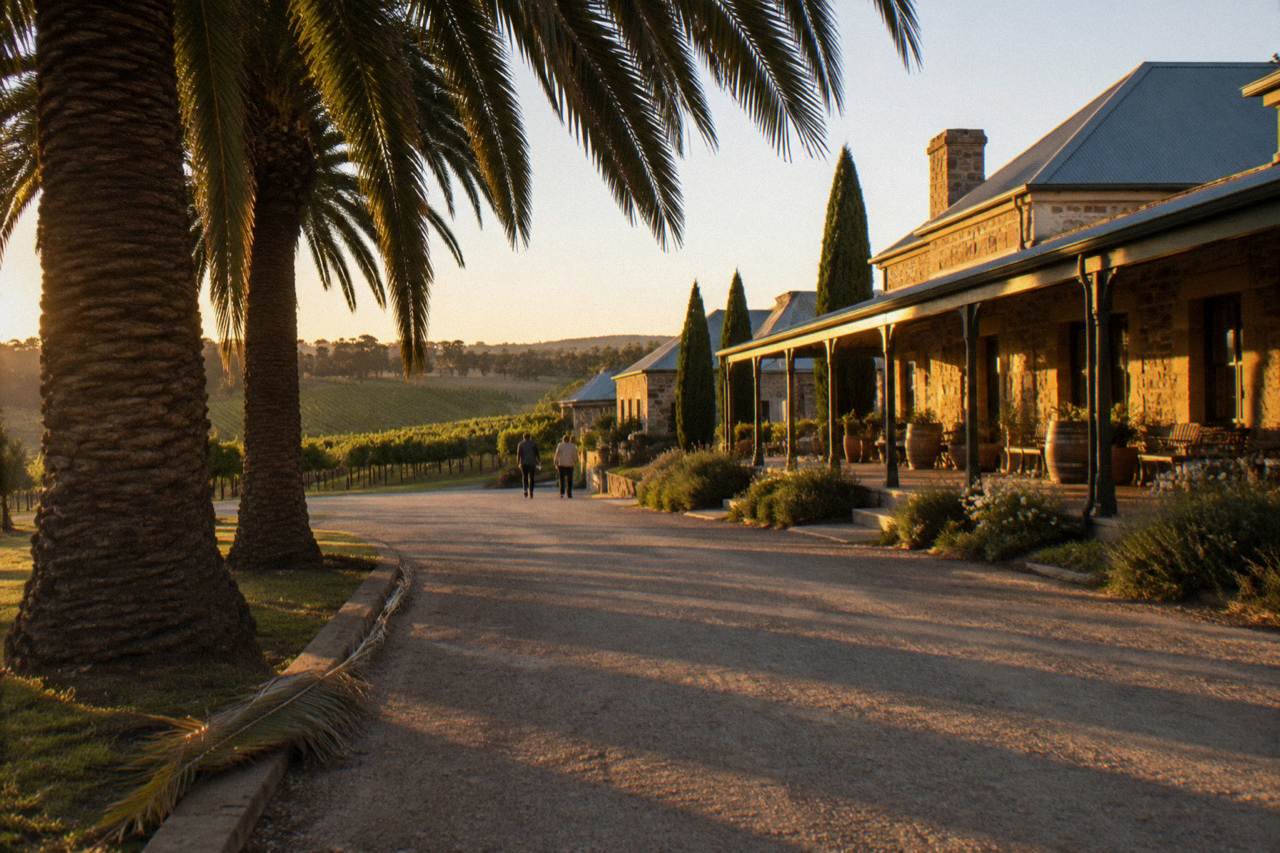
Visually, the estate also delivers the scene most people picture when they imagine the Barossa: heritage stone buildings, a palm-lined approach and a village layout that spreads a visit across several hours. Tour itineraries treat it accordingly. The Barossa Tour from Adelaide: 4 Tastings & Lunch Included builds its afternoon around Seppeltsfield Village, giving guests time at the JamFactory, Vasse Virgin and the cafe there, while the Premium Barossa Small Group Tour stops at neighbouring heritage estates including Chateau Tanunda.
If you want a quick sense of whether a guided day suits you, the eight-hour premium small group tour, from A$189 per person with lunch included, is the listing that bundles the most famous names into a single itinerary.
Is Langmeil Home To The Oldest Shiraz Vines In The World?
Yes, in the strongest sense the evidence allows: Langmeil, founded in 1842 in Tanunda, tends the Freedom 1843 block, which is believed to be the world's oldest surviving Shiraz vineyard, a documented distinction that gives the winery a fame no marketing budget could buy. The vineyard claim is not the winery's own boast alone; Wine Australia's regional variety pages carry the same wording, "believed" and all, alongside a matching 1847 date for Turkey Flat's old Shiraz vines. The word believed is doing honest work in that sentence, and the estate keeps it in its own materials too. Oldest-vine fame is quieter than brand fame, but among wine drinkers it carries real weight.
The winery's own history page states it plainly: founded in 1842, home of what is believed to be the world's oldest surviving Shiraz vineyard, The Freedom 1843. Wines from those vines are bottled separately, and they are the reason Langmeil appears on tour itineraries that emphasise heritage. Both the Barossa Valley Cellar Door Small Group Tour and the Small Tour Barossa Valley Voyager Tour list Langmeil among their stops, alongside newer names.
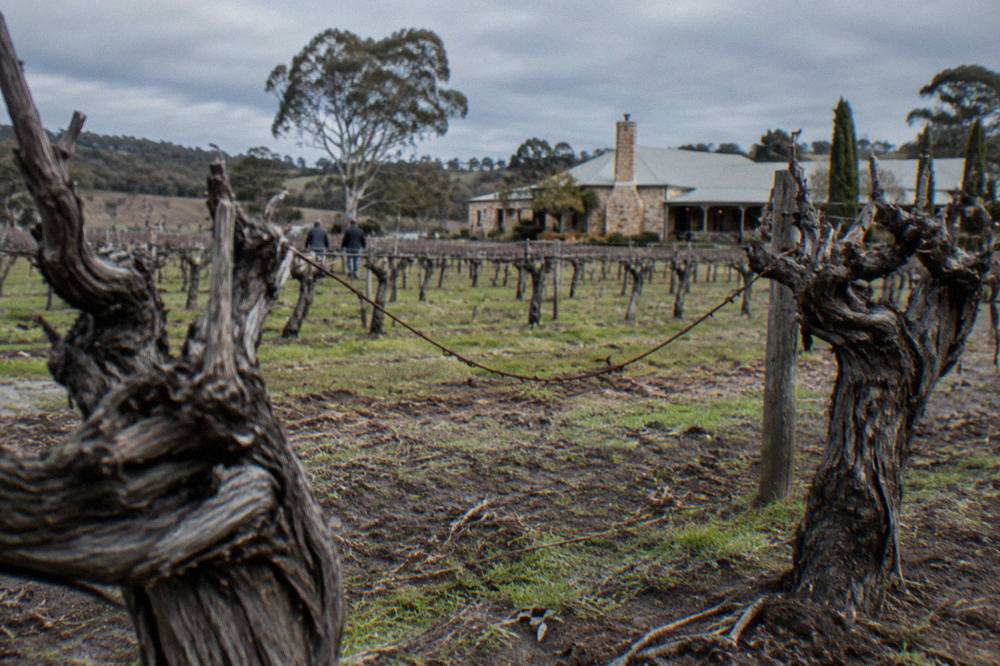
Why do old vines matter enough to make a winery famous? Age forces the vine to produce smaller crops of more concentrated fruit, and the Barossa's combination of deep soils, dry summers and unbroken settlement by Silesian migrant families from the 1840s meant vines were planted early and never pulled out during later fashion shifts. The result is a living archive: vineyards that predate federation, still producing. That is the story a guide at Langmeil tells in ten minutes, and it reframes every glass you taste afterwards.
Turkey Flat, also in Tanunda, holds the companion claim with vines believed to date to 1847, and its own site references an 1847 Bluestone Cellar, the building rather than the vines. The two estates sit minutes apart, which is exactly why small group itineraries can cover both heritage anchors plus a modern cellar door in one comfortable day. If old vines are the part of Barossa fame that interests you most, the Barossa Valley Shiraz guide digs into the variety and its history in more depth.
How Famous Is Jacob's Creek Compared With The Heritage Estates?
Jacob's Creek is the most internationally famous Barossa name by a wide margin, but the fame belongs to a brand rather than a heritage precinct, and the cellar door experience reflects that: bookable tasting flights at A$15, A$20 and A$30 per person, non-redeemable, with bookings essential and the last daily slot at 3.30pm. The label's global reach means many visitors arrive already knowing the name, which is a different kind of fame from Seppeltsfield's century of barrel-aged fortified wine or Langmeil's 1843 vines. All three are legitimate answers to the question, depending on what the asker means by famous. If the big names leave you curious about what else the region holds, our guide to the Barossa's quiet lookouts, markets and back roads points to the corners most day trips miss.
The estate's official tasting page sets out the three flights: Light and Fresh at A$15, Limited Release at A$20 and the Cellar Collection at A$30, each per person, none redeemable against purchases. That non-redeemable policy is worth noting because it differs from several neighbours, including Kaesler, whose A$20 Premium Estate Tasting is redeemable on a bottle purchase. Neither policy is a mark for or against the wine; it is simply how each cellar door prices its visitor experience, and knowing the difference helps you plan a day without surprises.
Jacob's Creek rarely appears on the guided itineraries you will find on this site, and the reason is logistics more than merit: operators build their routes around estates where a guide can deliver a structured private tasting, such as Kies Family Wines, Chateau Tanunda and Rosenvale. Independent visitors with a car, or riders on a hop-on hop-off bus, can include it easily. The Barossa Valley Hop On Hop Off Wine Tour, from A$100 per person, runs an 8-hour circuit with transport between wineries and a maximum of 8 per booking, and one guest review on its listing recommends making Bethany Wines and Rusden Wines two of your stops. Tasting fees are not included on that one, so the A$15 to A$30 flights at Jacob's Creek would be paid at the door.
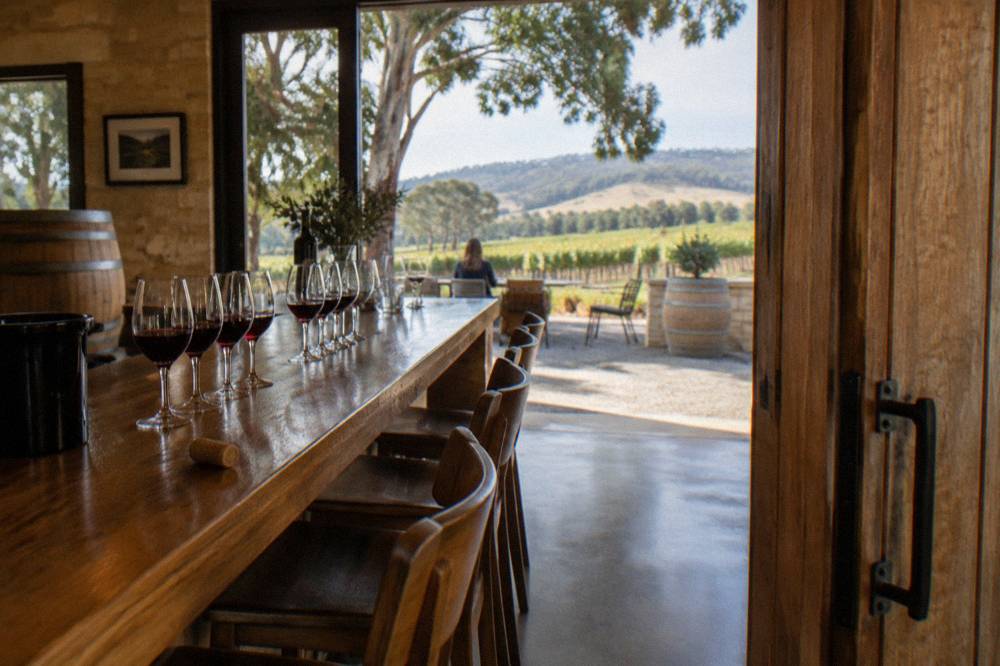
For balance, fame by brand has a shadow side: some wine travellers dismiss the biggest names precisely because they are big. That instinct sells the Barossa short. The estates below the headline brands, Kaesler, Henschke, Peter Lehmann among them, carry regional fame of their own, and the fee table in the next section shows how each one handles visitors.
Which Famous Cellar Doors Charge Tasting Fees, And How Much?
Tasting fees at the Barossa's famous cellar doors mostly sit between A$15 and A$30 per person for a standard flight, with each estate setting its own policy on redemption, bookings and opening days, and the details below come from each winery's own page or the Barossa Visitor Centre's wine resource guide. The range across the wider region runs roughly A$10 to A$30 for a standard tasting, and premium experiences sit well above it. None of these tours includes fees unless the listing says so, so read the inclusions before assuming.
| Winery | Standard tasting fee | Redemption policy | Visitor notes |
|---|---|---|---|
| Jacob's Creek | A$15 to A$30 by flight | Non-redeemable | Bookings essential; last slot 3.30pm |
| Seppeltsfield | A$15 per visitor centre guide | Guide marks it redeemable; estate page says fees apply | Group tastings limited to 6; Centennial tour about A$339 |
| Kaesler | A$20 Premium Estate Tasting | Redeemable on bottle purchase | Open 7 days, 10am to 5pm |
| Henschke | From A$20 | Waived or redeemed on standard options, not always premium | Seated experiences about an hour; bookings recommended for groups |
| Peter Lehmann | Not stated | Not stated | Open Thursday to Monday, 10.30am to 4.30pm; closed Tuesday and Wednesday |
| Yalumba | A$10 per visitor centre guide | Guide marks it redeemable | Appears on several tour itineraries |
Two honest caveats go with that table. First, fees change, and a cellar door's own page is always the final word; the figures here are what the operators and the regional visitor guide currently print. Second, redemption policies vary even within one cellar door, as Henschke's page makes explicit: standard tastings may be waived or redeemed with a purchase, while premium and old-vine options may not be. Never treat "the fee comes off the bottle" as a general Barossa rule, because it is not one.
On the tour side, only a minority of listings fold tasting fees into the price. Of the 26 tours on this site, 6 say tasting fees are included, 3 say they are not, and 17 leave the question open. The Barossa Valley Cellar Door Small Group Tour is one of the clear ones: standard wine tasting fees are included, hotel and motel pickup and return are included, and lunch at The Tanunda Club is part of the day, from A$189 per person. The Barossa Valley Wine Tour Max 6 Guests with Restaurant Lunch, from A$380 per person, likewise includes tasting fees alongside a multi-course restaurant lunch and hotel transfers in a group capped at six. If fee certainty matters to you, those rows are the ones to read closely, and the Barossa tasting fees guide breaks the topic down further.
What Happened To The Penfolds Barossa Cellar Door?
The Penfolds Barossa Valley cellar door at Nuriootpa closed permanently in June 2025, which means it can no longer be visited or included on any tour. Travelers building an itinerary around the Penfolds name in the Barossa should redirect their plans toward the region's open heritage estates instead. Penfolds announced the closure in February 2025 and its own site now directs visitors to Magill Estate in metropolitan Adelaide. Two other long-standing cellar doors have also shut recently: the Grant Burge Meshach cellar door closed in March 2025, with the brand moving to the St Hugo site at Rowland Flat, and the Rolf Binder cellar door closed at the end of June 2025. None of the three should appear on any current itinerary.
Closures like these are why a printed list of famous wineries ages faster than you would expect. The estates that anchor this article, Seppeltsfield, Langmeil, Chateau Tanunda, Yalumba and Kies, are all operating, and several appear by name in the tours listed on this site: Yalumba on the premium small group day and the e-bike itinerary, Chateau Tanunda on at least five different listings, Kies Family Wines on four. When in doubt about any individual cellar door, the operator's own page and the regional visitor centre are the two sources that stay current.
The practical takeaway for a visitor is simple. Fame in the Barossa is durable, but specific doors are not, and a guided tour handles that drift for you: operators re-route around closures and hold relationships with the cellar doors that welcome groups. That is a quiet argument for the eight-hour small group day over a self-planned crawl, especially on a first visit.
Can You Visit The Famous Wineries On A Guided Tour?
Yes, and it is the most reliable way to cover them, because the guided itineraries on this site name the famous estates directly: Chateau Tanunda appears on at least five listings, Kies Family Wines on four, Yalumba on two, and Langmeil on three, all with a driver handling the distances and, on most tours, lunch included. Seventeen of the 26 tours on this site include a meal, and 18 mention pickup in some form, though the detail varies from one to the next, so read each listing rather than assuming. The choice between them comes down to group size, price and which famous names you most want behind glass.
| Tour (decision name) | From | Duration | Famous stops named on the listing |
|---|---|---|---|
| Premium Small Group, Chocolate Tasting | A$189 per person | 8 hours | Kies Family Wines, Chateau Tanunda, Yalumba, Rosenvale |
| Four Wineries, Clubhouse Lunch | A$189 per person | 8 hours 30 minutes | Langmeil, Chateau Tanunda, Ubertas, Rusden |
| Four Tastings, Seppeltsfield Village | A$175 per person | 8 hours | Chateau Yaldara, Seppeltsfield, Hemera Estate |
| Hop-On Hop-Off, No Meal | A$100 per person | 8 hours | Bethany Wines and Rusden recommended by guests |
| Max 6 Guests, Restaurant Lunch | A$380 per person | 8 to 9 hours | Barossa Valley, Tanunda |
The hop-on hop-off bus deserves a special mention for fame-hunters on a budget. It is the cheapest tour on this site, from A$100 per person. The day runs a full 8 hours between wineries with water and transport included, and the choice of cellar doors stays with you. One five-star guest review on the listing calls it "a fabulous and easy way to see some of the best spots in the Barossa" and recommends Bethany Wines and Rusden Wines as stops. Tasting fees and lunch are not included, so pair it with the fee table above.
At the other end of the scale, the max-6 restaurant lunch tour turns the same sightseeing into a small, slow day: tasting fees at the wineries, a multi-course lunch with a premium beverage, hotel pickup and luxury transfers, from A$380 per person, with a 5.0 rating from 112 reviews. A guest review on that listing sums up the appeal: "Tom was a great tour guide and driver and terrific choice of wineries. Excellent wines to taste and lunch." When the goal is famous wineries without logistics, that is the row that removes the most friction.
Between those poles sit the shared coach days from A$175 to A$209 per person, most including lunch, several pairing the Barossa with Hahndorf. The related tour on this page, the Premium Barossa Small Group Tour from See Adelaide, is the one this site points most readers toward: 4.9 from 1,697 reviews, from A$189 per person, 8 hours with hotel pickup, a regional platter lunch and a private barrel room tasting at sixth-generation Kies Family Wines. You can compare it against the coach options on the Barossa Valley Wine Tours homepage, and its full itinerary sits on the premium small group tour page. Check availability
Why Does Shiraz Carry So Much Of The Barossa's Fame?
Shiraz is 60 percent of the Barossa Valley's crush tonnes in the 2026 Wine Australia snapshot, 90 percent of the region's tonnage is red varieties, and the oldest Shiraz vines on earth, believed to date to 1843 and 1847, grow here, which makes the variety the engine of the region's reputation. An estimated 48,183 tonnes came off the valley in 2026, down 17 percent on the previous year, yet the region's own vintage report called the reds concentrated and textural, with Shiraz "the standout of 2026 so far". Scarcity and quality in the same sentence is a strong fame story.
The 2026 season itself explains some of that character. The vintage was later than usual, with much of the harvest in the winery before Easter, and it followed the third dry year in a row, with 2025 rainfall at 331 mm, 77 percent of average. Heavy March rain, 56 mm at Nuriootpa, nearly three times the monthly average, cut yields further. The result was less wine but genuinely dense fruit, which is the raw material behind the valley's full-bodied red style. Tasting-note territory beyond that is best left to the glass in front of you.
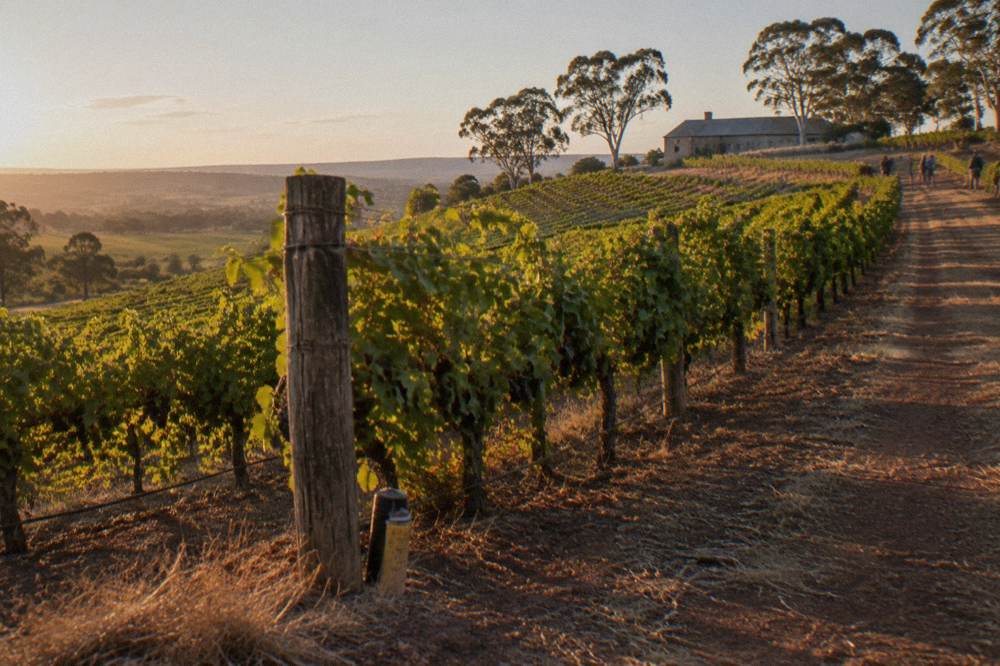
Fame, in the end, compounds. A region famous for a variety plants more of it; the oldest vines become tourist attractions; the tourist traffic funds cellar doors that can charge for premium experiences; and the premium experiences, like a century-old tawny poured from barrel, generate the stories that travel. The Barossa's most famous winery question has several right answers because the whole region has been running this loop since the 1840s. Whether your day starts at Seppeltsfield's stone gates or Langmeil's old vines, you are tasting the same long story.
If that story has you ready to book, these are the three itineraries that best combine the famous names with the least planning on your part.
Common Questions About The Most Famous Barossa Wineries
What Is The Most Famous Winery In The Barossa Valley?
Seppeltsfield has the strongest single claim: established in 1851, still on its original estate, and the only place offering a tasting of 100-year-old Para Tawny straight from the barrel. Jacob's Creek is more famous as a global brand, and Langmeil holds the fame of the world's oldest surviving Shiraz vines, believed to date to 1843.
Can You Visit Seppeltsfield On A Wine Tour?
Yes. The Barossa Tour from Adelaide: 4 Tastings & Lunch Included, from A$175 per person, spends time at Seppeltsfield Village including the JamFactory and Vasse Virgin. The estate's own cellar door charges tasting fees, and group tastings are limited to 6 people, so large parties should book structured experiences ahead.
Is The Penfolds Barossa Cellar Door Still Open?
No. The Penfolds Barossa Valley cellar door at Nuriootpa closed permanently in June 2025, and Penfolds directs visitors to Magill Estate in Adelaide. The Grant Burge Meshach and Rolf Binder cellar doors have also closed, so build your itinerary around the open heritage estates instead.
How Much Do Tastings Cost At The Famous Barossa Wineries?
Standard flights at the big names mostly run A$15 to A$30 per person: Jacob's Creek charges A$15 to A$30 depending on the flight and is non-redeemable, Kaesler charges A$20 redeemable on a bottle, and Henschke starts from A$20. Across the region a standard tasting is roughly A$10 to A$30, varying by cellar door.
Which Famous Wineries Can You See In One Day?
Several, with a driver. The Premium Barossa Small Group Tour covers Kies Family Wines, Chateau Tanunda, Yalumba and Rosenvale in 8 hours from A$189 per person with lunch, and the Barossa Valley Cellar Door Small Group Tour adds Langmeil and Chateau Tanunda from the same price with tasting fees included.